

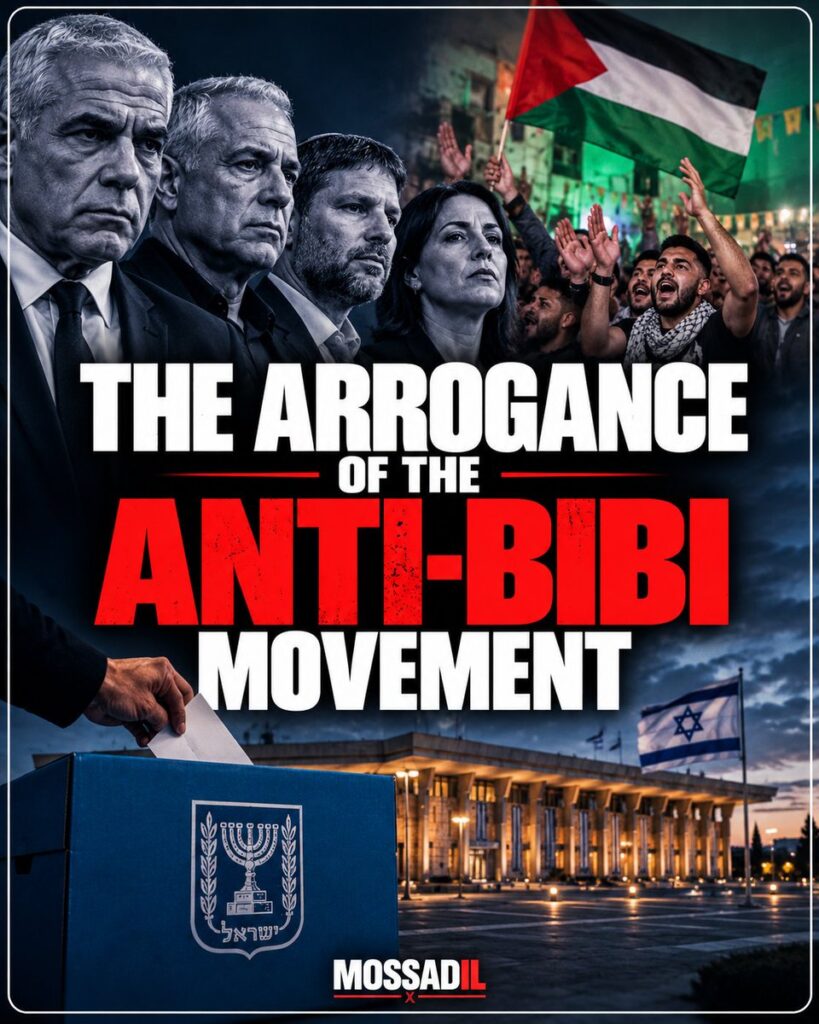
That may be an effective slogan. It is not a governing philosophy. You cannot build an entire political movement around opposition to one man, spend an election telling voters primarily who they should reject, and then be surprised when millions of Israelis ask a very basic question: What exactly are you offering instead? That is where I believe the arrogance of the anti-Bibi movement became its greatest political weakness. It operated as though opposition to Netanyahu was itself enough to create a majority. As though the public’s concerns about security, Jewish identity, Iran, Judea & Samaria, the Palestinians and the future character of the state were secondary to the question of Netanyahu’s personality. But elections have a way of exposing political echo chambers. The counting is still underway, and the final coalition picture remains unresolved. Early results and exit polls have shown neither major bloc comfortably reaching the 61 seats required to govern on its own. Whatever the final numbers are, the political choices made after this election may matter almost as much as the results themselves. Because Netanyahu’s opponents now face a decision that voters will remember. Do they attempt to build a broad Zionist government with people they profoundly disagree with politically? Or does removing Netanyahu remain such an overriding objective that they would rather depend on parties outside the Zionist political consensus? That question became impossible to ignore last night. At Joint List headquarters, supporters were filmed singing “Biladi, Biladi,” the Palestinian national anthem. People can interpret that scene however they choose. But politically, opposition leaders should understand exactly how it will be viewed by a very large portion of the Israeli public. These are Israelis who serve in the IDF, send their children to reserve duty, bury friends and relatives, live through rockets and wars, and may disagree fiercely with Netanyahu. Many of them are not ideological Likud voters. Some are centrists. Some are traditional Labor voters. Some desperately want new leadership. But asking those voters to accept a government whose survival depends on parties whose supporters celebrate an election result by singing the Palestinian national anthem is not a minor political detail. It is a decision that will have to be defended. And there is now another issue hanging over the election. Police arrested three suspects in the Negev on suspicion of attempting to bribe voters to support Ra’am. Investigators say they discovered envelopes containing tens of thousands of shekels in cash and Ra’am ballot slips. That does not prove that Arab turnout was fraudulent. It does not prove a nationwide conspiracy. It certainly does not justify declaring the election stolen before investigators establish the facts. But it is serious. And every credible allegation should be investigated completely, wherever it leads. What opposition leaders do now will therefore be watched extremely closely. This is where political wisdom matters. There are enormous disagreements inside Israel’s Zionist majority. There are people on the center, right and left who disagree about Netanyahu, judicial reform, settlements, religion and state, the war and almost everything else. But they also share something fundamental: they see the continued existence and security of a Jewish and democratic State of Israel as the starting point of the political conversation. A responsible political system should be capable of finding cooperation somewhere inside that enormous spectrum.

MOSSADIL-KOMMENTAR: DIE ARROGANZ DER ANTI-BIBI-BEWEGUNG Diese Wahl lehrt uns etwas, das weit über Benjamin Netanjahu hinausgeht. Seit Jahren baut ein großer Teil der israelischen Opposition seine politische Identität um ein zentrales Ziel herum auf: Bibi muss weg. Das mag ein wirksamer Slogan sein. Eine Regierungsphilosophie ist es nicht. Man kann keine gesamte politische Bewegung um den Widerstand gegen einen einzelnen Mann aufbauen, den Wählern in einem Wahlkampf vor allem sagen, wen sie ablehnen sollen, und dann überrascht sein, wenn Millionen Israelis eine ganz grundlegende Frage stellen: Was genau bietet ihr stattdessen an? Hier, so glaube ich, wurde die Arroganz der Anti-Bibi-Bewegung zu ihrer größten politischen Schwäche. Sie agierte, als reiche der Widerstand gegen Netanjahu allein aus, um eine Mehrheit zu schaffen. Als seien die Sorgen der Öffentlichkeit hinsichtlich Sicherheit, jüdischer Identität, Iran, Judäa und Samaria, der Palästinenser und des künftigen Charakters des Staates zweitrangig gegenüber der Frage nach Netanjahus Persönlichkeit. Doch Wahlen haben die Eigenschaft, politische Echokammern offenzulegen. Die Auszählung läuft noch, und das endgültige Koalitionsbild ist weiterhin ungeklärt. Frühere Ergebnisse und Nachwahlbefragungen haben gezeigt, dass keiner der beiden großen Blöcke bequem die für eine eigenständige Regierungsbildung erforderlichen 61 Sitze erreicht. Wie auch immer die endgültigen Zahlen aussehen werden: Die politischen Entscheidungen nach dieser Wahl könnten fast ebenso wichtig sein wie die Ergebnisse selbst. Denn Netanjahus Gegner stehen nun vor einer Entscheidung, an die sich die Wähler erinnern werden. Werden sie versuchen, mit Menschen, mit denen sie politisch zutiefst uneinig sind, eine breite zionistische Regierung zu bilden? Oder bleibt die Absetzung Netanjahus ein derart übergeordnetes Ziel, dass sie lieber auf Parteien außerhalb des zionistischen politischen Konsenses angewiesen wären? Diese Frage war gestern Abend nicht mehr zu ignorieren. Im Hauptquartier der Vereinigten Liste wurden Anhänger dabei gefilmt, wie sie „Biladi, Biladi“, die palästinensische Nationalhymne, sangen. Jeder kann diese Szene interpretieren, wie er möchte. Doch politisch sollten Oppositionsführer genau verstehen, wie sie von einem sehr großen Teil der israelischen Öffentlichkeit gesehen werden wird. Es handelt sich um Israelis, die in den Israelischen Verteidigungsstreitkräften dienen, ihre Kinder zum Reservedienst schicken, Freunde und Verwandte beerdigen, Raketenangriffe und Kriege durchleben und möglicherweise heftig mit Netanjahu uneinig sind. Viele von ihnen sind keine ideologischen Likud-Wähler. Einige sind Zentristen. Einige haben traditionell die Arbeitspartei gewählt. Einige wünschen sich verzweifelt eine neue Führung. Doch diese Wähler aufzufordern, eine Regierung zu akzeptieren, deren Fortbestand von Parteien abhängt, deren Anhänger einen Wahlerfolg feiern, indem sie die palästinensische Nationalhymne singen, ist kein nebensächliches politisches Detail. Es ist eine Entscheidung, die verteidigt werden müssen wird. Und nun liegt noch eine weitere Frage über der Wahl. Die Polizei nahm drei Verdächtige im Negev unter dem Verdacht fest, versucht zu haben, Wähler durch Bestechung dazu zu bewegen, Ra’am zu unterstützen. Nach Angaben der Ermittler entdeckten sie Umschläge mit Bargeld in Höhe von mehreren Zehntausend Schekel sowie Stimmzetteln von Ra’am. Das beweist nicht, dass die Wahlbeteiligung der arabischen Bevölkerung gefälscht war. Es beweist keine landesweite Verschwörung. Es rechtfertigt ganz sicher nicht, die Wahl für gestohlen zu erklären, bevor die Ermittler die Fakten festgestellt haben. Aber es ist ernst. Und jeder glaubwürdige Vorwurf sollte vollständig untersucht werden, wohin auch immer die Ermittlungen führen. Was die Oppositionsführer nun tun, wird daher äußerst genau beobachtet werden. Hier kommt politische Weisheit ins Spiel. Innerhalb der zionistischen Mehrheit Israels gibt es enorme Meinungsverschiedenheiten. Im Zentrum, auf der Rechten und auf der Linken gibt es Menschen, die sich über Netanjahu, die Justizreform, die Siedlungen, das Verhältnis von Religion und Staat, den Krieg und fast alles andere uneinig sind. Doch sie teilen auch etwas Grundlegendes: Sie betrachten die fortdauernde Existenz und Sicherheit eines jüdischen und demokratischen Staates Israel als Ausgangspunkt der politischen Debatte. Ein verantwortungsvolles politisches System sollte in der Lage sein, irgendwo innerhalb dieses enormen Spektrums Zusammenarbeit zu finden.
🌐 Original anzeigen Englisch
MOSSADIL COMMENTARY: THE ARROGANCE OF THE ANTI-BIBI MOVEMENT There is a lesson from this election that goes far beyond Benjamin Netanyahu. For years, a large part of Israel’s opposition has built its political identity around one central objective: Bibi must go. That may be an effective slogan. It is not a governing philosophy. You cannot build an entire political movement around opposition to one man, spend an election telling voters primarily who they should reject, and then be surprised when millions of Israelis ask a very basic question: What exactly are you offering instead? That is where I believe the arrogance of the anti-Bibi movement became its greatest political weakness. It operated as though opposition to Netanyahu was itself enough to create a majority. As though the public’s concerns about security, Jewish identity, Iran, Judea & Samaria, the Palestinians and the future character of the state were secondary to the question of Netanyahu’s personality. But elections have a way of exposing political echo chambers. The counting is still underway, and the final coalition picture remains unresolved. Early results and exit polls have shown neither major bloc comfortably reaching the 61 seats required to govern on its own. Whatever the final numbers are, the political choices made after this election may matter almost as much as the results themselves. Because Netanyahu’s opponents now face a decision that voters will remember. Do they attempt to build a broad Zionist government with people they profoundly disagree with politically? Or does removing Netanyahu remain such an overriding objective that they would rather depend on parties outside the Zionist political consensus? That question became impossible to ignore last night. At Joint List headquarters, supporters were filmed singing “Biladi, Biladi,” the Palestinian national anthem. People can interpret that scene however they choose. But politically, opposition leaders should understand exactly how it will be viewed by a very large portion of the Israeli public. These are Israelis who serve in the IDF, send their children to reserve duty, bury friends and relatives, live through rockets and wars, and may disagree fiercely with Netanyahu. Many of them are not ideological Likud voters. Some are centrists. Some are traditional Labor voters. Some desperately want new leadership. But asking those voters to accept a government whose survival depends on parties whose supporters celebrate an election result by singing the Palestinian national anthem is not a minor political detail. It is a decision that will have to be defended. And there is now another issue hanging over the election. Police arrested three suspects in the Negev on suspicion of attempting to bribe voters to support Ra’am. Investigators say they discovered envelopes containing tens of thousands of shekels in cash and Ra’am ballot slips. That does not prove that Arab turnout was fraudulent. It does not prove a nationwide conspiracy. It certainly does not justify declaring the election stolen before investigators establish the facts. But it is serious. And every credible allegation should be investigated completely, wherever it leads. What opposition leaders do now will therefore be watched extremely closely. This is where political wisdom matters. There are enormous disagreements inside Israel’s Zionist majority. There are people on the center, right and left who disagree about Netanyahu, judicial reform, settlements, religion and state, the war and almost everything else. But they also share something fundamental: they see the continued existence and security of a Jewish and democratic State of Israel as the starting point of the political conversation. A responsible political system should be capable of finding cooperation somewhere inside that enormous spectrum.