00:00 / –:–
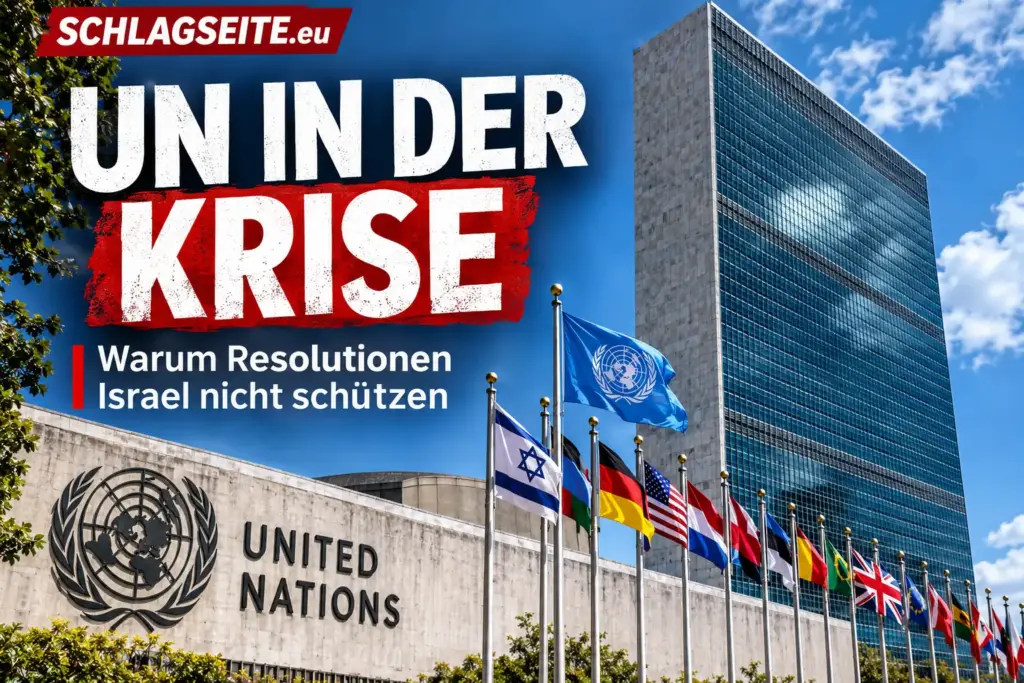
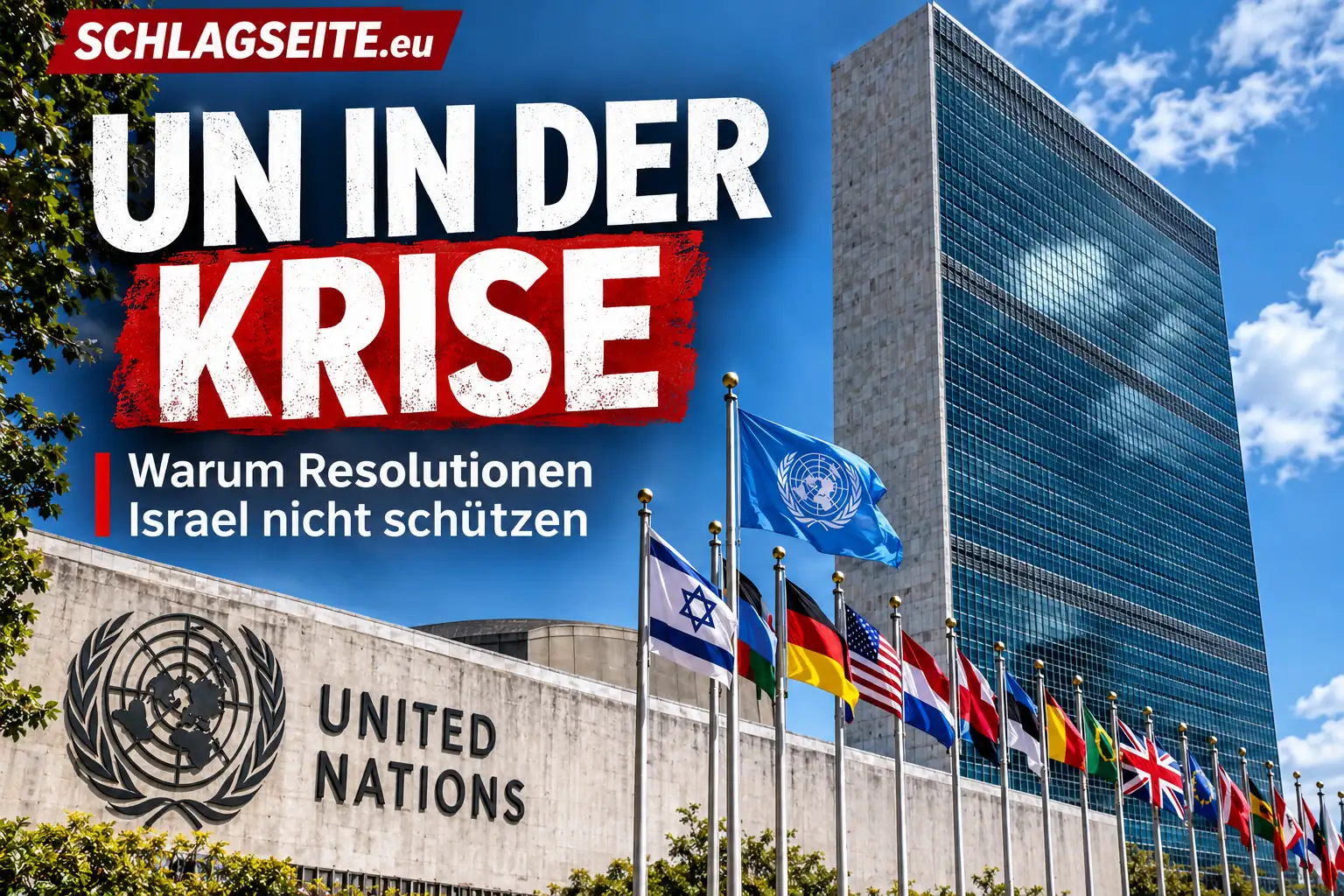
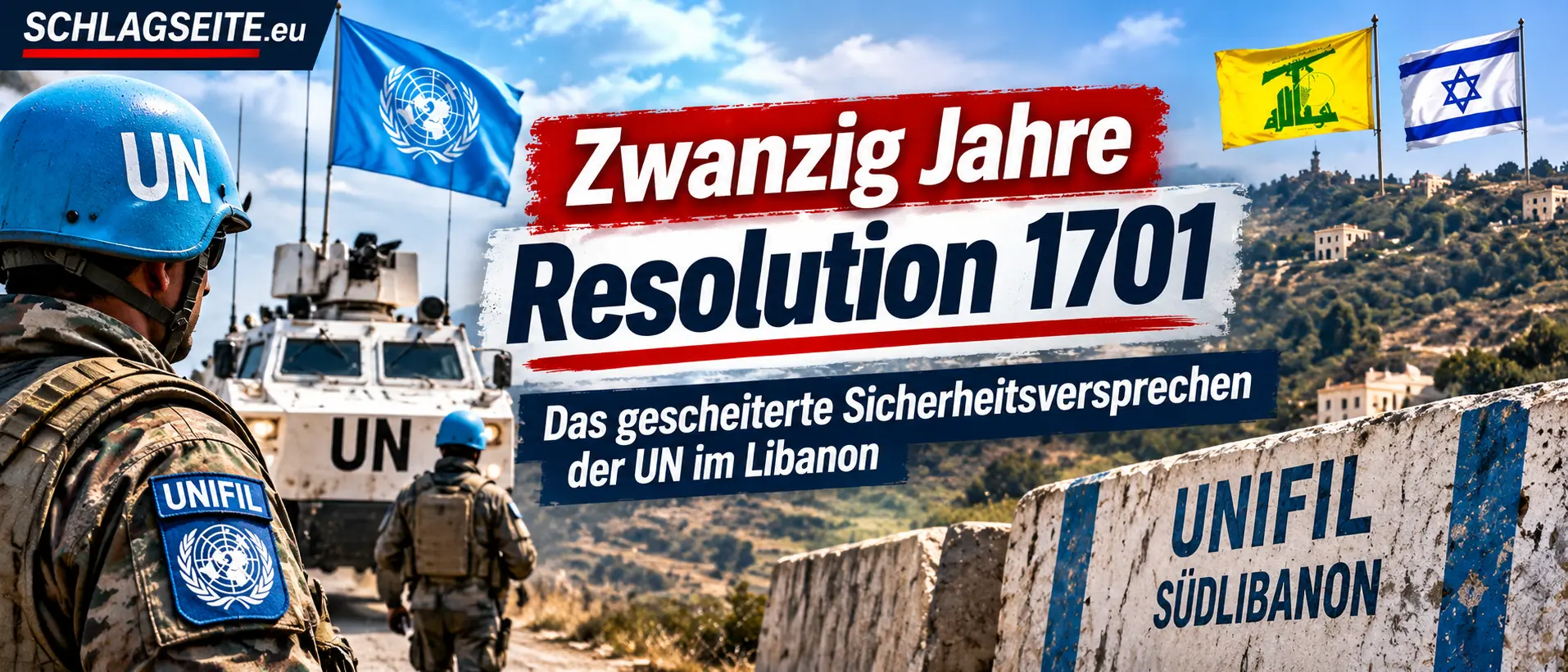
Since 2006, UN Security Council Resolution 1701 has been intended to prevent Hezbollah from using southern Lebanon as a military staging ground against Israel. Twenty years later, the terrorist organization remains armed, Israel has been attacked again, and the United Nations is preparing to withdraw its peacekeeping forces. For an organization whose purpose is to safeguard international peace, that is a rather sobering record.
The United Nations faces a fundamental problem. It can adopt resolutions, document violations and call on states to comply with international law. But when it comes to actually implementing its own decisions, there is often a lack of political will or the necessary capacity to act. This is particularly evident along Israel’s northern border, where a UN resolution that has been in place for two decades has failed to permanently eliminate the military threat posed by Hezbollah.
The organization itself is now under considerable pressure to reform. At the same time, southern Lebanon shows why international security guarantees are of little value when they are adopted but subsequently not implemented consistently.
Passende X-Beiträge
Aus dem SCHLAGSEITE X-ArchivUN Security Council Resolution 1701: Objective and provisions
On 11 August 2006, the UN Security Council unanimously adopted Resolution 1701. It was intended to end the fighting at the time between Israel and Hezbollah and create the conditions for a lasting ceasefire. A key component was the establishment of an area between the so-called Blue Line and the Litani River in which, apart from the forces of the Lebanese government and the UNIFIL mission, no armed units, weapons or military facilities were to be present.
The Blue Line is a withdrawal line established by the United Nations, not a definitively agreed state border. The Lebanese government was to extend its state control over the south of the country and advance the disarmament of armed groups. At the same time, the mandate of the UNIFIL mission, which had already existed since 1978, was significantly expanded. The peacekeepers were to monitor the cessation of hostilities and support the Lebanese army in implementing the security arrangements.
In fact, this clearly regulated what was supposed to happen. Hezbollah was not allowed to maintain an independent military infrastructure in southern Lebanon, and the Lebanese government was supposed to ensure that the state security forces took control.
That was precisely what failed to happen for many years. Hezbollah was able to maintain and expand its military structures, even though its armed presence in the designated area violated the security arrangements. The international community was aware of the problem without enforcing a lasting solution.
Hezbollah remained armed, the peacekeepers remained in place
Following Hamas’s terrorist attack on Israel on October 7, 2023, Hezbollah also began attacking Israel. In the north of the country, tens of thousands of people had to leave their homes. The threat was by no means new, but now it once again became clear what consequences the terrorist organization’s failure to disarm over many years had.
In June 2024, the German federal government explicitly stated to the Bundestag that the Lebanese state remained unable to independently take over securing its border with Israel. At the time, Israel demanded the full implementation of Resolution 1701 and Hezbollah’s withdrawal from the border so that around 80,000 evacuated Israelis could return to their places of residence. This can be read in the documentation of the German Bundestag dated June 7, 2024.
On November 26, 2024, a new agreement to cease hostilities between Israel and Lebanon was reached, entering into force the following day. It was intended to enable the full implementation of Resolution 1701. However, the military threat was not permanently eliminated as a result.
On March 2, 2026, Hezbollah resumed its attacks on Israel. One day later, UNIFIL confirmed in an official statementthat the terrorist organisation had fired rockets and missiles at Israel. The mission also documented Israeli air strikes and numerous other military incidents along the Blue Line.
This once again made clear that the international security order, which had been intended to prevent further fighting since 2006, had failed to achieve its essential objective. Hezbollah’s continued military presence in particular was one of the problems that Resolution 1701 was intended to eliminate.
UNIFIL: Mandate, powers and limitations in Lebanon
However, it would be factually incorrect to place all the responsibility for this on the UN peacekeepers on the ground. The soldiers were not tasked with disarming Lebanon in its entirety on their own authority or taking over the responsibilities of the Lebanese government. Their mandate included monitoring the ceasefire, supporting the Lebanese army and certain powers to secure their area of operations. The Lebanese authorities above all bore the political and state responsibility for the complete disarmament of Hezbollah.
That UNIFIL has indeed carried out tangible work is documented by the mission itself. Following the ceasefire in November 2024, its soldiers discovered more than 160 unauthorized weapons and ammunition depots within three months and reported them to the Lebanese army. The peacekeepers also performed important work on humanitarian tasks, the removal of explosive remnants of war, and coordination between the parties to the conflict. The information on the weapons discoveries comes from the official information of the UNIFIL mission.
The fundamental problem therefore lies not solely with the soldiers deployed, but with the political prerequisites of their mission. If an international peacekeeping force can document violations for years while the armed groups continue to remain active, the implementation of the security resolutions is evidently not working.
For Israel’s population, this is a very concrete question. Whether a threat persists because of a lack of authority, insufficient state control or political blockades ultimately does not change the fact that people must continue to expect rocket attacks.
2026: New agreement, security issues remain unresolved
Following the renewed military escalation in spring 2026, direct talks between Israel and Lebanon began under American mediation. On June 26, 2026, both countries, together with the United States, signed a trilateral framework agreement, which is intended to enable a gradual end to the military confrontations.
A central component is the disarmament of Hezbollah and other non-state armed groups, as well as expanding the control of the Lebanese Armed Forces. The withdrawal of Israeli troops from Lebanon is likewise linked to corresponding security arrangements.
Hezbollah rejects this political process. This leaves precisely the decisive issue unresolved: As long as an armed terrorist organisation can conduct military operations independently of the Lebanese government, the most important prerequisite for a permanently stable security order is missing.
The Security Council Report of November 2026 explicitly points out that Hezbollah’s continued rejection of disarmament prevents the Lebanese state from enforcing its exclusive sovereign authority over the entire national territory.
The new agreement is therefore an important diplomatic approach, but not yet a solution to the security problem. The decisive question will be whether the agreed measures are actually implemented and whether the Lebanese government can permanently enforce its control over armed groups.
UNIFIL’s operational mandate ends at the end of 2026
On 28 August 2025, the UN Security Council adopted Resolution 2790, extending the UNIFIL mandate for the final time until 31 December 2026. On that day, the mission is to end its operational mandate and subsequently withdraw its troops in stages over the course of one year.
This brings to an end a mission that has been stationed in southern Lebanon since 1978 and was significantly reinforced after the 2006 war. However, the agreed withdrawal raises the question of who will monitor compliance with the security agreements in the future and support the Lebanese army in carrying out its tasks.
UN Secretary-General António Guterres presented three possible models for a smaller international successor mission as early as June 2026. France, Italy and other countries support considerations for a new international presence. Israel and the United States, by contrast, view such a solution critically because the previous mission was unable to prevent Hezbollah’s military buildup. The differing positions are documented in an analysis by the British House of Commons from October 2026 .
The problem is obvious. A new mission with similar tasks would change little if the political enforcement of the security agreements also fails in the future. What matters is not how many international soldiers are stationed in southern Lebanon, but whether Hezbollah is actually disarmed and the Lebanese government can enforce its state authority.
Power politics decides in the Security Council
The weakness of the United Nations is not limited to Lebanon. The very structure of its most powerful body shows why even urgent decisions can fail.
In the UN Security Council, the United States, Russia, China, France and the United Kingdom have veto power. Any one of these five countries can use it to prevent key resolutions, even if the remaining members vote in favor. The basis for this is Article 27 of the UN Charter. Different voting rules apply to procedural matters.
This system dates back to the political order that emerged after the Second World War. It was intended to ensure that the great powers of the time remained part of the new international peace order. Today, it regularly leads national power interests to block joint decisions.
The UN can remind states of their obligations, identify violations of international law, and propose political measures. Whether these lead to concrete decisions, however, depends to a significant extent on whether the powerful member states support them.
For countries facing an immediate military threat, this is a serious problem. After all, international security agreements require more than a majority in a vote. They must also function when their implementation becomes politically inconvenient.
Reforms are not enough if the security problems remain
Even within the United Nations, there is now open discussion about fundamental changes. On May 26, 2026, UN Secretary-General António Guterres stated במסגרת the UN80 reform initiative, that the organization’s current way of working could not be maintained.
The reform proposals address, among other things, costs, administration, organizational duplication and a more efficient use of existing resources. This is certainly necessary in view of the UN’s financial problems. However, more efficient administrative procedures will neither disarm Hezbollah nor eliminate the political veto power on the Security Council.
A credible reform would therefore also have to address the point at which international security resolutions regularly reach their limits. Responsibilities for implementation must be clearly defined, and violations must be documented in a verifiable manner. Above all, what is needed is the political will of the member states to actually respond to the persistent disregard of binding security agreements.
In the case of Lebanon, this above all means that state control over armed groups must be established. As long as Hezbollah can conduct military operations independently of the Lebanese government, the security problem on Israel’s northern border cannot be resolved permanently.
Israel needs security, not more promises
Israel has repeatedly experienced that international statements do not eliminate a concrete military threat. The attacks since October 7, 2023, and the renewed escalation in spring 2026 have shown that the Jewish state cannot make its security dependent solely on international assurances.
Israel’s right to self-defense is not a political favor that other states can grant or deny at will. Article 51 of the UN Charter expressly recognizes the inherent right to individual and collective self-defense in the event of an armed attack. The concrete exercise of this right remains bound by the applicable rules of international law.
Anyone who demands that Israel comply with international law must also insist that terrorist organizations cease their attacks and that international security agreements be implemented. A state whose population is repeatedly attacked needs more than observers who subsequently document that yet another resolution has been violated.
The United Nations must be judged by whether its resolutions actually contribute to security. Resolution 1701 was intended to prevent Hezbollah from using southern Lebanon to launch attacks on Israel. Twenty years later, this goal has still not been achieved on a lasting basis. Anyone seeking to reform the UN should therefore finally ensure that its security resolutions are also implemented. Further resolutions alone will not protect Israel’s population.
ℹ️ Factual basis and primary sources for the article 📑
▶️ United Nations, Security Council:
Resolution 1701 of 11 August 2006
Legal basis for the security arrangements for southern Lebanon and the expanded UNIFIL mandate.
▶️ United Nations, Security Council:
Resolution 2790 of 28 August 2025
Latest extension of the operational UNIFIL mandate and arrangements for the subsequent withdrawal.
▶️ UNIFIL:
Mission tasks and implementation of Resolution 1701
Information on the mandate, cooperation with the Lebanese army, and documented weapons finds.
▶️ UNIFIL:
Statement of 3 March 2026
Documented Hezbollah rocket attacks and further military incidents.
▶️ German Bundestag:
Federal Government on the security situation in Lebanon, June 2024
Assessment of Lebanese border security and Israeli security demands.
▶️ U.S. Department of State:
Trilateral Framework Agreement of 26 June 2026
Political framework between the United States, Israel and Lebanon to end the fighting and disarm non-state armed groups.
▶️ Security Council Report:
Lebanon, Monthly Forecast November 2026
Current assessment of Resolution 1701, Hezbollah’s disarmament and the political talks.
▶️ British House of Commons, House of Commons Library:
Lebanon and the end of UNIFIL’s mandate in 2026
Background analysis of the planned withdrawal, possible successor missions and the positions of the states involved.
▶️ United Nations:
UN Security Council voting system
Regulations governing the veto power of the five permanent members.
▶️ United Nations:
UN80 reform initiative, May 26, 2026
Official statement on the UN Secretary-General’s reform proposals.
🔎 Spotted an error, criticism, or addition?
SCHLAGSEITE.eu stands for careful research and transparent corrections. Have you spotted a factual error, unclear wording, or broken link? Then send me your note. Please provide a verifiable source where possible.