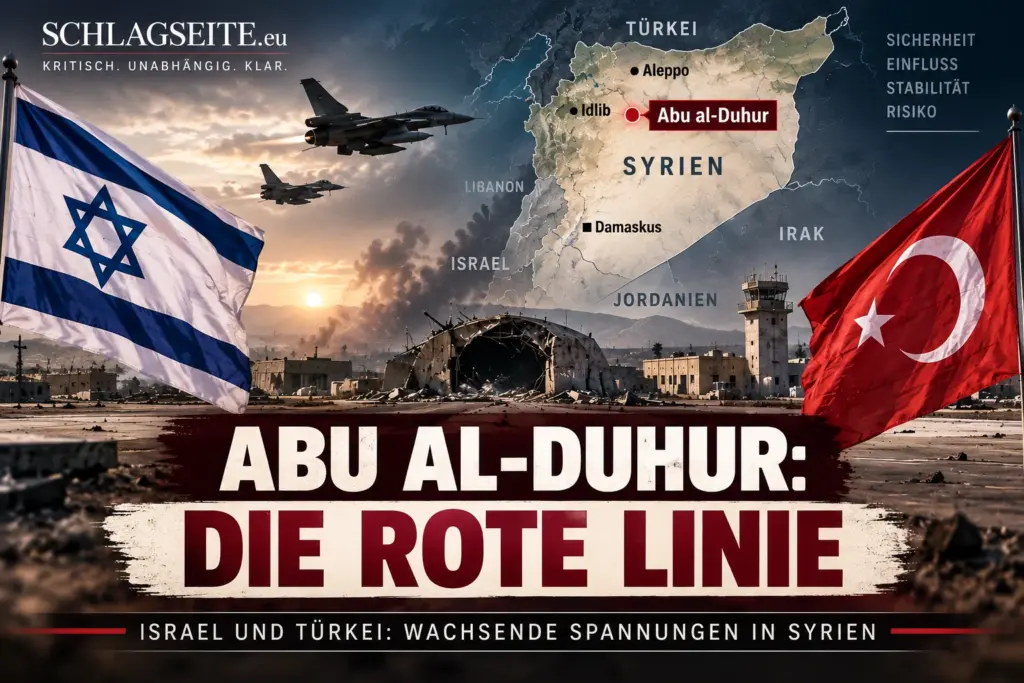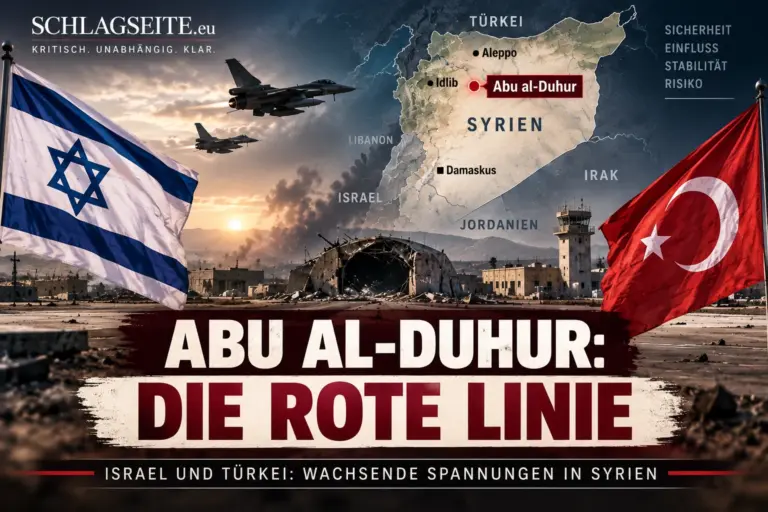

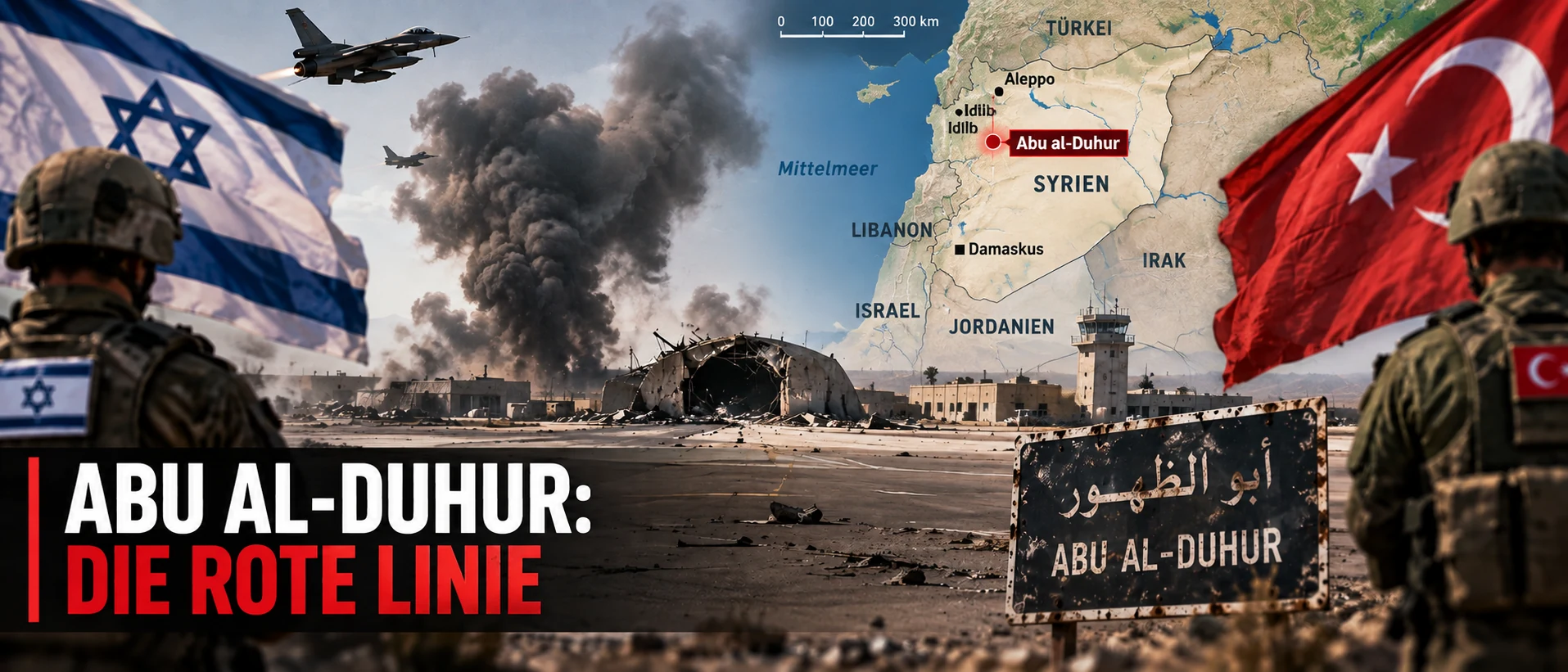
The Israeli airstrike on Abu al-Duhur in August showed how dangerously close Israel and Turkey are now coming to one another in Syria. A month later, the conflict has not disappeared. Ankara is expanding its cooperation with Damascus, Israel is drawing red lines over a Turkish military presence, and Washington is trying to prevent a direct confrontation.
When Turkish Foreign Minister Hakan Fidan traveled to Damascus on September 13, he brought an incident that had occurred nearly four weeks earlier back onto the political stage. At the joint press conference with Syria’s Foreign Minister Asaad Hassan al-Shaibani Fidan explicitly criticized Israel over the attack on the Abu al-Duhur airbase. In his account, Israel’s policy was obstructing the stabilization of Syria. This assessment is Ankara’s position, not a neutral statement of fact. The political conflict behind it is nevertheless real: How far can Turkey expand its military cooperation with Syria before Israel sees it as an immediate threat to its own security and freedom of operation?
An analysis by Table.Media published on September 16 accordingly describes Syria as a theater of competing spheres of influence. According to the analysis, Turkey and Israel are expanding their influence, while Russia remains present at two important military bases. For Israel and Turkey, this is no longer exclusively about political influence. Abu al-Duhur showed at the latest that their interests can also overlap militarily.
Passende X-Beiträge
Aus dem SCHLAGSEITE X-Archiv

Abu al-Duhur: Eight Attacks and a Message to Ankara
On August 18, Israel attacked the Abu al-Duhur airbase in northwestern Syria. Reuters reported, citing Syrian state media that eight Israeli airstrikes had hit the base’s runway and storage facilities. Another military source and a resident told Reuters that there had been no fatalities. Israel subsequently said Syria had been on the verge of allowing Turkish soldiers to be stationed at the site. Such a development, it said, would be considered a threat to Israeli security interests.
Ankara rejected this account. The Turkish government described Israel’s claims about its military intentions in Syria as untenable. Immediately after the attack, the Turkish Foreign Ministry had already sharply condemned the Israeli airstrikes and said that Israel was attacking Syrian infrastructure and military capabilities. Reuters also documented Turkey’s rejection of Israel’s justification the following day.
The crucial difference lies in the detail. A Turkish connection to Abu al-Duhur is documented. AP reported, citing Syrian government officials, that a Turkish military delegation had visited the base only hours before the Israeli attack. This does not automatically mean that a permanent Turkish deployment was imminent. That more far-reaching claim was part of Israel’s justification and is disputed by Ankara.

ℹ️ What is established about Abu al-Duhur?
Israel attacked the base on August 18. A Turkish military delegation had visited the site beforehand. Israel said that a Turkish troop deployment had been imminent. Ankara disputes this account. The Turkish visit and military cooperation with Syria are documented, while the specifically claimed imminent permanent deployment remains disputed.
Washington Saw the Risk of a Direct Escalation
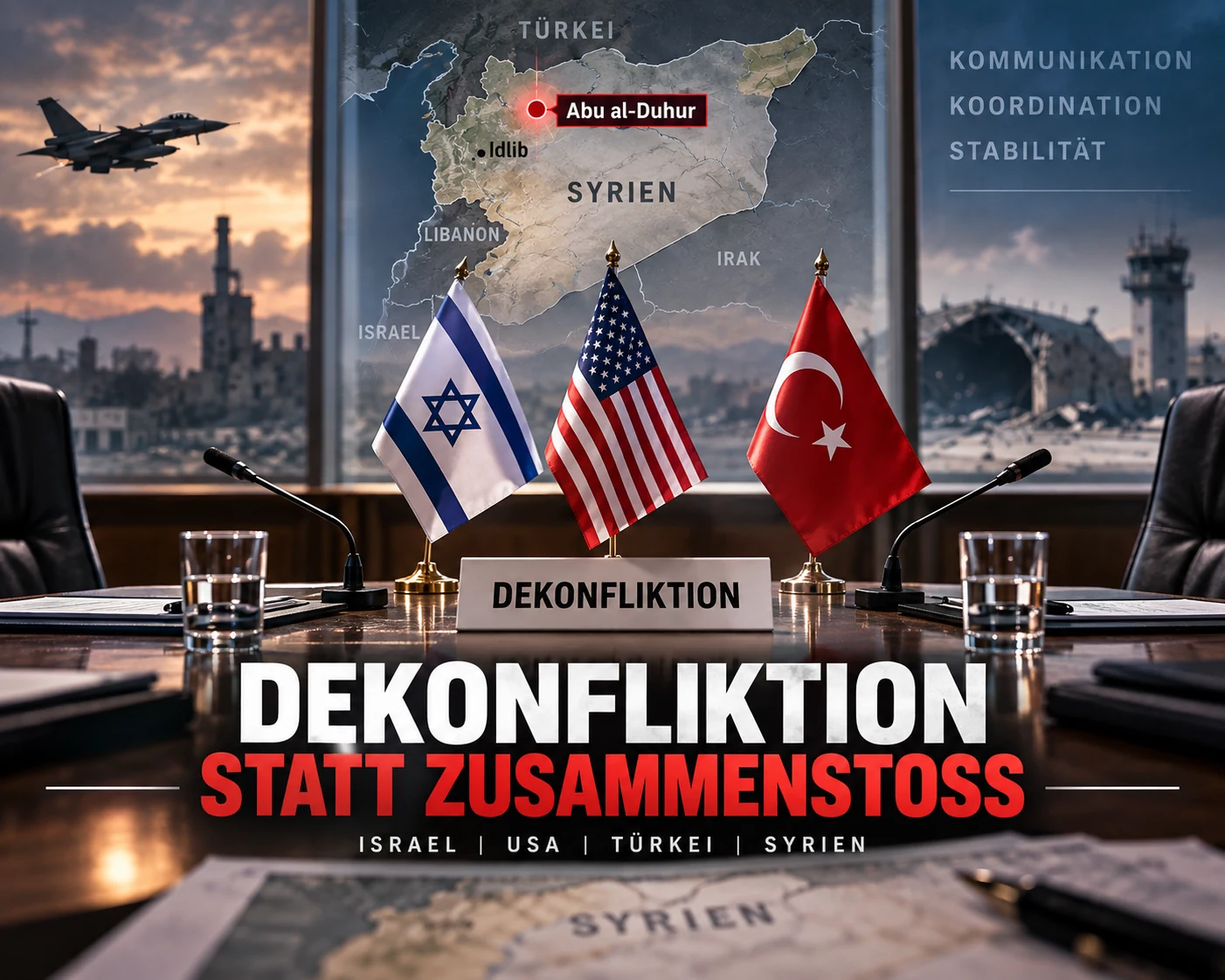
The seriousness with which the situation was assessed is shown by the US reaction. Tom Barrack, the US special envoy for Syria and American ambassador to Ankara, told Reuters that Turkey had not been informed before the Israeli attack. Ankara could have observed Israeli aircraft movements toward its border and could have responded militarily. Washington was therefore working on a deconfliction mechanism between Israel, Turkey, and Syria.
The warning of a possible Israeli-Turkish confrontation therefore did not come only from commentary or geopolitical speculation. After an actual Israeli attack, a senior American mediator described a concrete risk of escalation and the need for direct communication channels between the parties involved.
Such a mechanism is intended to prevent military movements from being misinterpreted and one side from responding to a perceived threat before it can be clarified what is actually happening. In airspace where several states are pursuing security interests simultaneously, precisely this lack of coordination can become the most dangerous factor.
Israel’s Red Line Concerns Military Capabilities
For Israel, the issue is not simply that Turkey has political influence in Syria. What matters is which military capabilities Ankara is building there and at which locations they become available. A Turkish presence with radar, air defense, or other military systems could change the conditions under which Israel has so far conducted operations in Syrian airspace.
That Israel had already raised this issue at the highest level before Abu al-Duhur is supported by further reporting. Reuters reported, that Mossad chief Roman Gofman had discussed the growing Turkish military presence with Syria’s Foreign Minister Asaad al-Shaibani on August 14. Four days later, Abu al-Duhur was attacked.
Israel had thus raised its concerns through diplomatic or intelligence channels before the airstrike. Which specific Turkish systems or units were actually intended for Abu al-Duhur has not been conclusively clarified publicly. Reports about possible radar or air-defense systems should therefore not be confused with an officially confirmed deployment.
Ankara Pursues a Different Syria Strategy
The Turkish perspective begins from a different point. Syria is Turkey’s direct neighbor, and Ankara regards stabilizing the country, building state structures, and cooperating with the new Syrian authorities as its own strategic interest. Among other things, Turkey is supporting Syria in training and rebuilding military capabilities.
During his visit on September 13, Fidan made clear that Ankara wants to deepen this cooperation further. At his press conference, he described strengthening Syria’s security and state structures as part of stabilizing the country and accused Israel of obstructing this process through its attacks. Fidan’s far-reaching political accusations against Israel remain explicitly the position of the Turkish foreign minister.
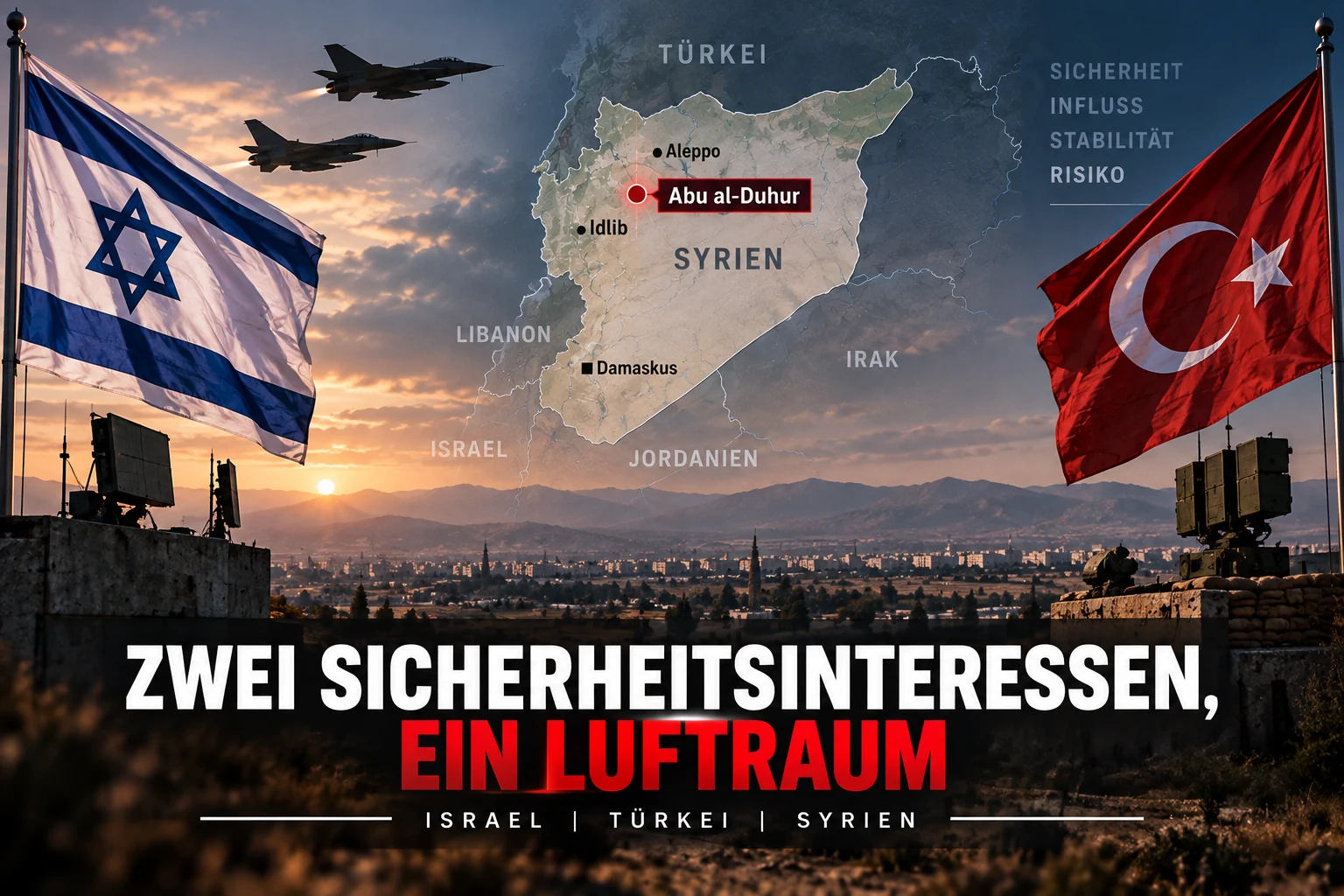
The fundamental conflict of interests can nevertheless be described clearly. Ankara wants a Syrian state that, with Turkish support, becomes more capable of acting militarily and institutionally again. Israel wants to prevent military structures from emerging that could endanger its own security or restrict its freedom of operation. Both states therefore speak of security and stability, but they associate these terms with different strategic prerequisites.
This development connects to a security issue already analyzed on SCHLAGSEITE. The analysis “Israel in Turkey’s War Calculus: Ankara Is Planning for the Worst” examines Ankara’s regional security planning and the growing overlap between Israeli and Turkish interests in Syria.
Syria Is Caught Between Several Centers of Power
This creates a difficult balancing act for Damascus. The Syrian government is seeking military and political support from Turkey, while also holding talks with Israel and relying on American mediation to prevent further escalations. The closer military cooperation with Ankara becomes, the greater the risk may be from Israel’s perspective that Turkish systems or soldiers will advance into areas that Jerusalem considers sensitive for its own security planning.
Russia has also not completely disappeared from Syria. The current analysis by Table.Media points out that Moscow continues its presence at two important military bases. This aspect is relevant to the broader power competition, but it does not change the immediate finding from Abu al-Duhur: The acute risk of a direct incident there arose between Israeli operations and a Turkish military presence.
Speaking of an imminent war between Israel and Turkey would not be supported by the current evidence. What is documented, however, is a real risk of military escalation. Israel attacked a site visited shortly beforehand by the Turkish military. According to the US special envoy, Ankara had not been given advance warning. Washington saw enough danger of unintended reactions to push for a deconfliction mechanism between Israel, Turkey, and Syria.
Political Rivalry Becomes Military Risk Management
Abu al-Duhur therefore marks more than another Israeli airstrike in Syria. The incident shows that Israeli and Turkish security interests are now overlapping at specific military sites. Israel has made clear that it regards certain forms of Turkish military presence as a security problem. At the same time, Ankara says it intends to continue expanding its cooperation with Damascus.
The fact that Fidan publicly highlighted the attack again on September 13 shows that the conflict has not been politically settled. On September 16, Table.Media placed this development in the broader competition for influence in Syria. Militarily, however, the decisive issue remains who is building troops, sensors, air defenses, or other capabilities at which sites. Such decisions alter not only political influence but also the actual room for maneuver available to the other actors.
The most dangerous point at present is not that Israel and Turkey are seeking a direct war. The risk arises because both states are increasingly pursuing their security interests in the same military space. The American effort to establish a deconfliction mechanism shows that this risk has long since become practical enough to make direct communication channels necessary.
Abu al-Duhur is therefore not evidence of an imminent Israeli-Turkish war. The attack is nevertheless a clear warning signal: In Syria, two regional powers are now confronting each other so directly that military coordination is no longer merely diplomatic precaution, but protection against unintended escalation.
ℹ️ Factual basis and primary sources for the article 📑
▶️ Turkish Foreign Ministry:
Joint press conference of Hakan Fidan and Asaad Hassan al-Shaibani, September 13, 2026
Primary source for Fidan’s current statements on Israel, Abu al-Duhur and Turkey’s Syria policy.
▶️ Turkish Ministry of Foreign Affairs:
On the attack on the Abu al-Duhur air base, August 18, 2026
Official Turkish reaction immediately after the Israeli airstrike.
▶️ Reuters:
Israeli airstrikes hit Syrian airbase, drawing Turkish condemnation
Report on eight Israeli airstrikes on the runway and storage facilities at Abu al-Duhur, as well as the immediate reactions.
▶️ Reuters:
US working on deconfliction mechanism among Turkey, Israel and Syria, US envoy says
Report on Tom Barrack’s statements regarding the specific escalation risk and the planned deconfliction mechanism.
▶️ Reuters:
Turkey slams Israel’s ‚untenable‘ claims after strikes on Syrian base
Documents Israel’s justification for the attack as well as Turkey’s rejection of this account.
▶️ Reuters:
Mossad chief, Syrian foreign minister discussed Turkish military deployments before strikes
Report on the conversation between Mossad chief Roman Gofman and Syria’s foreign minister before the attack on Abu al-Duhur.
▶️ Associated Press:
Israeli strikes hit an air base hours after a Turkish delegation visit, Syrian officials say
Independent confirmation of the visit by a Turkish military delegation to Abu al-Duhur shortly before the Israeli attack.
▶️ Table.Media:
Syria: How Turkey, Israel and Russia are fighting for influence
Analysis from September 16, 2026, on the broader power struggle in Syria. The source serves to provide current context and not as sole factual confirmation.
🔎 Found an error, criticism or addition?
SCHLAGSEITE.eu stands for careful research and transparent corrections. Have you discovered a factual error, unclear wording or a broken link? Then send me your tip. If possible, please provide a verifiable source.