
00:00 / –:–
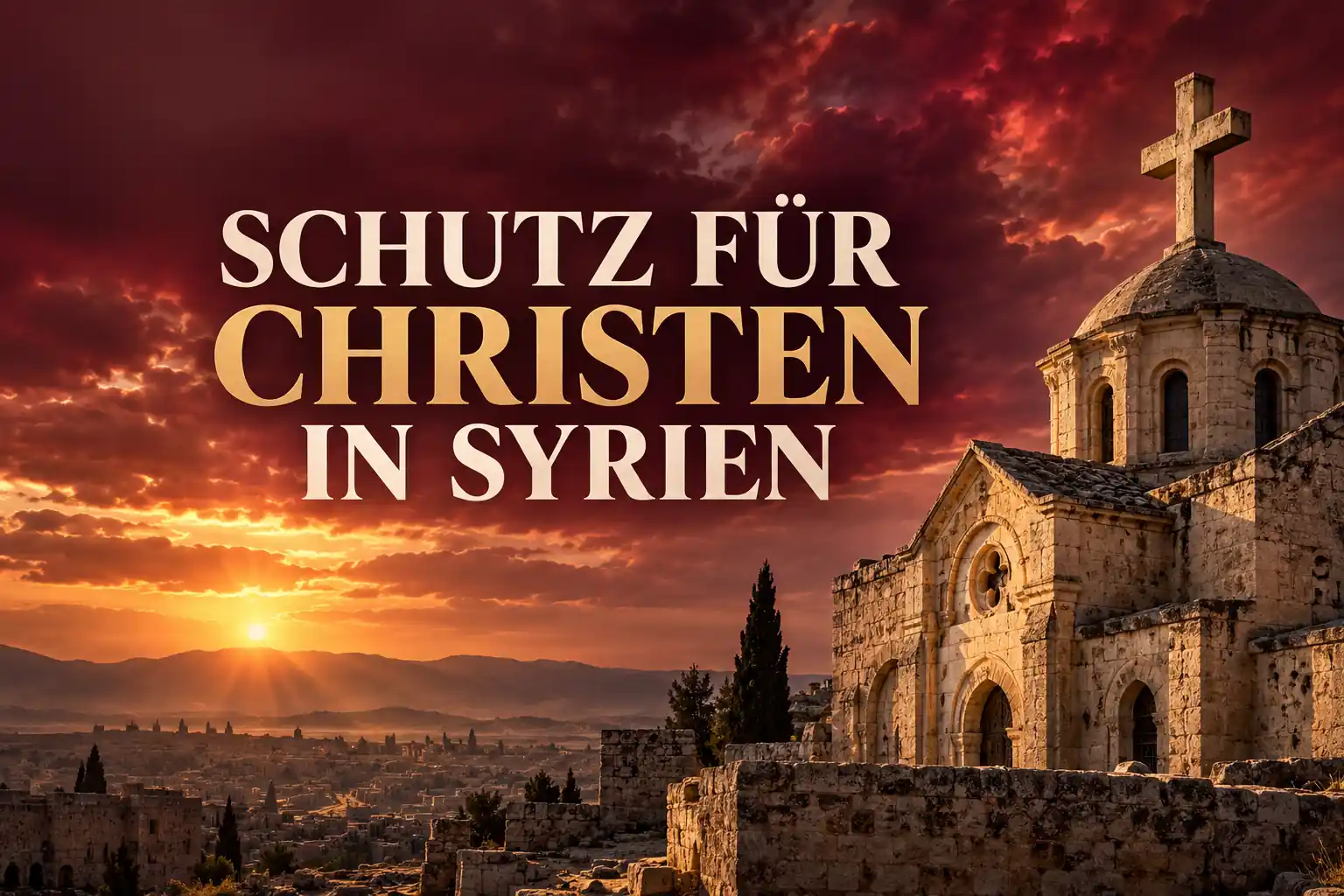
While King Abdullah II of Jordan has responded resolutely following the deadly attack on a church and announced measures against terrorist structures in Syria allegedly linked to the attack, we are addressing a clear question to Ahmad al-Sharaa: Why do Christians and other religious minorities in Syria continue to fear for their safety, while Islamist symbols are publicly visible and a consistent response to extremism is not sufficiently evident?
On October 23, 2026, nine people were killed in an attack during a memorial service at a church in Jordan. On October 26, according to Jordan, the Jordanian air force attacked alleged terrorist positions in southern Syria that were said to be connected to those responsible for the attack. The exact background and the attribution of the groups attacked have not yet been conclusively clarified.
We welcome King Abdullah II’s determination to take action against alleged terrorist structures and hold those responsible accountable. Our deepest sympathies go to the victims, their families, and all those affected.
But this response raises another question: Where is a comparable commitment to protecting religious minorities in Syria?
Ahmad al-Sharaa bears political responsibility
Ahmad al-Sharaa heads Syria’s transitional government. This makes him politically responsible for protecting religious minorities, combating extremist structures and prosecuting perpetrators of violence under criminal law.
His past makes this responsibility particularly urgent. Al-Sharaa previously led the al-Nusra Front, which was linked to al-Qaeda. Anyone who rises from such a past to the head of a state must prove through verifiable actions that he has genuinely broken with Islamist extremism.
The events in Syria show how urgent this proof is. In March 2025, numerous Alawites were killed during the violence on the Syrian coast. Human rights organizations documented mass killings and serious abuses by members of state security forces and allied armed groups.
In June 2025, the Mar Elias Church in Damascus was the target of a suicide attack in which more than two dozen people were killed and numerous others injured. The violence against Druze in summer 2025, particularly in Suweida province, also resulted in numerous deaths, displacement and serious human rights violations.
In October 2026, there was another attack on the predominantly Christian city of Al-Suqaylabiyah. Armed men fired on residential buildings; a priest was also narrowly missed. Once again, the question arises as to why Christians are not being effectively protected from such attacks.
We call on Syria’s transitional government to investigate these incidents comprehensively and independently, hold those responsible to account and transparently explain what protective measures are being taken. A new Syria must be judged by actions—not by international promises.
ISIS and al-Qaeda flags: We demand an explicit ban!
Reports of publicly visible ISIS and al-Qaeda symbols in Syria are reaching us from our Assyrian community. We have videos relating to this, and fellow Assyrians have also reported corresponding observations. The Syrian Observatory for Human Rights also reported in 2025 on ISIS symbols being publicly displayed and sold, and criticized what it considered the authorities’ inadequate response.
We ask Ahmad al-Sharaa directly: What specific steps has his government taken to prevent the public dissemination of such terrorist symbols?
Our demand is clear: We call for an explicit legal ban on the flags, emblems and propaganda symbols of ISIS and al-Qaeda, as well as consistent action against their public dissemination and support within the framework of due process.
These symbols are not harmless decoration. They stand for terror, religious persecution and the most serious crimes. They embody an ideology that declares people enemies because of their faith and combats religious diversity with violence. When state authorities tolerate their dissemination or fail to take effective action against it, this sends a dangerous signal to extremists and threatened minorities.
Ahmad al-Sharaa must counter this impression with clear legal regulations, consistent enforcement and verifiable results.
Christians in Syria need security—not just fine words
We continue to hear about the fear, intimidation and threats to which Christians in Syria are exposed. Our compatriots report an atmosphere in which people are asking themselves whether they can openly practise their faith and provide their children with a safe future.
Attacks whose backgrounds are not investigated transparently or in which those responsible are not held accountable reinforce mistrust. The authorities must clearly explain what investigations are under way and what measures are being taken to protect Christian communities.
We demand clear answers from Ahmad al-Sharaa: Why can Christian communities still not trust that they will be reliably protected? What concrete successes can his government point to in investigating attacks on Christians? What measures is it taking against Islamist networks and the intimidation of religious minorities? And when will ISIS and al-Qaida symbols be explicitly banned and their public dissemination consistently prevented?
It is not enough to present oneself internationally as a representative of a new Syria. Christians, Alawites, Druze and other minorities must actually be protected, and extremists must not stand above the law.
Our community knows the consequences of looking away
We Assyrians are an indigenous people of the Middle East. Our history is marked by persecution, displacement and the loss of our homeland. The terror of the so-called Islamic State inflicted immeasurable suffering on our community and other Christian peoples.
That is why we recognize the warning signs. We know what can happen when extremist ideologies gain ground, minorities are intimidated and state authorities fail to fulfill their duty to protect.
We will not remain silent merely because clear criticism of the Syrian leadership is politically inconvenient. The international community must judge Ahmad al-Sharaa by his actual actions. Political recognition, international talks and economic support must not lead to the security of religious minorities being overlooked.
Our shared demand
We welcome every serious measure against Islamist terrorism and thank King Abdullah II for his clear stance on protecting the people of Jordan.
At the same time, we call on Ahmad al-Sharaa to take unequivocal action against ISIS, al-Qaeda, religious intimidation and every form of extremist violence. This includes a legal ban on their flags and symbols, effective enforcement of this ban, and an independent investigation into attacks on Christians and other minorities.
Ahmad al-Sharaa cannot undo his past. But through his actions today, he can prove whether he has truly broken with Islamist extremism. As long as this proof is still lacking and religious minorities continue to fear for their safety, we will hold his government accountable and publicly name failures.
We are not asking for privileges. We are demanding security, the rule of law, freedom of religion and equal rights for all people in Syria.
Visibility is survival. No future for Islamist terrorism. Protection for Syria’s Christians.
Charli Kanoun
Chairman
Assyrian Cultural Association e. V. Saarlouis
Majed Bahi
Chairman
Assyrian Autonomy Movement e. V. Germany
Joint press statement by both organizations