

00:00 / –:–
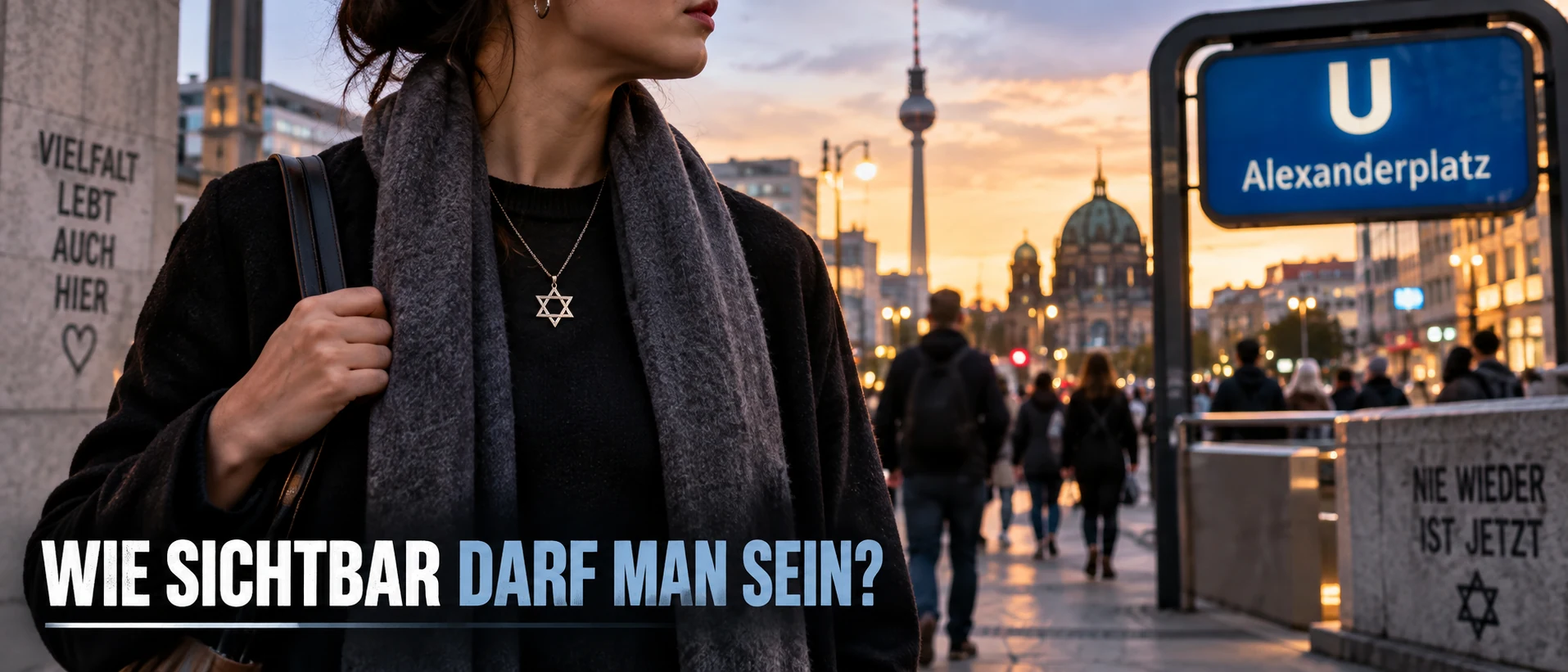
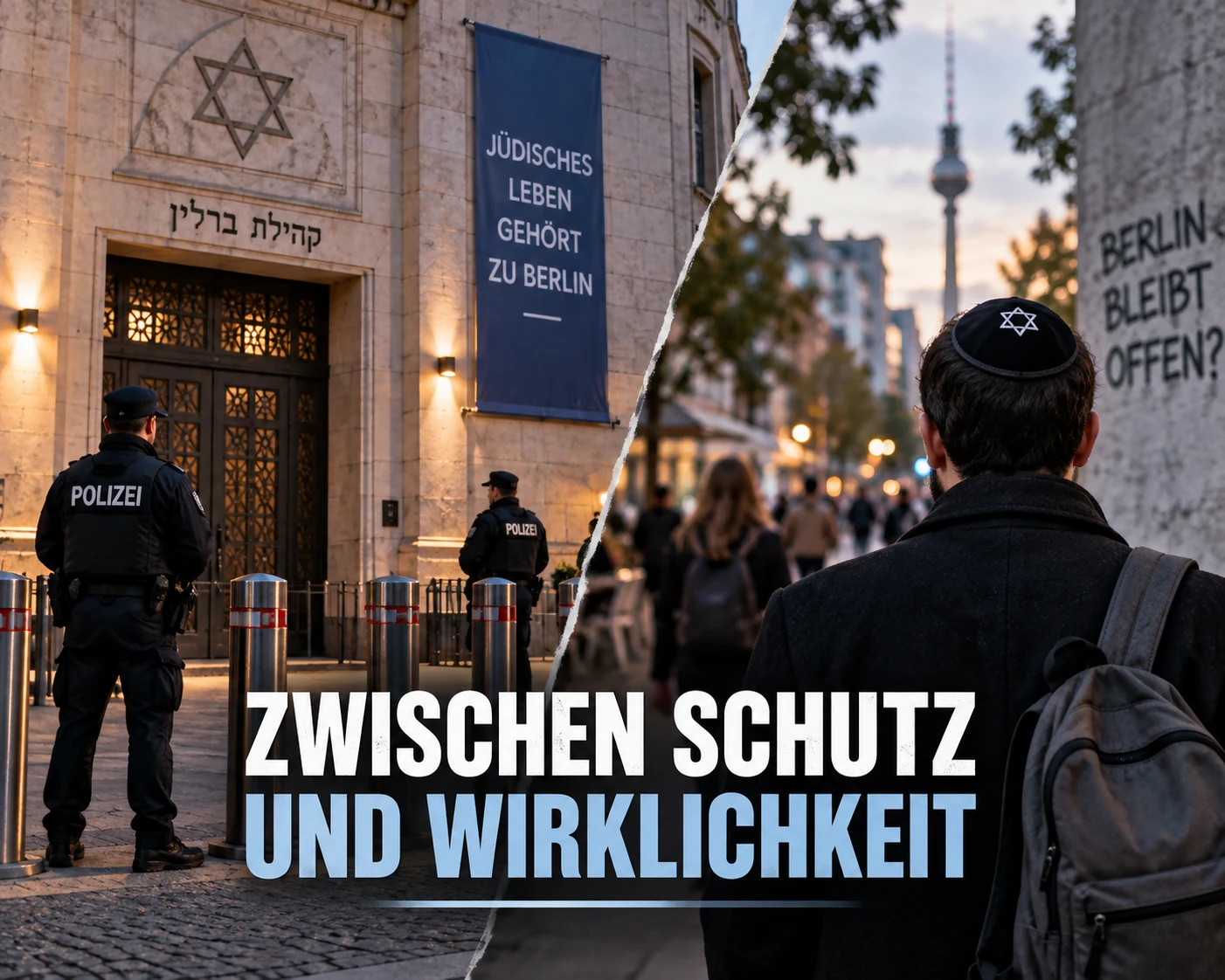
Berlin protects synagogues, Jewish schools and events with police and security measures. At the same time, Jews are considering whether to wear a Star of David openly, speak Hebrew or show their connection to Israel. This gap between institutional protection and personal freedom has now become one of the crucial questions facing Jewish life in the capital.
In 2025, the Berlin police registered 2,268 antisemitic crimes. That was 443 more cases than in the previous year. The Interior Administration attributes the increase primarily to more consistent recording of reports. During the same period, the Berlin Research and Information Center for Antisemitism documented 2,197 antisemitic incidents, an average of around six per day. Both figures come from different recording systems and must not be added together. However, they describe the same social problem from different perspectives.
Wearing a Star of David openly: When Jewish visibility becomes a risk
RIAS documents not only figures but also the consequences for everyday life. Jews and Israelis experience hostility on the streets, on public transport, at universities and in other places of daily life. The reporting office explicitly describes effects on the visibility of Jewish life.
How concrete this question can become was demonstrated by an attack in Berlin-Mitte in September 2026. According to the Berlin police a 43-year-old woman was subjected to antisemitic insults and attacked because she was wearing a Star of David. She was injured and required medical treatment. The state security division took over the investigation.
The woman wore the Star of David as a sign of solidarity with Jews. Jewish organizations and initiatives responded to the attack with the campaign “Berlin Wears the Star of David”. An individual attack thus became a fundamental question: How taken for granted can Jewish visibility still be in this city?
Passende X-Beiträge
Aus dem SCHLAGSEITE X-ArchivBerlin election intensifies debate over Jewish life and antisemitism
This is precisely the question also raised by lawyer Michail Kantor in an opinion piece published by Israelnetz on 22 September. Kantor describes how Jewish Berliners’ sense of belonging changes as soon as Jewish identity or a connection to Israel becomes visible.
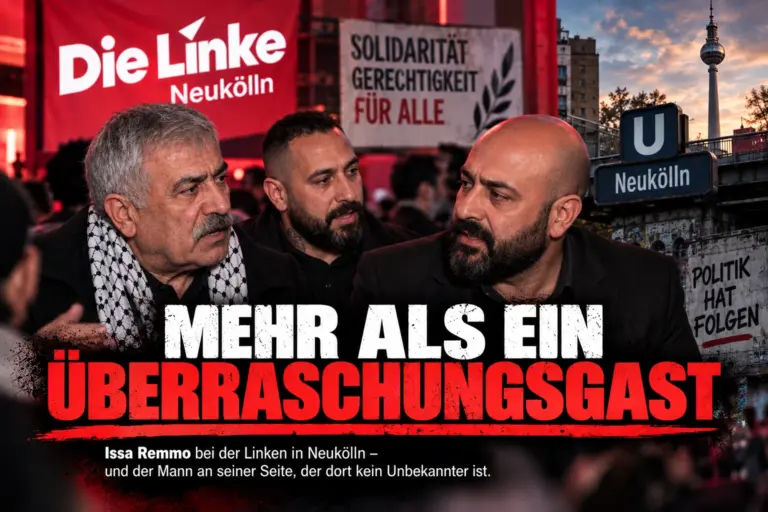
One political backdrop is the Berlin House of Representatives election on 20 September. The Left became the strongest force, with 25.7 percent of the second votes. This, of course, does not allow any antisemitic attitude to be inferred among its voters. However, the election further intensified an already existing debate over Israel, anti-Zionism and the party’s handling of antisemitic boundary crossings.
Top candidate Elif Eralp has publicly taken a position against antisemitism. As early as May, she presented a five-point plan to protect Jewish life . It explicitly calls for Jewish life in Berlin to be protected and made visible.
Alongside this are incidents within the party’s environment that are now the subject of open dispute. After the election victory, Central Council President Josef Schuster said that Berlin’s Left had repeatedly attracted attention during the campaign through antisemitic boundary crossings and warned against a coalition led by the party. Heidi Reichinnek, chair of the parliamentary group in the Bundestag, rejected accusations of antisemitism against her party and described antisemitism as a red line. The dispute was also reported by Deutschlandfunk on 22 September.
Antisemitism does not fit into a simple box
It would be wrong, however, to attribute Berlin’s problem to one political direction alone. Police statistics assign antisemitic crimes to different categories of phenomena. Of the 2,268 registered cases, 1,485 fell into the category of “foreign ideology.” This alone shows that Berlin’s problem cannot seriously be reduced to a single political milieu.
RIAS, in turn, documents numerous antisemitic incidents connected with anti-Israel activism. According to the reporting office, more than one-fifth of the Berlin incidents recorded by RIAS in 2025 contained “Zionism” as an antisemitic enemy image. This reveals a crucial distinction: Criticism of an Israeli government is a political dispute. Turning people into an enemy image because of an actual or presumed connection to Israel is something else.
One can criticize Benjamin Netanyahu, debate Israeli military operations or reject government decisions. But when a Star of David, Hebrew or an affirmation of Israel’s existence is enough for people to be subjected to hostility, this is no longer merely about politics in Jerusalem.
Belonging means more than police protection
Germany protects Jewish institutions for good reason. Police presence outside synagogues, security checks and structural protective measures have been part of everyday life for many institutions for years. This protection is necessary. At the same time, its very necessity already says something about the reality of Jewish life.
Belonging means more than guarded buildings. It also means being able to wear a Star of David, speak Hebrew or show one’s connection to Israel without first having to assess one’s personal risk.
The decisive question is therefore not which party publishes the most convincing statement against antisemitism. What matters is whether Jewish life in Berlin can actually be visible as a matter of course. If even the Star of David, a kippah or Hebrew on the U-Bahn becomes a security issue, this goal has not been achieved.
ℹ️ Factual basis and primary sources for the article 📑
▶️ Berlin police:
Antisemitic attack of 11 September 2026
Police information on the attack on a woman visibly wearing a Star of David.
▶️ Senate Department for the Interior and Sport:
Politically motivated crime in 2025
Official Berlin figures on antisemitically motivated crimes and their classification.
▶️ RIAS Berlin:
Antisemitic incidents in Berlin in 2025
Documentation of 2,197 antisemitic incidents and their effects on Jewish life and Jewish visibility.
▶️ Tempelhof-Schöneberg District Office:
Berlin Wears the Star of David
Information on the solidarity campaign following the antisemitic attack in September 2026.
▶️ The Left Berlin:
Strengthening and protecting Jewish life in Berlin
Elif Eralp’s five-point plan of 8 May 2026.
▶️ Deutschlandfunk:
The struggle with accusations of antisemitism
Contextualization of the current dispute over antisemitism, Israel and Berlin’s Left after the election.
▶️ Israelnetz:
When Berlin no longer feels like home
The starting point of the article: personal opinion piece by Michail Kantor dated 22 September 2026.
🔎 Spotted an error, criticism or addition?
SCHLAGSEITE.eu stands for careful research and transparent corrections. Have you spotted a factual error, unclear wording or a broken link? Then send me your note. If possible, please provide a verifiable source.