
00:00 / –:–
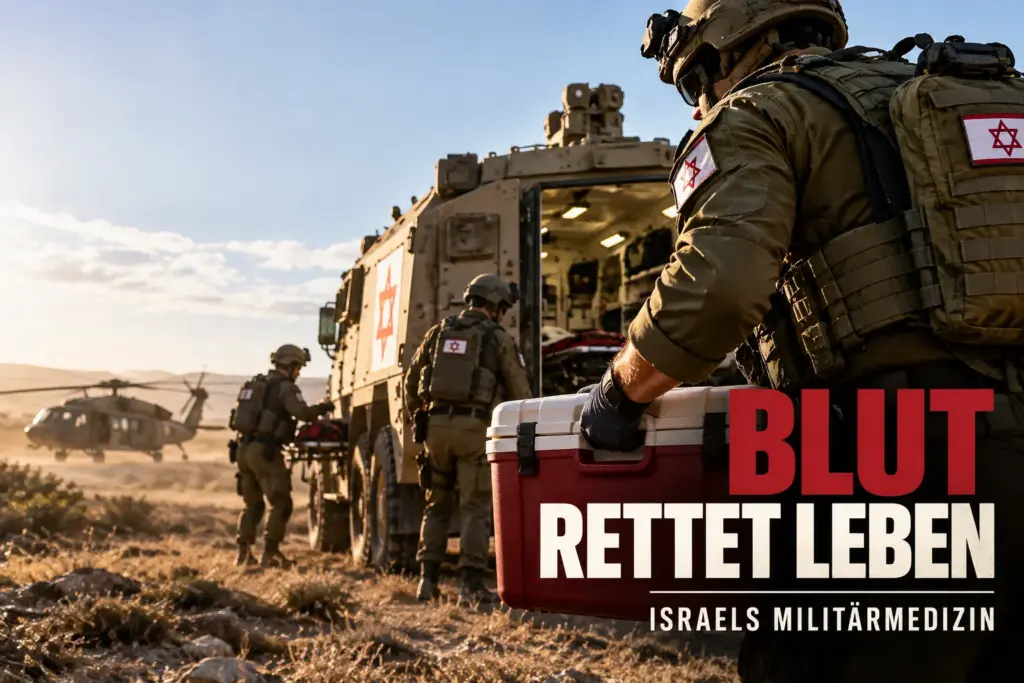
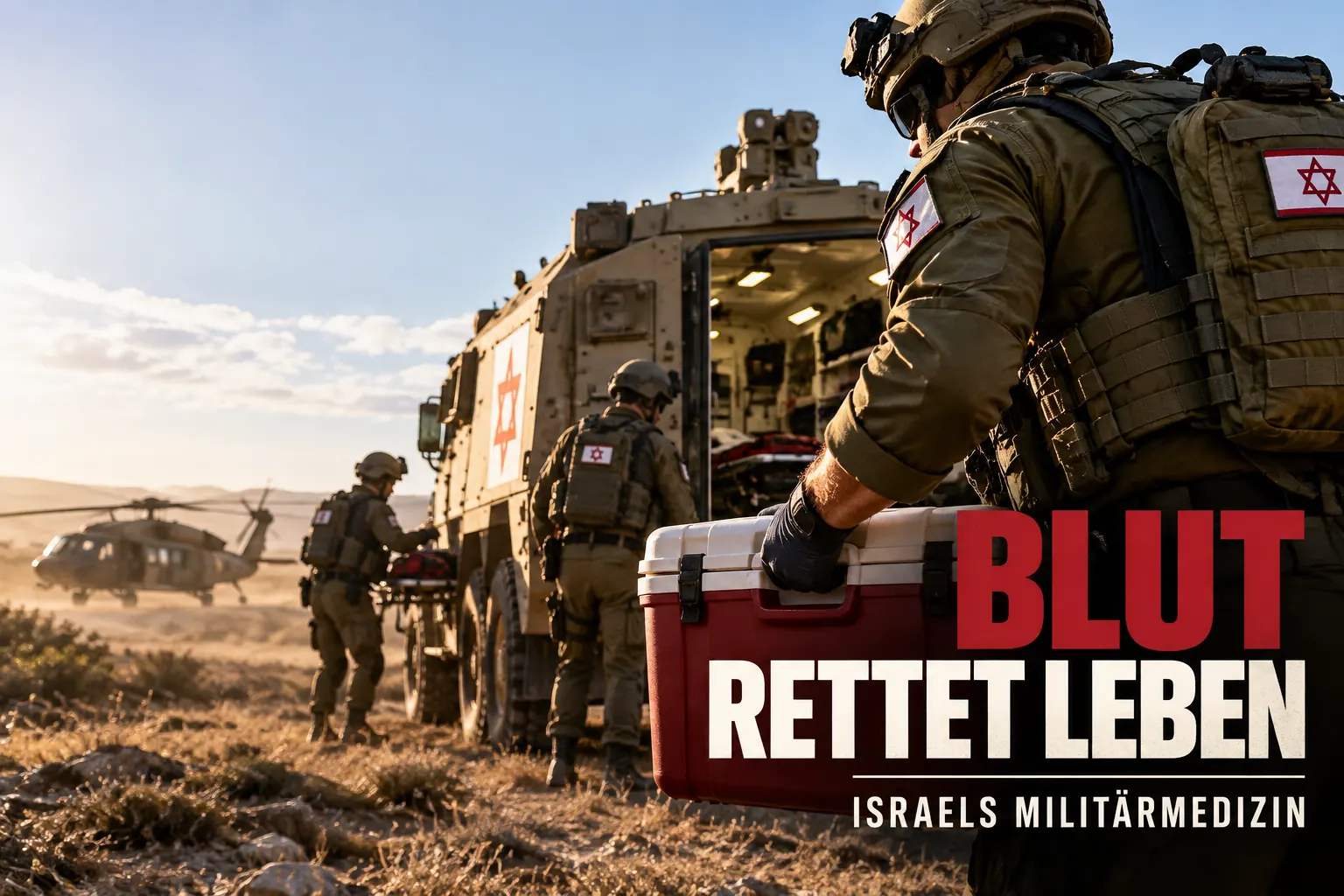
Israel has fundamentally changed its military casualty care in recent years. Blood transfusions are no longer exclusively a matter for hospitals and rescue helicopters. Specially equipped medical teams can now provide severely wounded soldiers with whole blood close to the battlefield. The trade magazine European Security & Technology is now reporting on inquiries from European armed forces to the IDF. Scientific studies also show why this procedure is of interest to Europe’s military medicine.
For a severely wounded soldier, how quickly he receives medical care can be decisive. Particularly in cases of life-threatening blood loss, it is not enough to request a rescue helicopter as quickly as possible. The necessary treatment may have to begin before the wounded soldier can even be evacuated.
This is precisely where Israel has focused its efforts. For years, the medical corps of the Israel Defense Forces (IDF) has been working to bring high-quality medical care as close as possible to the combat units. The war following the Hamas massacre of October 7, 2023, significantly accelerated this development. On October 20, 2026, Europäische Sicherheit & Technik, several European armed forces had inquired directly with the IDF about whole-blood transfusions. The report does not name specific countries or procurement plans.
Israel has transformed its military medicine step by step
The transition began long before the current war. As early as 2012, the Israeli military medical service introduced freeze-dried blood plasma for treating severely wounded soldiers. Since 2018, specially prepared whole blood has been used in military air rescue. From 2021 onward, it was also used in selected ground-based rescue vehicles.
After October 7, 2023, the IDF took a decisive step further. Armored medical vehicles at brigade level were equipped with whole-blood units. This enables appropriately trained medical teams to begin a transfusion near the site of injury.
A 2024-published study by Almog and co-authors in the specialist journal Transfusion documents this development. The authors, including physicians from the Israeli Medical Corps, describe both the medical possibilities and the challenges involved in providing care for the troops.
The approach is remarkably simple: Instead of generally bringing the wounded person to the blood product first, Israel brings the blood product closer to the wounded person.
Why whole blood offers advantages in combat
In cases of severe bleeding, the human body does not need fluids alone. It needs red blood cells to transport oxygen, blood plasma, and components necessary for proper blood clotting.
In hospitals, these components are often provided separately. This enables targeted treatment, but requires different products and appropriate storage conditions.
Whole blood contains several of these vital components in a single unit. Especially outside a hospital, this can significantly simplify care.
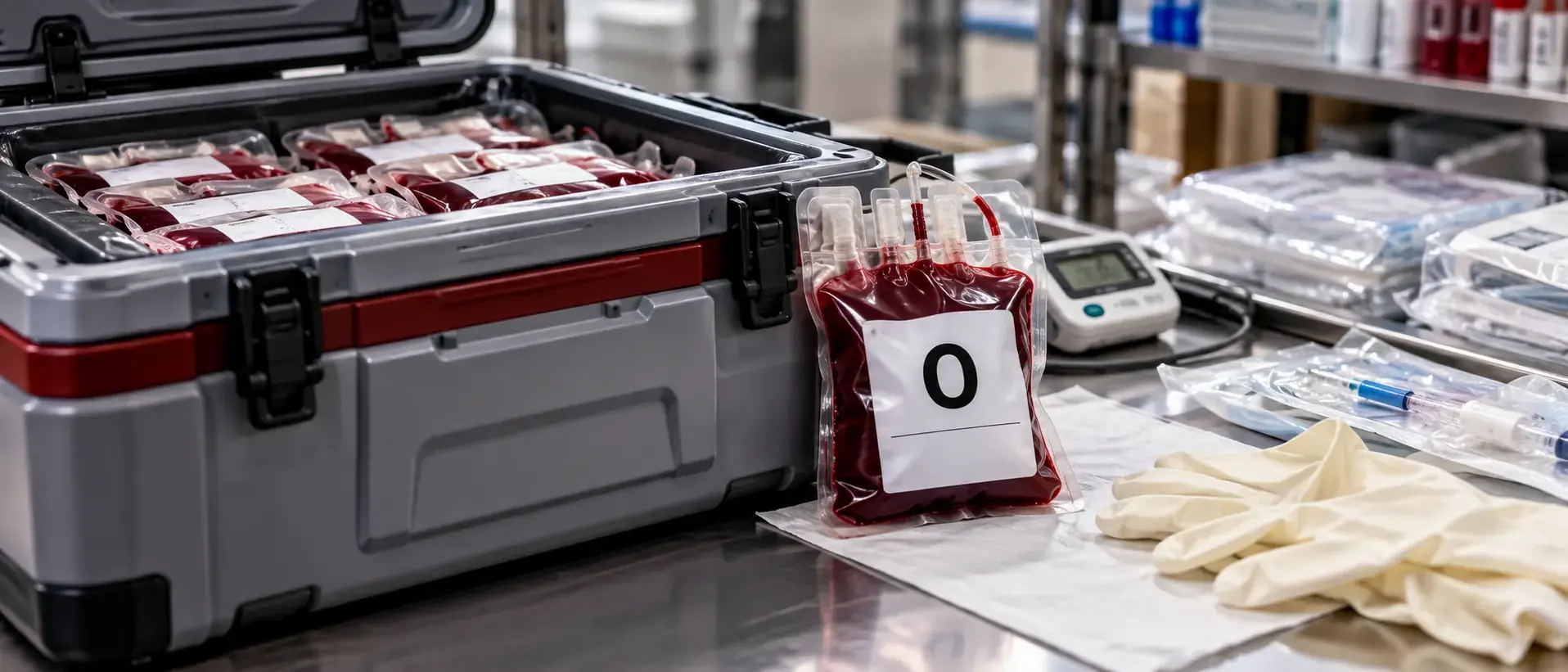
For this purpose, Israel uses what is known as low-titer O whole blood. This is carefully tested group O blood with particularly low concentrations of certain antibodies. Under defined medical conditions, it can be used for the emergency treatment of patients with different blood groups.
The practical challenge lies in making it available. The blood must be tested, refrigerated, transported, and kept reliably available. Israel has therefore, among other things, integrated suitable cooling systems into medical emergency vehicles.
This is underpinned by extensive civilian and military cooperation. Israel’s emergency medical service, Magen David Adom, operates the national blood supply and provides blood products both to hospitals and to the armed forces.
Passende X-Beiträge
Aus dem SCHLAGSEITE X-ArchivWhole-blood use and mortality figures in comparison
An analysis published online at the end of 2024 by Katzman and co-authors in Military Medicine documents more than 200 units of whole blood administered directly at or near the site of injury during the first ten months of the war. The study appeared in the print journal in 2025.
The development of military mortality figures also deserves attention.
For the first ten months of Israel’s ground operation in the Gaza Strip, the authors cite a so-called case fatality rate of 6.7 percent. This metric describes the proportion of those killed among the total number of those killed and wounded in the respective combat zone.
By comparison: A rate of 14.8 percent is cited for the 2006 Lebanon War. In the 2014 Gaza War, it was 9.2 percent.
A later April 2026 U.S. Army analysis gives a figure of 7.1 percent for its data set. This figure belongs to a different analysis status and does not replace the 6.7 percent reported in the academic study.
The comparison of injury severity is particularly striking: In the Israeli analysis, around 8 percent of those injured in 2006 had an Injury Severity Score above 15. For the period examined, 2023/24, this proportion was 23 percent. The proportion of severe injuries was therefore significantly higher.
The authors cite several reasons for the lower case-fatality rate: early blood transfusions, forward-deployed medical teams, consistent hemorrhage control and rapid evacuation. The US Army report also describes a reduction in the time to advanced medical care, from 10 to 25 minutes previously to, in some cases, 0 to 4 minutes. This refers to the availability of qualified assistance, not to complete treatment or arrival at the hospital.
The figures come from different wars and observation periods. The share of the improvement attributable solely to Vollblut cannot be calculated from them. However, the combination of measures shows how fundamentally Israel has transformed its military care for the wounded.
The US Army is also studying Israel’s experiences
Interest in Israeli procedures has long been confined to neither scientific journals nor specialist publications.
On April 30, 2026, the US Army published a report entitled Israeli Defense Force Medical Lessons Learned—a 78-page assessment of Israeli military medicine.
The American authors examined which lessons from the war are relevant to preparing their own armed forces for large-scale combat operations.
A key focus is the early treatment of life-threatening bleeding. The U.S. Army emphasizes that Israel has brought whole blood significantly closer to combat units and has adapted its medical logistics accordingly.
The study also examines cooperation between civilian and military institutions, digital patient documentation, and the organization of medical evacuations.
The American conclusion is clear: Medical readiness depends not only on well-trained doctors and medics. What is decisive is whether the entire care system functions under difficult conditions and can quickly adapt to new requirements.
Israel’s experience is thus becoming a concrete subject of examination in American military planning.
France is already changing its transfusion doctrine
In Europe, too, the early provision of whole blood is becoming increasingly important.
On April 10, 2026, French military physicians published in the specialist journal Critical Care a revised transfusion doctrine for large-scale combat operations.
France itself has many years of experience with blood transfusions in military operations. The new doctrine takes this experience into account, along with international research and the changing security situation in Europe.
In the future, refrigerated whole blood is to play a central role, particularly in forward medical treatment facilities. Appropriately trained nursing staff are to be able to independently initiate certain transfusions under clearly defined conditions.
To this end, the concept provides for adapted logistics, special training measures and strictly regulated medical monitoring.
The French approach shows what is at stake: armed forces are preparing to care for wounded personnel even when rapid transport to a large hospital is not possible.
Israel provides important practical experience from an intensive war deployment. The French specialist publication also examines the approaches taken by the United Kingdom, Norway and Sweden. Germany and Poland are considered less advanced in introducing corresponding procedures. France is continuing to develop its medical support system on the basis of its own experience and international findings.
Military casualty care: Lessons for the Bundeswehr
This raises a fundamental question for the Bundeswehr and other European armed forces: How well does the care of severely wounded soldiers function when transport routes are disrupted, several casualties must be treated simultaneously, or the next suitable hospital cannot be reached quickly?
An effective military healthcare system requires more than vehicles, medication, and medical personnel.
It needs sufficient blood products, secure storage conditions, suitable transport options, clear responsibilities, and medical teams that remain capable of action even under heavy strain.
The Israeli experience in particular shows how important the link between military operational medicine and civilian healthcare is. After all, blood units must first be collected, tested, and processed before they can help in the field.
The Israeli data therefore constitute practical experience, not a ready-made blueprint for the Bundeswehr. One must always examine one’s own medical standards, training and supply chains.
The development is also of interest to civilian emergency medical services. Serious traffic accidents, major disasters and catastrophes present medical responders with comparable problems when patients suffering life-threatening blood loss cannot reach a hospital immediately.
The question of earlier blood provision therefore concerns not only soldiers.
Israel provides experience that Europe should take seriously
Israel’s military medicine did not change overnight. Today’s procedures are the result of years of research, practical experience and organisational adjustments. The war following 7 October 2023 has shown how important these preparations are.
The experiences are now being examined in international specialist journals, evaluated by the U.S. Army, and reflected in a European debate on medical care in war.
This is not about transferring an Israeli system unchanged to other armed forces. What matters is which procedures work under the respective conditions and how they can be sensibly integrated into existing medical structures.
Israel has shown that modern military medicine does not begin only behind the front lines. Anyone who sends soldiers into dangerous operations must also ensure that life-saving care is available as early as possible. Preparation for this begins long before the first casualty.
ℹ️ Factual basis and primary sources for the article 📑
▶️ Almog et al., Transfusion (2024)
Open original source
Introduction of low-titer O whole blood in armored medical vehicles at brigade level.
▶️ Katzman et al., Military Medicine (2024/2025)
Open original source
Whole blood administration, early medical care, mortality and injury severity.
▶️ US Army, April 30, 2026
Open original source
78-page military medical analysis with a later data cutoff.
▶️ Pons et al., Critical Care (2026)
Open original source
New French transfusion doctrine and comparison of international models.
▶️ European Security & Technology, October 20, 2026
Open original source
Report on inquiries from unnamed European armed forces to the IDF.
🔎 Spotted an error, criticism or addition?
SCHLAGSEITE.eu stands for meticulous research and transparent corrections. Have you discovered a factual error, unclear wording or a broken link? Then send me your note. If possible, please provide a verifiable source.