00:00 / –:–
Table of contents 📑
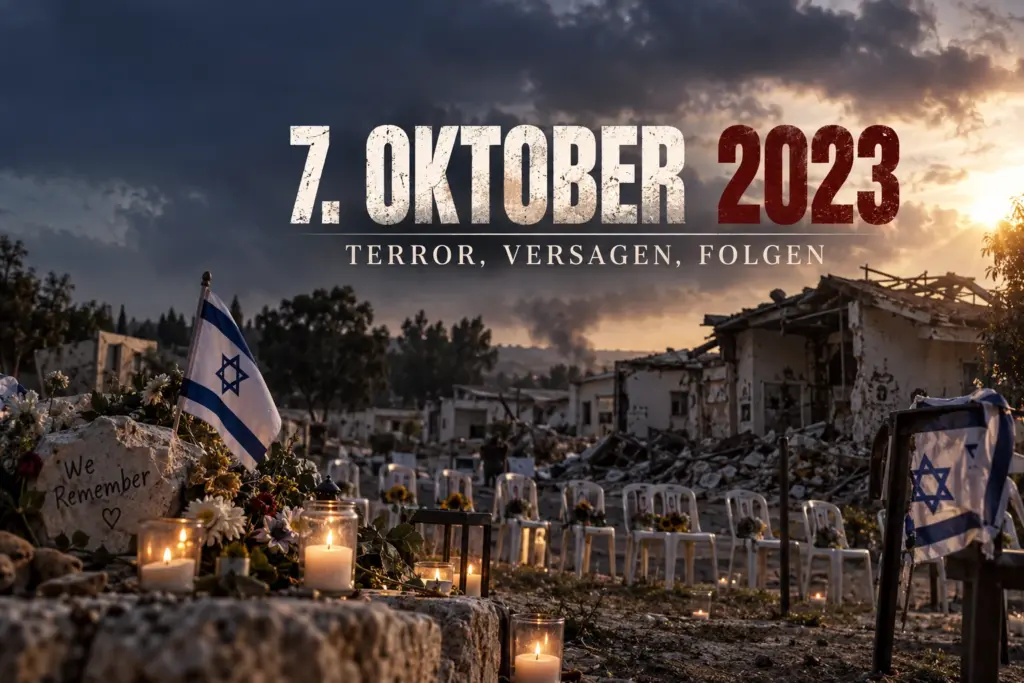
That morning, the protection for which the Jewish state was built collapsed. Israel was supposed to be a place where Jews could defend themselves and not depend on others to protect them. On October 7, 2023, Hamas and other armed Palestinian groups breached that protection. They raided communities, hunted festivalgoers, murdered civilians and abducted people to Gaza.
Around 1,200 people were killed, and 251 people were abducted to Gaza. Later investigations show that the deliberate killing of civilians and the taking of hostages were among the central objectives of the planned operation. October 7 thus shook not only Israel’s security, but also a cornerstone of its self-understanding.
Hamas started this war with the October 7 attack. Without that attack, the Gaza war that began as a result would not have occurred. The history of the Middle East conflict does not absolve those who planned and carried out the decision to raid civilian communities, murder people and abduct hostages of responsibility. Israel’s military response followed that attack.
Almost three years later, we know substantially more about how Hamas prepared the attack, which warning signs Israel overlooked, which crimes were committed during the attack and how the massacre developed into a war that engulfed Gaza, Lebanon, Iran, Yemen and, ultimately, large parts of the regional security order.
We also now know more about what happened afterward in the West. In parts of the anti-Israel scene, the attack was celebrated or legitimized as “resistance.” At the same time, a political struggle began over language, cause and responsibility. Antisemitic crimes and incidents rose sharply. Synagogues, Jewish institutions, students, restaurants, artists and ordinary Jews were identified with a war they had neither started nor politically decided.
Passende X-Beiträge
Aus dem SCHLAGSEITE X-ArchivOctober 7, 2023: The Attack Begins
At around 6:30 a.m., a massive rocket barrage began from the Gaza Strip. Almost simultaneously, armed groups breached the Israeli border barrier at several points. According to the later investigation by Human Rights Watch at least five Palestinian armed organizations participated in the attack. Hamas’s Qassam Brigades led the operation. Other participants included Palestinian Islamic Jihad, the DFLP’s National Resistance Brigades, the PFLP’s Abu Ali Mustafa Brigades and the Al-Aqsa Martyrs’ Brigades.
The attack was not limited to the organized initial waves. Human Rights Watch also found indications that additional people from Gaza participated in acts of violence after the border breaches, including people who appeared in footage to be civilians. At the same time, the organization notes that civilian clothing alone does not prove that a person was actually a civilian. This distinction is important: The attack was planned and led by armed organizations. The subsequent participation of additional people does not justify collective guilt toward Gaza’s population.
Human Rights Watch documented attacks on at least 19 kibbutzim, five moshavim, the cities of Sderot and Ofakim, two music events and other civilian sites. At the same time, Israeli military positions along the border were attacked and partly overrun. Among the hardest-hit places were Be’eri, Kfar Aza and Nir Oz. Visitors at the Nova music festival were attacked, killed and abducted.
The composition of the victims shows that the attack struck both civilian communities and security forces. The UN Commission of Inquiry later named at least 809 civilians killed, including at least 68 foreign nationals, as well as at least 314 Israeli military personnel. Israeli overall counts classify police and other security services somewhat differently and therefore differ slightly in individual categories and stages of data collection. The UN figures serve here as an international basis for comparison, not as the sole count. This does not change the basic finding: The majority of those killed on October 7 were civilians. The 251 people abducted to Gaza are counted separately.
The Hamas-led terrorists murdered civilians in their communities, on the roads and while they were fleeing. They deliberately shot at people, often from close range, and fired at passing vehicles. Those who fled from the attackers became targets themselves. Human Rights Watch documented these sequences of events through witness testimony and verified images and videos.
The shelters offered no safety either. The attackers threw grenades inside and shot at the people who had sought refuge there. Rooms intended to protect against rockets became sites of massacre. The perpetrators attacked those seeking shelter precisely where they had gone to safety from the bombardment.
In the communities, the terrorists fired anti-tank weapons at homes and set them on fire. People burned or suffocated inside their houses. Others were driven outside by the flames and smoke. There, the attackers shot them or took them captive. The arson was therefore itself part of the deadly violence against the residents.
Footage recorded by the perpetrators also shows a Hamas terrorist shooting a dog that runs toward the attackers. CNN described this scene on October 9, 2023 based on body-camera footage from Kibbutz Sufa that the broadcaster had received from the Israeli military. Even a pet that approached them was shot.
The Nova festival near Re’im was not collateral damage. The IDF investigation published in April 2025 counted, for the festival and the associated escape and combat sites, 378 people killed, 344 of them civilians. 44 people were abducted. The figures also include victims outside the actual festival grounds.
In Nir Oz, Shiri Bibas and her children were abducted from their home. Ariel was four years old, and Kfir was nine months old at the time of the abduction. According to Israeli forensic and intelligence findings both were murdered in captivity in November 2023. According to these findings, Kfir was ten months old when he died. Shiri, too, was murdered in captivity according to Israeli findings. On February 20, 2025, Hamas initially handed over the body of an unidentified woman as Shiri’s. Only afterward were Shiri’s actual remains returned and identified. The director of Israel’s Institute of Forensic Medicine stated that there was no indication of injuries caused by a bombardment. The Hamas narrative that the family had died in an Israeli airstrike thus contradicted the findings of the Israeli investigation.
Visual material recorded by the attackers themselves later also became part of the evidence. Investigators, media outlets and human rights organizations analyzed footage recorded by terrorists involved during the attack or published afterward. Together with surveillance footage, recordings by rescue workers and witness testimony, it enabled a more detailed reconstruction of the day.
After evaluating interviews, images and videos, Human Rights Watch concluded that the killing of civilians and the abduction of hostages were central objectives of the planned attack . The selection of targets included military positions, Israeli communities, the Nova festival and the abduction of people to Gaza. October 7 therefore cannot credibly be described as a border skirmish that happened to spill over into civilian areas. Civilian sites and hostage-taking were part of the planned operation.
Ghazi Hamad, a member of Hamas’s political bureau, said on October 24, 2023, on the Lebanese channel LBC that October 7 was only the beginning. There would be a second, third and fourth attack. Asked about the complete destruction of Israel, he replied, according to the MEMRI transcript in German translation: “Yes, of course.” Everything Hamas did was justified. The Times of Israel reported on the statements on November 1, 2023 as well. This is not a retrospective interpretation. This was the organization’s leadership, three weeks after the massacre.
Ofakim: Surviving in Their Own Home
In Ofakim, five terrorists held Rachel and David Edry in their home for around 15 hours. In their television interviews after their liberation they described death threats and fear for their lives. Rachel tried to distract the attackers with conversation, coffee and food. During the negotiations, she discreetly showed the police officers five fingers to indicate how many terrorists were in the house. Security forces freed the couple during the night of October 8.
This story also represents the people who acted despite the state’s failure: residents, local defenders, police officers, soldiers and rescue workers. From an Israeli perspective, October 7 therefore means both the collapse of protection and the courage of those who tried to save others at the risk of their lives.
Sexual Violence Was Part of the Documented Violence of October 7
The reconstruction of the attack also includes sexual violence. UN Special Representative Pramila Patten and her team investigated the allegations on the ground in early 2024. The mission report concluded that there were reasonable grounds to believe that conflict-related sexual violence, including rape, occurred at at least three locations on October 7. The mission found clear and convincing information concerning sexual violence against some hostages.
The report did not confirm every early individual allegation. This distinction is important: Correcting an unsubstantiated claim does not change the fact that the UN mission documented sexual violence as part of the crimes of October 7 .
In May 2026, the Civil Commission on October 7th Crimes by Hamas Against Women and Children founded by Cochav Elkayam-Levy published the report “Silenced No More” after a two-year independent investigation. The commission evaluated testimony, video and image material and other documents, and identified 13 recurring patterns of sexual and gender-based violence across different phases of the attack, abduction and captivity. In its assessment, these acts were not merely isolated accompanying incidents, but part of a recurring and systematic course of action.
Hamas: Ideology, Deception and Preparation for October 7
October 7 did not happen spontaneously. Over the years, Hamas had built up military capabilities, trained fighters, expanded tunnel infrastructure, produced or acquired weapons and monitored the Israeli border. Subsequent investigations showed that Israeli intelligence services perceived parts of this development but fundamentally misjudged its significance, with grave consequences.
Since June 2026, it has been documented more precisely that this preparation also included deliberate deception. The Meir Amit Intelligence and Terrorism Information Center published internal Hamas documents seized from Gaza. A document dated September 13, 2022, bears the title of a strategic deception plan as the basis for a surprise attack. The analyzed papers describe a combination of political, military, economic and public communications intended to create the impression in Israel that Hamas was seeking calm and wanted to avoid a larger confrontation. According to the analysis, this also included negotiations, de-escalation signals and publicly effective pressure issues such as Al-Aqsa, prisoners and the blockade.
A second line of sources confirms this pattern for the years before the attack. The New York Times analyzed minutes from ten internal Hamas leadership meetings in 2024. The planned large-scale attack was referred to as the “Big Project.” According to the minutes, the leadership discussed avoiding smaller escalations in order to convince Israel that Hamas was supposedly deterred, while at the same time attempting to win Iran and Hezbollah over to participation or support.
The documents explain Israel’s misjudgment; they do not excuse it. Israel’s security apparatus was responsible for assessing warning signs correctly. At the same time, a complete reconstruction must include that, according to these documents, Hamas deliberately worked to create precisely this misjudgment. The narrative of a spontaneous “breakout” on October 7 does not withstand this documented preparation.
The ideological history of Hamas is also part of this background. The Federal Agency for Civic Education explicitly describes the 1988 Hamas Charter as antisemitic. It contains not only the rejection of Israel, but also classic antisemitic conspiracy narratives and refers to the forgery of the “Protocols of the Elders of Zion.”
The 2017 political document softened some of this language and, in its self-presentation, framed the conflict as a struggle against Zionism and Israel, not against Jews as Jews. The document contains no lasting recognition of Israel. In it, Hamas accepted a Palestinian state within the 1967 borders as a possible formula for consensus, but maintained its claim to all of Palestine “from the river to the sea.” Then-Hamas official Mahmoud al-Zahar said shortly after its publication to Reuters, the new document did not replace the founding charter.
The 1988 charter is antisemitic, the 2017 document did not replace it according to al-Zahar, and Hamad articulated the repetition three weeks after the massacre as a program. Anyone who portrays the attack as a desperate reaction to a blockade contradicts the planning and the perpetrators’ leadership.
Political infrastructure outside Gaza
Hamas carried out the attack from Gaza. Part of its political insurance policy was located outside it. Its leaders had been working from abroad for years.
Qatar has allowed Hamas’s political leadership to be based in Doha since 2012 and has provided payments to Gaza, some of them with Israeli acquiescence. This acquiescence was the calm-for-calm policy, not an exoneration. Some of the leadership responsible for October 7 operated from there. Turkey does not classify Hamas as a terrorist organization and receives its representatives. Anyone who presents this as mere mediation adopts the hosts’ justification.
The United Nations also rapidly became a central political arena after October 7. On October 27, 2023, the UN General Assembly adopted a resolution calling for a humanitarian ceasefire. An amendment explicitly condemning Hamas’s terrorist attacks of October 7 failed to obtain the required majority. The assembly thus found a majority for a ceasefire, but not for explicitly naming the terrorism that had triggered this war. The diplomatic battle over interpretation had long since begun.
Israel’s security failure before and on October 7
As clear as the attackers’ responsibility for the terror is, Israel’s failure before and during October 7 is now equally clearly documented.
Israel possessed one of the world’s most technologically advanced security and intelligence services. Nevertheless, Hamas managed to breach the border, reach Israeli communities and operate for hours.
Later internal IDF investigations identified several fundamental problems. Hamas was considered largely deterred. Information about possible attack scenarios was not taken seriously enough. Warning signs were considered separately and were not combined into an accurate overall assessment.
The attack plan that later became known, often referred to as “Jericho Wall,” was also known to Israeli authorities before October 7. The existence of such a scenario did not mean that the date and precise execution were known. Rather, the problem was that the possibility of such an attack was assessed as barely feasible.
The IDF itself speaks of its failure. In its investigation of the attack on Kibbutz Be’eri the Israeli army concluded that it had failed in its mission to protect the residents. The local defense group and residents themselves had to try to stop the terrorists’ infiltration during the first hours.
Be’eri thus became a symbol of a question that has occupied Israel since October 7: Where was the state?
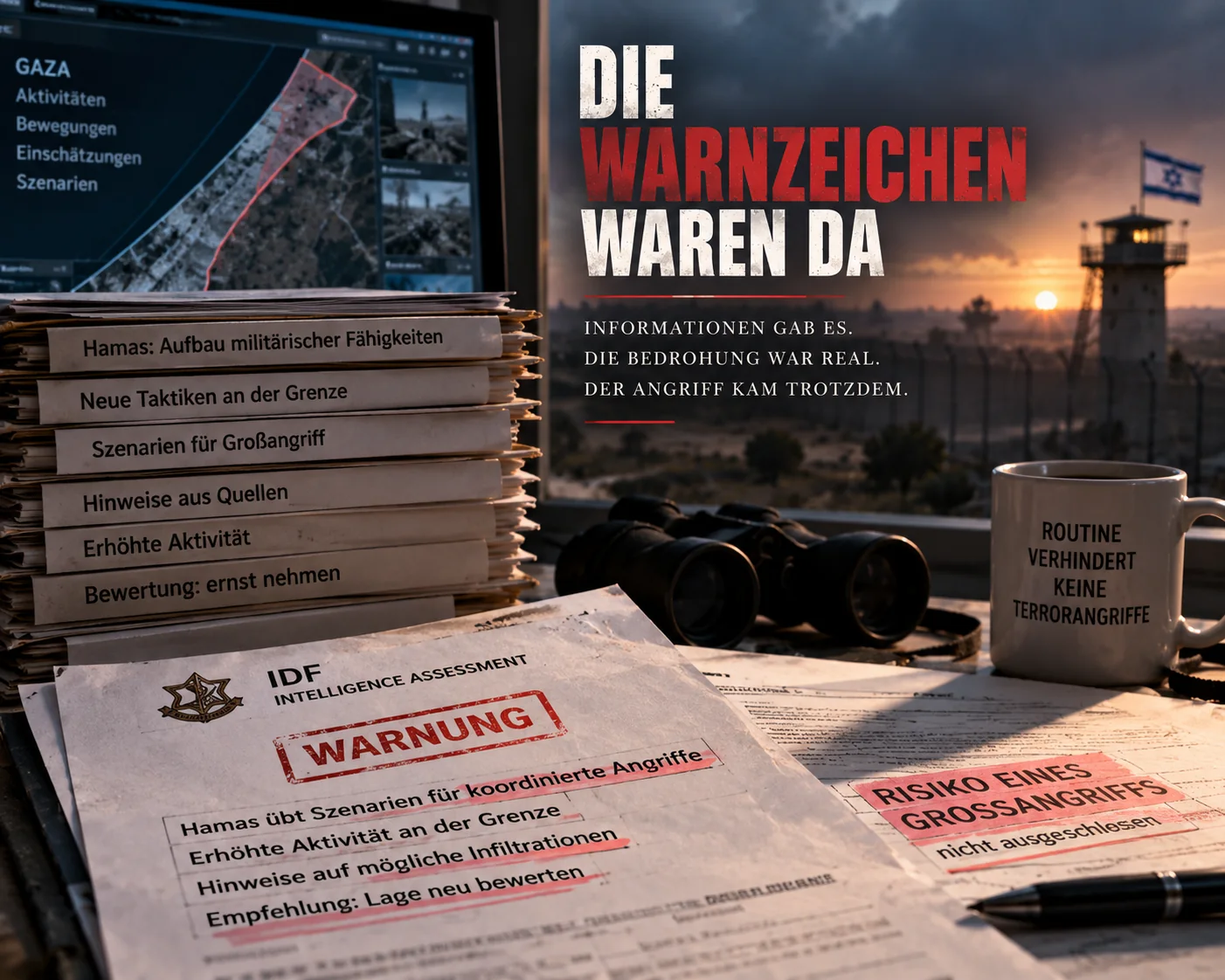

The documented Israeli security failure does not shift responsibility for the attack from the perpetrators to the victims. It explains why the attack was able to reach such a scale. To this day, there is no solid evidence that Israel’s leadership knowingly allowed the attack to happen.
The hostages: 251 people, 843 days
The hostage-taking was not an accidental byproduct of the attack. According to the now consolidated Israeli count, 251 people were abducted to Gaza, including civilians, members of the Israeli security forces and foreign nationals.
Some hostages were released or rescued during the first weeks. During the first agreed ceasefire, from November 24 to December 1, 2023, 105 hostages returned as part of an exchange, according to the Israeli Ministry of Health.
The hostage issue thereafter remained the political and social focus of the war. Families organized demonstrations and campaigns, demanded new agreements and increased pressure on the Israeli government to prioritize the return of their relatives more strongly.
In September 2024, the bodies of six hostages were recovered: Carmel Gat, Eden Yerushalmi, Hersh Goldberg-Polin, Alexander Lobanov, Almog Sarusi and Ori Danino. Israeli authorities said the six had been killed by their guards shortly before their recovery. Their deaths intensified the domestic political dispute over whether an agreement could have been reached earlier.
Another ceasefire took effect on January 19, 2025. Between January 19 and February 7, further hostages returned, according to a report by the Israeli Ministry of Health .
On October 13, 2025, the last 20 living hostages were released as part of the American-mediated agreement. In return, Israel released 250 Palestinian prisoners as well as more than 1,700 Palestinians detained in the Gaza Strip.
What captivity meant was described by lawyer Amit Soussana, who was abducted from Kfar Aza, on January 29, 2024, amid the ruins of her home. She reported 55 days of physical and psychological terror, constant fear of death, little food and a dark tunnel in which she had felt as if she were buried alive. In her later filmed testimony for “Screams Before Silence” she also described sexual violence by a guard. Here, the victims speak for themselves. Their experiences must not disappear in a debate about ceasefires and political demands.
The consequences of captivity cannot be reduced to the number of returnees. A report by the Israeli Ministry of Health from August 2025 analyzed the treatment of twelve hostages who returned in January and February 2025 and documented significant physical and psychological consequences of prolonged captivity. The report concerns this examined group and must not be generalized to every hostage. However, it provides medically documented findings that captivity had consequences for returnees extending far beyond the day of their release.
The last unresolved hostage issue ended only months later. On January 26, 2026, Israel recovered the remains of police officer Ran Gvili. According to Israeli reports, this meant that no living or deceased hostage from October 7 remained in the Gaza Strip.
843 days lay between the massacre and the return of the last hostage.
Operation Iron Swords: The war in Gaza
Israel began extensive airstrikes on targets in the Gaza Strip on October 7 itself and mobilized large parts of its reserve forces. The Israeli government stated that its goal was to destroy Hamas’s military and political capabilities and bring the hostages home.
Why returning to the situation before the massacre offered no security
After October 7, Israel faced a concrete security question: How could residents return to their communities if Hamas retained its ability to launch the next attack? An organization with armed units, rockets, tunnels and the stated intention of repeating the massacre was not a threat that would disappear with another period of calm.
From Israel’s perspective, the aim was to eliminate the conditions for a repetition and bring the abductees home. Destroying Hamas’s military capabilities was therefore a security objective to protect the population. Israel fiercely debated strategy, political leadership and the path to freeing the hostages. Responsibility for the attack remained with the perpetrators.
The ground operation
On the night of October 27–28, 2023, the IDF expanded its ground operation. IDF spokesperson Daniel Hagari stated on October 28 that infantry, armored, engineering and artillery forces had entered the northern Gaza Strip and expanded their ground activities.
The first temporary ceasefire followed at the end of November. Hostages were released, Palestinian prisoners were freed and more aid deliveries were brought into the Gaza Strip. After a week, fighting broke out again.
Rafah and the Philadelphi Corridor
In May 2024, a focus of Israel’s ground offensive shifted to Rafah in the southern Gaza Strip. On May 7, the IDF said it had taken operational control of the Palestinian side of the Rafah crossing. Before the operation began, Israel called on residents of eastern neighborhoods to evacuate toward Al-Mawasi.
On May 29, the IDF said it had achieved operational control of the Philadelphi Corridor along the border with Egypt and had found tunnels and Hamas military infrastructure there. Egypt and Hamas disputed parts of the account concerning smuggling routes. The discovery is the Israeli finding; the denial is the counterclaim.
The death of Yahya Sinwar and Hamas leadership afterward
On October 16, 2024, Hamas leader Yahya Sinwar was killed in a clash with Israeli soldiers in Rafah. The IDF confirmed his death the following day. Israel regarded Sinwar as one of the key planners of October 7.
Sinwar’s death was a severe blow to Hamas’s leadership, but it did not end the war. Neither the hostage issue nor the organization’s military presence in the Gaza Strip was resolved as a result.
On July 20, 2026, Hamas appointed Khalil al-Hayya as its new overall leader. Al-Hayya lives in exile and had already been one of Hamas’s most important negotiators during the war in ceasefire and hostage talks. His appointment also showed that, despite losing large parts of its former leadership, the organization remained politically capable of taking action.
Hamas had not disappeared completely militarily either. Israel continues attacks on people it describes as Hamas commanders or members of military structures. Hamas formally dissolved its previous de facto government in Gaza on July 6, 2026, but at the same time declared that it would continue maintaining security and police structures in the areas it controls. Disarmament remains one of the central points of contention in the postwar plan.
2025 Ceasefire and Renewed Offensive
On January 19, 2025, another ceasefire with a hostage exchange came into effect. The first phase lasted several weeks; negotiations on continuing it subsequently stalled.
On March 18, 2025, Israel resumed major attacks in the Gaza Strip. In May, the IDF expanded its ground operation under the name Operation “Gideon’s Chariots.” According to the IDF, the operation was intended, among other things, to destroy Hamas’s military structures, establish operational control in additional areas, and increase pressure for the release of the hostages.
The war caused enormous destruction in the Gaza Strip and a severe humanitarian crisis. For the purposes of classification, it is crucial how the casualty figures are generated, what information they contain, and who uses them in the political battle over interpretation.
The Northern Front: Hezbollah and Lebanon
The war was not confined to the Gaza Strip and southern Israel. As early as the morning of October 8, the UN mission UNIFIL recorded rocket fire from southern Lebanon toward Israel, as well as Israeli artillery fire in response.
This effectively began a second military front on Israel’s northern border immediately after the Hamas attack. Hezbollah described its attacks as support for Hamas and the Gaza Strip.
Around 60,000 Israelis had to leave their homes in the north. Many communities near the border remained largely evacuated for more than a year. By the November 2024 ceasefire, Hezbollah attacks had killed 45 civilians in northern Israel and on the Golan Heights, according to Israeli figures. At least 73 Israeli soldiers died in attacks in the north, on the Golan Heights, or in fighting in southern Lebanon. The second front was therefore not a symbolic sideshow to the Gaza war, but an independent theater of war involving prolonged displacement and heavy losses.
Escalation in September 2024
On September 17 and 18, 2024, thousands of pagers and radios used by Hezbollah exploded in Lebanon. The operation was internationally attributed to Israel. Israel did not publicly accept responsibility at the time. The explosions also killed and injured people outside Hezbollah’s structures and sharply escalated the conflict.
On September 27, an Israeli airstrike hit Hezbollah’s headquarters in a southern suburb of Beirut. Hezbollah confirmed the following day the death of its longtime secretary-general, Hassan Nasrallah. In the following weeks, the organization lost additional senior officials and military commanders.
At the end of November 2024, a ceasefire between Israel and Hezbollah brokered by the United States and France took effect. It was again based on implementation of UN Resolution 1701, which provides, among other things, that no armed forces other than the Lebanese army and UNIFIL should maintain a permanent presence south of the Litani.
The ceasefire did not resolve the underlying problem. Israel continued to maintain a presence at several points on Lebanese territory and justified this by citing continuing threats. The Lebanese government and the UN called for a complete withdrawal. At the same time, Hezbollah’s disarmament remained incomplete.
In 2026, fighting flared up again in the shadow of the larger Iran conflict. In September 2026, Reuters reported, that Israel was maintaining an approximately ten-kilometer-deep buffer zone on the Lebanese side, while efforts by the Lebanese army to disarm Hezbollah were stalling. A lasting security framework had therefore still not been achieved.
Iran’s Support for Hamas and Armed Groups
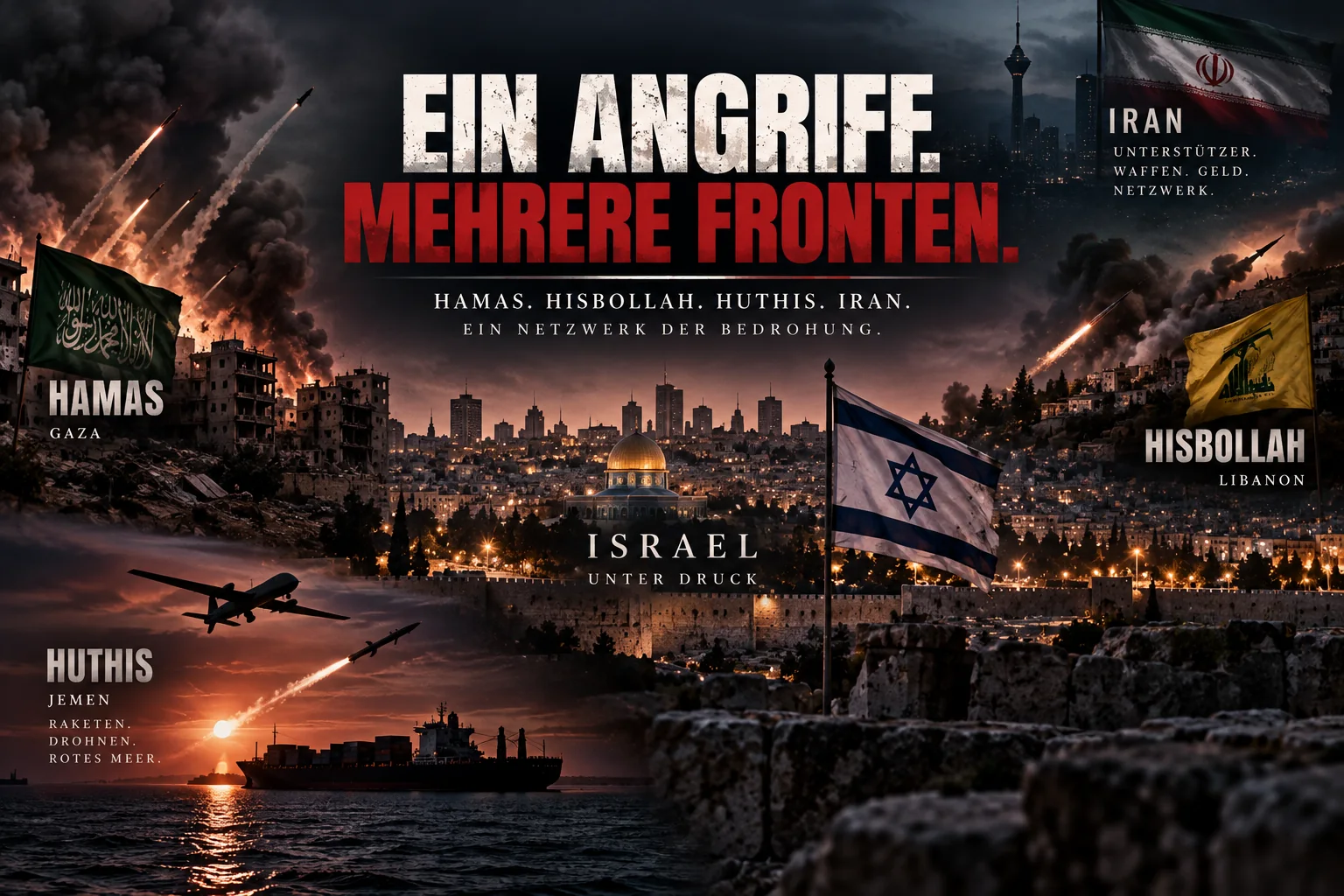
Hamas did not build its military capabilities alone. The U.S. State Department’s terrorism report documents extensive Iranian support for Hamas, Palestinian Islamic Jihad, Hezbollah, the Houthis, and other armed organizations. This included funding, weapons, training, and technical assistance.
The report also draws an important distinction: there is no evidence that Iran knew about the specific attack on October 7 in advance. Tehran’s longstanding material, financial, and military support nevertheless gave Hamas capabilities that facilitated an attack of this magnitude.
April and October 2024
On April 13, 2024, Iran attacked Israel directly on a large scale for the first time, using drones and missiles. The attack followed a strike attributed to Israel on the Iranian consulate building in Damascus, in which senior members of the Revolutionary Guards had been killed.
A second direct Iranian missile attack on Israel followed on October 1, 2024. Iran cited, among other things, retaliation for the killings of Hamas Politburo chief Ismail Haniyeh and Hezbollah chief Hassan Nasrallah. Israel responded on October 26 with attacks on Iranian military and missile sites.
The Twelve-Day War of 2025
On June 13, 2025, Israel began a large-scale wave of attacks against Iranian nuclear, missile, and military structures. Iran responded with missile and drone attacks on Israel.
On June 22, 2025, Iranian local time, or June 21 according to U.S. time, the United States also attacked Iranian nuclear facilities. Those affected included Fordow, Natanz, and Isfahan. The International Atomic Energy Agency confirmed damage at several Iranian nuclear sites and had to temporarily suspend its inspections.
After twelve days, this phase of direct war ended with a ceasefire. Iran’s nuclear and missile programs were damaged but not completely eliminated.
2026: No Stable Ceasefire
On February 28, 2026, the United States and Israel again began large-scale attacks on Iran. Iranian Supreme Leader Ali Khamenei was also killed in the process. Iran responded with attacks on Israel and on sites in countries hosting American troops.
In the spring, several attempts followed to contain the fighting through pauses in hostilities and negotiations. They did not produce a stable and lasting ceasefire. On September 16, 2026, Reuters described the war as an ongoing conflict with no immediate end; negotiations over a possible conclusion were proceeding in parallel.
Iran’s role has therefore fundamentally changed since October 7. Tehran was no longer merely a supporter of armed groups around Israel. Iran and Israel had by then directly engaged in military confrontation several times.
The Houthis, the Red Sea, and Other Iranian-Supported Groups
Yemen also became part of this development. The Iranian-backed Houthis began missile and drone attacks toward Israel at the end of 2023, as well as attacks on commercial ships in the Red Sea and the Gulf of Aden.
The International Maritime Organization recorded around 50 attacks on commercial ships by May 2024 since the seizure of the “Galaxy Leader” in November 2023. Shipping companies temporarily diverted vessels around the Cape of Good Hope. This lengthened routes, increased transportation costs, and turned the war into a problem for international trade as well.
The United States and the United Kingdom responded with military attacks on Houthi positions. The Houthis nevertheless continued their attacks. In 2026, the International Maritime Organization again reported deadly attacks on international shipping.
Iranian-backed militias in Iraq and Syria also attacked targets in the region after October 7. Not every one of these groups follows a direct order from Tehran in every decision. What they have in common, however, is that Iran provided weapons, training, funding, or technical support over many years.
Gaza: Casualty Figures, Destruction, and Humanitarian Situation
The ongoing death toll from Gaza comes from the Ministry of Health within the administrative system ruled by Hamas. It is used in the political battle over interpretation as an indictment of Israel, even though it does not systematically distinguish between civilians and combatants. International bodies that cite it are adopting a figure from the administration of the attacking side, not their own independently verified casualty count. This origin and the lack of a breakdown belong at the beginning of any assessment.
As of September 20, 2026, the Ministry of Health in the Gaza Strip reported a total of 73,910 deaths since the beginning of the war. This is the figure recorded by that authority on the stated date. It is neither a timeless final figure nor a number consisting exclusively of civilians killed.
With the collapse of large parts of the health-care and registration systems, data collection changed. In addition to hospital data, reports from families and subsequent identifications later played a greater role.
OCHA publishes this information with explicit attribution to its source and labels figures that have not been verified by the United Nations itself. The UN logo does not turn a figure from the Gaza authority into an independently confirmed UN casualty count.
In January 2026, Reuters citing Israeli media, senior Israeli military officials accepted an overall figure of around 70,000 Palestinian deaths. The IDF subsequently clarified that the figures cited were not official IDF data. Moreover, even an approximation of the total figure does not answer the crucial second question of how many of those killed were civilians and how many were members of armed groups.
During the war, Israel published its own estimates of Hamas and other fighters killed. One of the most recently widely reported Israeli estimates stood at around 20,000 fighters killed at the beginning of 2025. This figure was no longer current in September 2026 and, like the precise civilian breakdown of the Palestinian total, cannot be fully independently verified.
It is certain that very many civilians have died in Gaza. Hamas bears responsibility for starting this war with the massacre of October 7 and for waging it from residential areas, tunnels, and civilian infrastructure. The organization thereby exposed its own population to a risk of war it had deliberately created. Anyone who presents the total figure as exclusively the number of civilian victims and makes the fighters disappear within it is distorting the finding.
Hamas and civilian infrastructure
For years, Hamas has built a tunnel system beneath residential areas and placed weapons depots and military facilities in or alongside civilian infrastructure. The IDF documented this at numerous locations during the operations. Those who fight from there accept the deaths of their own civilian population. Israel remains bound by the requirements of distinction and proportionality. Responsibility for this way of waging war lies with the organization that deliberately abandoned the protection of civilians.
Aid, hunger, and destruction
Evacuation orders, destroyed homes, restricted infrastructure, and repeated fighting led to a severe humanitarian crisis. Throughout the war, aid organizations reported problems with supplies, shelter, medical treatment, and access to relief goods.
The humanitarian situation is therefore not a propaganda issue. It is a documented consequence of the war.
A separate question is what legal conclusion is drawn from this. Hunger, displacement, and massive destruction may be relevant to the examination of war crimes or other international crimes. For the specific crime of genocide however, the specific intent to destroy, in whole or in part, a protected group as such must additionally be proven.
UNRWA and October 7
The UN Palestinian refugee agency UNRWA also fell into a deep crisis after October 7. Israel accused employees of the organization of involvement in the attack.
Nine UNRWA employees lost their jobs after the UN Office of Internal Oversight Services, OIOS, found indications of possible involvement in October 7. The UN investigation concerned a total of 19 employees. In one case there was no evidence; in nine others, it was insufficient. In the remaining nine cases, OIOS concluded that the material indicated possible involvement. UNRWA additionally cautioned that the evidence had to be authenticated and corroborated. Thus, no criminal guilt had been proven. The institutional finding remains serious: The aid agency had to dismiss its own personnel because of indications of possible involvement in the massacre. Its neutrality mechanisms had not prevented these risks.
The independent investigation under Catherine Colonna assessed UNRWA’s neutrality mechanisms and recommended numerous improvements. It described the existing rules as comparatively well developed. The individual involvement of employees on October 7 was the subject of the separate OIOS investigation. Colonna’s assessment of the rules therefore does not exonerate the nine employees and does not disprove their possible involvement.
In October 2024, Israel passed two laws restricting UNRWA activities in Israeli-controlled territory and prohibiting official contact between Israeli authorities and the organization. The regulations entered into force at the end of January 2025. The United Nations disputes the legality of these restrictions under international law.
Self-defense, the law of war, and international courts
October 7 was an armed attack on Israel. Article 51 of the UN Charter recognizes states’ right to individual and collective self-defense against armed attacks.
Israel was permitted to defend itself against this armed attack. The legal examination of individual operations is a separate matter.
The right of self-defense governs the question of whether a state may use military force in principle. International humanitarian law governs how this war may be conducted. This includes distinction between civilian and military targets, proportionality, and precautions to protect the civilian population.
The International Court of Justice
At the end of 2023, South Africa initiated proceedings against Israel before the International Court of Justice under the Genocide Convention. The Court ordered several provisional measures. These decisions were not a judgment that Israel had committed genocide.
As of September 2026, the merits proceedings remain pending. In an order of May 21, 2026, the Court set November 22, 2027, as the deadline for South Africa’s Reply and May 22, 2029, for Israel’s Rejoinder. The legal question therefore remains open.
The International Criminal Court
On November 21, 2024, the International Criminal Court issued arrest warrants for Israeli Prime Minister Benjamin Netanyahu and then-Defense Minister Yoav Gallant.
The same chamber found on the same day reasonable grounds to believe, that at least Deif, Sinwar, and Haniyeh had jointly agreed on October 7. The warrant for Deif included, among other charges, murder, extermination, torture, rape, and hostage-taking. The applications against Sinwar and Haniyeh had been withdrawn after their deaths were confirmed. No arrest warrants against them were issued that day. Anyone who highlights only the two Israeli arrest warrants and omits the Hamas section of the same record conceals a central finding of the Court. An arrest warrant remains a finding of suspicion, not a judgment. Nevertheless, the list of crimes against the Hamas leadership is not a footnote.
Regarding Netanyahu and Gallant, the Pre-Trial Chamber stated that there were reasonable grounds to suspect war crimes and crimes against humanity, including the allegation that starvation had been used as a method of warfare. These findings, too, were not convictions.
After the Court received sufficient information about Deif’s death, it terminated the proceedings against him on February 26, 2025. The warrant has not been in force since then.
Israel is not a state party to the Rome Statute and disputes the Court’s jurisdiction. The ICC bases its jurisdiction on Palestine’s accession to the Rome Statute and therefore considers that the Court can cover acts in the territory it refers to in its legal terminology as the “West Bank, including East Jerusalem, and Gaza.” Israel rejects this interpretation of jurisdiction. Israel described the Court’s actions as politically motivated.
The October 2025 ceasefire
After almost two years of war, a new diplomatic framework emerged in autumn 2025. On October 9, the parties to the conflict signed initial implementation steps for a plan mediated by the United States. A ceasefire took effect on October 10.
On October 13, the last 20 living Israeli hostages were released. Israel simultaneously released Palestinian prisoners and people detained in Gaza.
On November 17, 2025, the UN Security Council endorsed the new framework with Resolution 2803. The plan envisaged gradual demilitarization, a new civilian administration of the Gaza Strip, and international reconstruction.
The Yellow Line: Gaza is de facto divided
The ceasefire did not create unified control over the Gaza Strip. A demarcation line marked on the ground with yellow concrete markings, the so-called Yellow Line, marks the edge of the area in which Israeli forces are stationed.
Reuters reported in July 2026, that Israel at that time effectively controlled around 64 percent of the Gaza Strip. According to the report, nearly the entire population of around two million people was concentrated in a narrow coastal strip outside this Israeli-controlled zone. Residents and Hamas representatives also reported that the markings had been moved farther toward the Palestinian-populated zone in several areas. The IDF stated that the line was clearly marked to avoid contact between civilians and Israeli troops, and that its positions served to defend Israel.
The political deadlock hinges precisely on this geography. Hamas continues to reject complete disarmament. Israel ties further withdrawals and extensive reconstruction to demilitarization and security guarantees. Until this sequence is clarified, large areas will remain under Israeli control, while the population in the remaining zones lives in a confined space and reconstruction barely progresses.
Board of Peace and NCAG
In January 2026, the White House announced the formation of the “National Committee for the Administration of Gaza,” or NCAG. The technocratic body, headed by Ali Sha’ath, is intended to organize civilian administration, basic services, and reconstruction.
At the same time, a “Board of Peace” was created to accompany the political and economic transition process.
On paper, this marked the transition to phase two of the American 20-point plan. In practice, implementation remained difficult.
The central dispute is Hamas’s disarmament. Hamas signaled willingness to consider different transitional models and formally dissolved its previous civilian government in July 2026, but did not accept complete and verifiable disarmament on Israel’s terms. Israel, in turn, ties further withdrawals and extensive reconstruction to the organization’s demilitarization.
The ceasefire therefore remains fragile. Israel continues to carry out attacks against individuals it describes as Hamas commanders. Hamas and Israel continue to accuse each other of violations.
Reuters reported on September 19, 2026, that more than 1,300 Palestinians had been killed since the ceasefire took effect, according to Gaza’s Health Ministry; the statistics there still do not systematically distinguish between fighters and civilians. On the Israeli side, four soldiers died during this period. Large-scale reconstruction of Gaza has still barely begun.
Israel domestically: three years under high tension
October 7 changed not only Israel’s foreign and security policy. It changed the country itself.
The IDF published numerous internal investigations into individual attack sites and military processes. They acknowledged serious failures in intelligence services, operational planning, communications, and the strategic assessment of Hamas.
A comprehensive state inquiry that jointly assesses political and military responsibility, by contrast, is still the subject of domestic political disputes in autumn 2026.
On July 7, 2026, the Knesset approved in its first reading a bill for a so-called state-national commission of inquiry. The proposal provides for a special procedure for appointing its members and thus differs from the classic model of a state commission of inquiry. Parts of the opposition boycotted the proceedings.
The military price
The official IDF casualty overview listed a total of 968 soldiers killed since the beginning of the war on October 7, 2023, as of September 18, 2026. Of these, 472 died since the beginning of the ground operation in the Gaza Strip on October 27, 2023. The IDF additionally reported 6,424 soldiers wounded since the beginning of the war.
These figures do not include all members of the police, Shin Bet, and other security organizations and therefore cannot be equated with a total for all Israeli security forces.
There is also the years-long strain on the reserve system. Repeated call-ups, long periods of deployment, and economic consequences became a domestic political issue.
The 2026 election campaign
On October 27, 2026 Israel is expected to elect a national parliament for the first time since October 7.
The war’s issues are shaping the election campaign: responsibility for October 7, Gaza, Hamas’s future, Iran, the commission of inquiry, and the question of what a lasting security framework should look like.
The battle over interpretation began practically immediately
While Israel was still identifying the dead, treating the wounded, and searching for those who had been abducted, the political battle over how to interpret the attack had already begun in Western cities.
On October 8, a large pro-Palestinian demonstration took place in Times Square in New York. The People’s Forum, one of the organizers, later described the Hamas-led attack as part of a “liberation struggle” and defended a right to resistance.
Genocide rhetoric against Israel also appeared at the October 8 demonstration. This is relevant to the chronology: Such political accusations were already publicly visible before the ensuing war in Gaza developed into its later dimensions.
The political genocide rhetoric preceded the subsequent legal proceedings. It was already part of the mobilization before a court could examine the allegations.
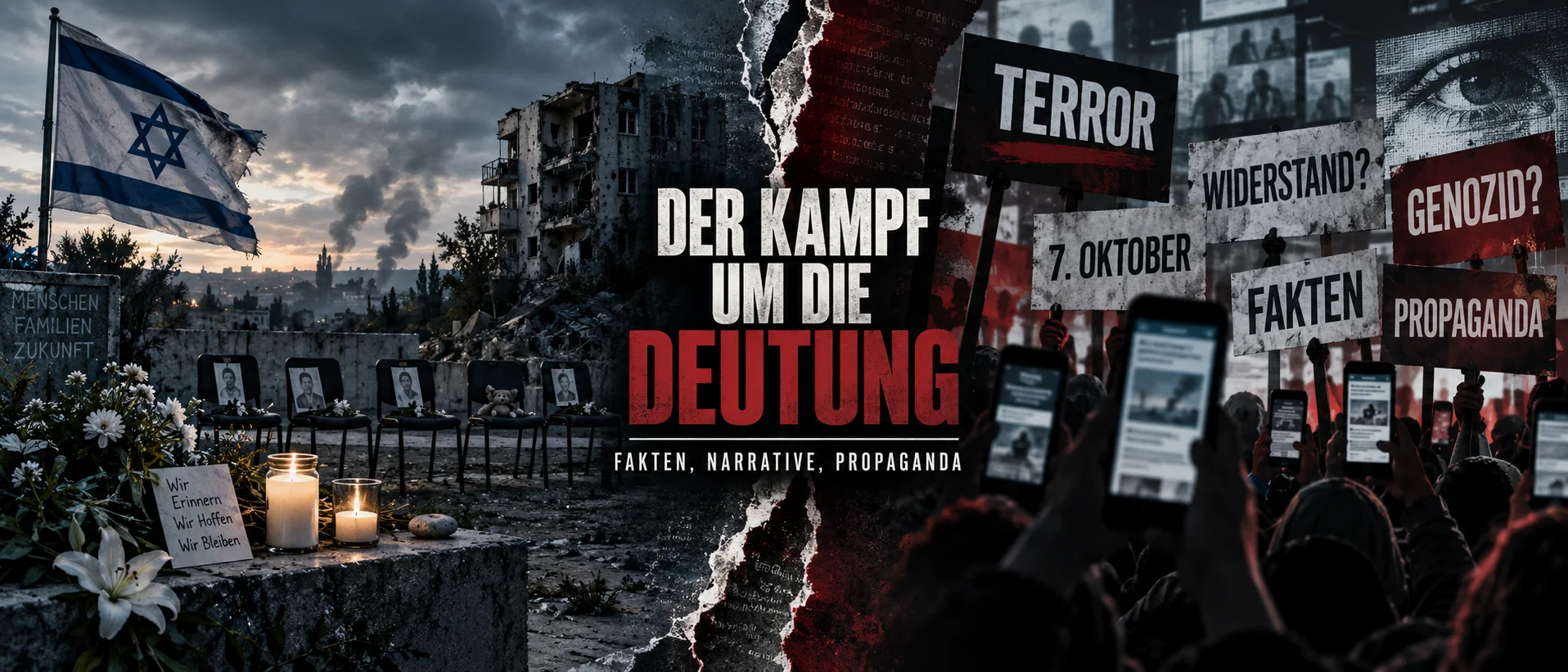
Iran’s second front: Israel in the information war
Iran supported Israel’s armed opponents and conducted a digital influence campaign after the massacre. The Microsoft Threat Analysis Center documented in February 2024 Iranian cyberattacks and influence operations to support Hamas and weaken Israel and its international supporters. These included fabricated online identities, intimidation, and misleading reports about alleged attack successes.
One specific case illustrates the method: The persona “Soldiers of Solomon” claimed to have seized material from Nevatim Air Base. Microsoft determined that the published camera footage came from a location north of Tel Aviv with a street called Nevatim. In December 2023, streaming services were also disrupted and replaced by a fake news broadcast featuring an apparently AI-generated presenter. It reached viewers in, among other places, the United Kingdom and Canada. Microsoft also described cooperation between Iranian and Hezbollah-linked cyber actors. For the immediate initial phase, however, the company found little or no coordination with Hamas. The report documents Iranian influence operations after the attack, not an Iranian order for the massacre.
The then-U.S. Director of National Intelligence Avril Haines stated on July 9, 2024, that actors with ties to the Iranian government had posed online as activists, encouraged protests over the Gaza war, and financially supported demonstrators. The Jerusalem Post reported this, reproducing her statement. Haines was referring to the United States and warned that those approached might not be aware of the foreign influence.
The political function of such operations is clear: Israel is to lose international support, its society is to be unsettled, and Hamas is to retain political room for maneuver. A campaign does not need to control every participant to achieve this. It is enough to amplify existing outrage, insert false content, and push the attackers‘ responsibility out of focus.
Islamist and far-left mobilization against Israel
The connection between Islamist and far-left actors is not explained by a shared conception of freedom. They come together through a common enemy image. A study by the Hesse Office for the Protection of the Constitution on protest activity after October 7 describes hatred of Israel and antisemitism as unifying narratives. The period examined extends through February 6, 2024.
The state office names the Islamist group Realität Islam as well as SDAJ, DKP, and Palästina e.V., among others. It describes how antisemitic narratives related to Israel, the portrayal of Israel as a colonial power to be fought, and the justification of violence are used for mobilization. Extremist actors also draw non-extremist people into their agitation. The finding is more than a similarity of slogans: The authority documents rapprochement and cooperation in parts of the protest milieu.
The Berlin Office for the Protection of the Constitution’s 2025 report identifies VPNK, BDS Berlin, and Young Struggle as prominent actors in a scene hostile to Israel that is relevant to the work of the Office for the Protection of the Constitution. According to the authorities, Israel’s right to exist was denied and Hamas terrorism celebrated at their events.
Anyone who presents the attack as liberation turns the perpetrators into political role models. Anyone who removes the abductees from the portrayal and presents Israel alone as the cause of the war shifts responsibility. And anyone who collectively holds Jews abroad responsible for Israel brings the conflict into their everyday lives as an antisemitic threat. Such actors help justify violence and make Israeli victims invisible.
A documented Iranian influence operation and the independent agitation of a far-left group are different processes. Shared slogans do not prove a common sponsor. Nor is such a sponsor necessary for the political effect: Anyone who legitimizes Hamas terrorism and denies Israel’s existence supports the attackers‘ central objectives through their own actions.
Germany: Celebrating the attack, protests, and antisemitism
Germany did not even need until the following day. Berlin police had already documented people in Neukölln on October 7 distributing sweets or baked goods in connection with the Hamas attack.
The Berlin Office for the Protection of the Constitution later described the action as a celebration of an alleged “victory of the resistance.” Samidoun expressed solidarity with the attack and justified it as resistance.
On November 2, 2023, the Federal Ministry of the Interior banned Hamas activities in Germany and the international Samidoun network, including its German subdivisions.
This is crucial for the chronological classification. The public justification and partial celebration of the attack did not begin only after weeks of fighting in Gaza. It began while Israel did not yet fully know the scale of the massacre.
Institutions: The initial reactions were clearer than the street
The joint statement by the SPD, Greens, CDU, CSU, and FDP on October 7 condemned the terror and emphasized Israel’s right to self-defense. The signatories described the attacks as crimes that cannot be justified.
The Evangelical Church in Germany also condemned the terrorist attacks on October 8 and expressed solidarity with Israel. The German Trade Union Confederation explicitly condemned the murder and abduction of Israeli civilians as terror and war crimes on October 10.
The clear institutional condemnations stood alongside the cheering and justifications from parts of the activist scene. This contrast in particular shows how early the political battle over the meaning of the massacre began.
The hostage posters themselves became targets
After October 7, posters bearing photographs of the abductees appeared in many German and Western cities. They were intended to make visible that concrete people stood behind the word “hostages.”
RIAS documented numerous cases, in which these posters were torn down, the hostages‘ faces scratched out, covered over, or defaced. This also affected posters for German and Israeli victims.
Anyone who tears the photograph of an abducted person from a wall is not criticizing an Israeli military operation. They are removing the memory of a person who was abducted by terrorists.
Campus, red triangles, and Intifada slogans
German universities also became a political battleground after October 7. Occupations, demonstrations, and protest camps were sometimes accompanied by antisemitic graffiti, calls for violence, or symbols known from Hamas propaganda.
Hamas uses the downward-pointing red triangle in propaganda videos to mark targets. On German campuses and in demonstration contexts, it is used in precisely this function. In that case, it is not a graphic gimmick but a marker.
Antisemitism rose massively
At the same time, reporting centers and security authorities recorded a drastic increase in antisemitic incidents and offenses in Germany. Two different data sets must be clearly distinguished here.
RIAS also documents antisemitic incidents below the threshold of criminal liability. For 2025, the federal association recorded 8,725 antisemitic incidents. RIAS classified 68 percent of them as manifestations of antisemitism related to Israel.
Police statistics, by contrast, count criminal offenses. For 2025, the German government reports 6,548 antisemitic offenses. Of these, 3,163, or 48.3 percent, had a connection to Israel.
By comparison: In 2022, only 63 of 2,641 antisemitic offenses had a corresponding connection to Israel. Thus, not only has the number of antisemitic acts changed. Their structure has also shifted significantly since October 7.
Antisemitism comes from different political and ideological milieus. Far-right hatred of Jews remains a considerable threat. In addition, the security authorities document antisemitic offenses stemming from the area of foreign ideology, religious or Islamist-motivated ideology, left-wing milieus, and other contexts.
For older statistics, another point is important: The former special attribution rule for antisemitic offenses with unknown motivation was abolished on January 1, 2024. Current PMK figures therefore cannot simply be equated with older attribution mechanisms.
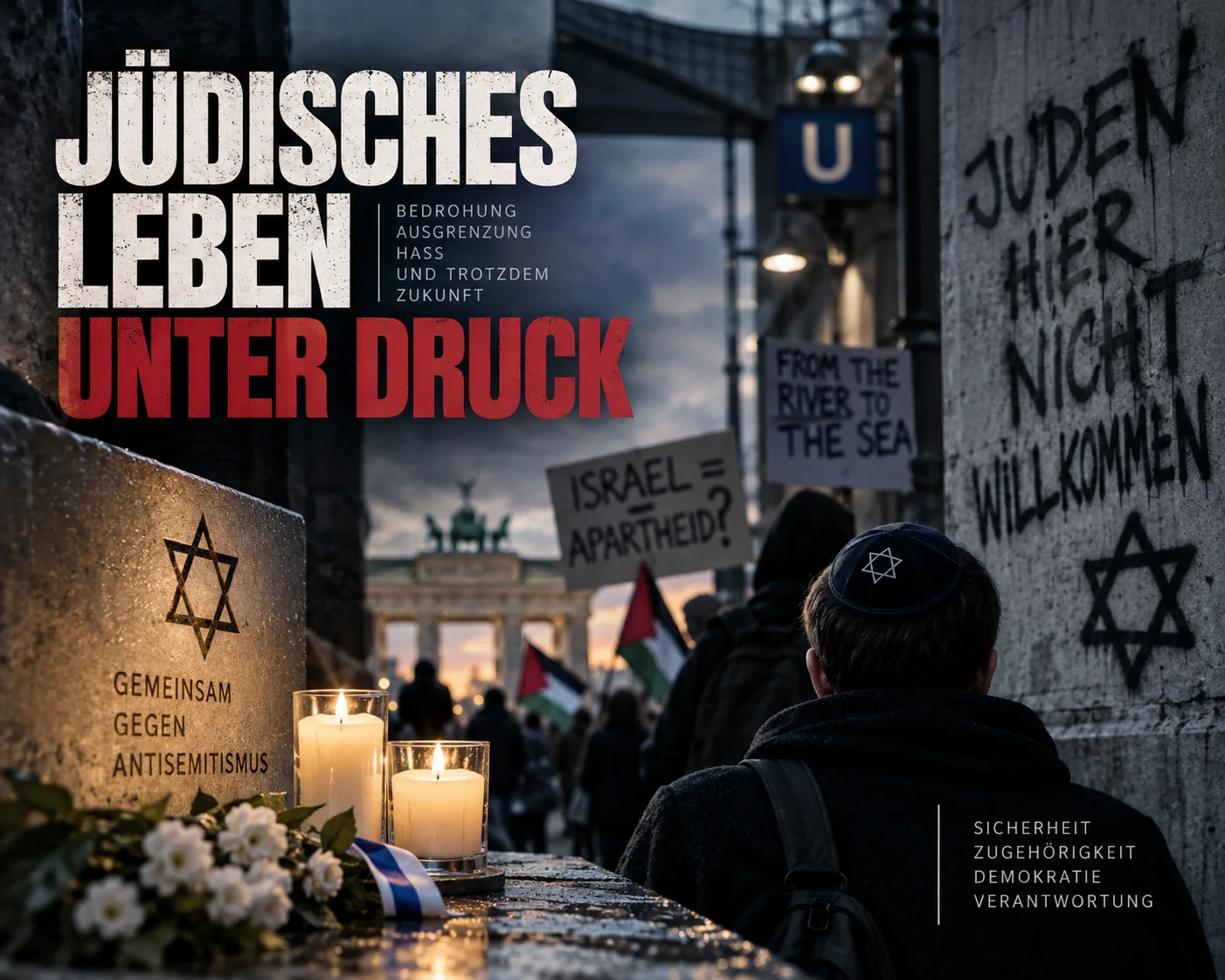
Jewish life became less secure
Statistics tell only part of this story. The real cost is visible in everyday life.
The Central Council of Jews in Germany surveyed leaders of 102 Jewish communities and regional associations in 2026. 68 percent said that Jewish life in Germany felt less secure to them than before October 7, 2023. At the same time, perceived social solidarity fell from 62 percent in 2023 to 35 percent in 2026.
This is evident in many places. Synagogues need police protection. Events require security plans. Jewish students report hostility. Restaurants and other establishments perceived as Israeli or Jewish have become targets of political actions and antisemitic incidents.
People are once again considering whether to wear a kippah visibly. Whether a Star of David should disappear beneath their clothing. Whether Hebrew can be spoken on the street.
A synagogue is not waging a war in Gaza. A Jewish student is not an Israeli minister. A Jewish business owner does not decide on military operations.
Those who nevertheless hold Jews collectively responsible for the actions of the State of Israel are not criticizing a government. They are making Jewish people, because of their identity, substitute targets in a political conflict.
The 2026 arson attack in Wuppertal
How current this danger remains was demonstrated as recently as September 2026. On September 17, an arson attack was carried out on the Bergische Synagogue in Wuppertal. According to police, a 37-year-old Afghan national known to the police was arrested near the scene. Initial findings indicated that he acted alone. State security took over the investigation.
The public prosecutor’s office said the following day that the findings available at that point indicated an antisemitic motive. At that time, there was explicitly no indication of an Islamist background.
The war of narratives
As time passed, another battle began: the battle over the facts of October 7 itself.
The Hamas-led attacks planned against civilian communities, the killings, and the abductions are documented by videos, eyewitness accounts, and subsequent investigations. In the war of narratives, corrections to individual early reports are used to attack this overall finding. False individual details must be corrected. They do not undo the documented crimes.
⚠️ Claims that distort the findings
“October 7 was resistance”: The deliberate murder and abduction of civilians do not become lawful through this designation. Anyone who sells such acts as liberation is justifying terror.
“Israel killed most of its own victims”: There is no reliable evidence for this. Documented Israeli friendly fire in individual situations does not substantiate this overall claim. The targeted killings and abductions by Hamas-led groups are documented at numerous civilian locations.
“Sexual violence was fabricated”: The Patten report found reasonable grounds to believe that sexual violence, including rape, occurred at several attack sites, as well as clear and convincing information about sexual violence against some hostages. Correcting unconfirmed individual reports does not refute these findings.
“All reported Gaza deaths were civilians”: The Health Ministry’s ongoing total does not systematically distinguish between civilians and combatants. Presenting it as a purely civilian death toll distorts what it conveys.
“Jews abroad are responsible for Israel”: A Jewish student, a synagogue, or a Jewish business bears no collective responsibility for decisions by the Israeli government. Accusing Jews because of their identity is antisemitism.
Al-Ahli as a lesson in early wartime reporting
On October 17, 2023, an explosion occurred at Al-Ahli Hospital in Gaza. The Hamas-controlled Health Ministry reported hundreds of deaths that same evening and attributed the cause to an Israeli airstrike. Internationally, the claim of around 500 deaths was disseminated. The Tagesschau ran the report under the headline “Hamas reports hundreds dead after explosion at hospital” and presented Israel’s denial alongside it.
On October 26, the ARD fact-checking unit, after an OSINT assessment, concluded that several indications pointed to a misfired rocket from Gaza. Human Rights Watch later also saw indications of rocket munitions of the kind used by Palestinian armed groups. A U.S. intelligence report assessed by Reuters on October 19 estimated the death toll was probably at the lower end of a range from 100 to 300, well below the initial report. The exact number remained unclear.
The first image had nevertheless been established: Israel had bombed a hospital and killed hundreds. This is exactly how wartime propaganda works. The hasty attribution of blame and the unverified high figure shape the evening. Later findings that undermine this portrayal follow only once the headline has long since spread.
When newsrooms amplify the perpetrators’ narrative
On October 23, 2023, The New York Times acknowledged that its early reporting on Al-Ahli had relied too heavily on statements by Hamas. It said it had not made sufficiently clear that these claims initially could not be verified. The portrayal had conveyed a false impression of what was established and of the credibility of the claims. The Times of Israel documented this self-criticism.
Citing a source is no substitute for verification. Even a claim identified as a Hamas report can become presumed certainty through its headline, choice of images, and constant repetition. Anyone who prominently disseminates an unverified accusation must identify its uncertainty just as clearly and make subsequent corrections visible. Otherwise, the perpetrators’ propaganda gains reach and credibility through the authority of the newsroom.
Journalistic contextualization of this war must also include its cause: Hamas triggered it with the massacre of October 7. Its taking of hostages, its military use of civilian infrastructure, and its announced intention to repeat the attack explain the continuing threat to Israel. Where this context disappears from reporting, Israel’s military response appears as violence without a prehistory. This obscures Hamas’s responsibility and distorts the view of Israel’s self-defense.
September 2026: What remains of the war
Almost three years after the massacre, the situation is fundamentally different from October 2023, but it is not resolved.
All the hostages from October 7 have by now returned to Israel, alive or dead. Hamas has been severely weakened militarily and has lost much of its leadership at the time. However, the organization has neither disappeared politically nor militarily. Khalil al-Hayya has been at its helm since July 2026 and continues to pursue its political line from exile, while Hamas structures in the Gaza Strip are attempting to preserve or rebuild security and military capabilities.
A fragile ceasefire has been in effect in the Gaza Strip since October 2025. Reconstruction is stalled. The Yellow Line effectively divides the Gaza Strip into a large Israeli-controlled zone and a densely populated coastal area. The American 20-point plan, the Board of Peace, and the NCAG have created institutional structures, but key questions remain open: Hamas’s disarmament, an Israeli withdrawal, international security guarantees, and financing for reconstruction.
Hezbollah has lost a large part of its 2023 leadership generation but has not been completely disarmed. Israel continues to hold a buffer zone in southern Lebanon, while the Lebanese government and international mediators are pressing for a new security framework.
Iran has gone from supporting regional armed groups to becoming a direct belligerent in the war against Israel and the United States. Several ceasefire attempts and negotiations have not produced a stable political solution by September 2026.
Israel itself is in an election campaign and continues to debate who bears political responsibility for October 7 and what the comprehensive investigation should look like.
And in Germany, October 7 is long since no longer a distant event. It has become embedded in the security plans of Jewish communities, police protection, conflicts at universities, demonstrations, and the everyday lives of many Jews.
October 7 was neither an outbreak nor resistance. It was a planned annihilation attack on Jews in their state and on other people who lived there or were visiting, involving documented sexual violence including rape, abduction, and an open declaration by Hamas’s leadership that such attacks would be repeated. Israel did not see it coming. That is a grave failure of the state, not any complicity on the part of those murdered. Without the Hamas attack of October 7, there would have been no Gaza war. The war that followed was the response to an organization that had prepared this large-scale attack for years and had already announced its repetition three weeks after the massacre.
Anyone here who celebrates Hamas terror as resistance, tears down hostage posters, or holds Jews responsible for Israel’s self-defense is not pursuing peace policy; they are justifying the perpetrators or turning Jews into targets.
ℹ️ Factual basis and primary sources for the article 📑
▶️ Human Rights Watch:
October 7 Crimes Against Humanity, War Crimes by Hamas-led Groups
Investigation of July 17, 2024: targeted attacks on civilians, grenades and gunfire in shelters, as well as the setting of residential buildings on fire, with deadly consequences for residents.
▶️ CNN:
Inside Politics, broadcast of October 9, 2023
Hadas Gold describes body-camera footage from Sufa provided by the IDF, in which Hamas attackers shoot a dog running toward them.
▶️ Microsoft Threat Analysis Center:
Iran accelerates cyber ops against Israel from chaotic start
Analysis of February 6, 2024, on Iranian cyberattacks, fabricated identities, and influence operations following the Hamas attack.
▶️ Jerusalem Post / Avril Haines:
US intel chief: Iran influence campaign stoking, funding anti-Israel protests
Report of July 9, 2024, updated on July 10, with the explanation by the then U.S. director of national intelligence regarding Iranian influence on protests in the United States.
▶️ Hesse State Office for the Protection of the Constitution:
Presentation of the study “On the Streets Against the Common Enemy”
Official findings on antisemitic narratives, extremist mobilization, and cooperation in protest activity through February 6, 2024.
▶️ Berlin Office for the Protection of the Constitution:
Report on the Protection of the Constitution 2025: presentation on June 2, 2026
Names, among others, VPNK, BDS Berlin, and Young Struggle in the constitutionally relevant anti-Israel scene.
▶️ Times of Israel / Israeli television interviews:
Rachel and David Edry: Survival and liberation in Ofakim
Report featuring statements by the couple and the police involved after their liberation on October 8, 2023.
▶️ Times of Israel / Amit Soussana:
Urging help for hostages, freed captive fears for resilience of those still held
Soussana’s public statement on January 29, 2024, in front of her destroyed house in Kfar Aza.
▶️ Times of Israel / filmed testimony:
Former captive describes Hamas guard’s sexual abuse in new footage
Report dated April 3, 2024, on Soussana’s filmed testimony for “Screams Before Silence”.
▶️ Reuters:
U.S. intel says Gaza hospital death toll likely between 100–300
Report dated October 19, 2023, on the preliminary U.S. intelligence estimate of the death toll from the Al-Ahli explosion.
▶️ MEMRI / LBC:
Interview with Ghazi Hamad on October 24, 2023
Transcript and translation of his announcement of further attacks and the destruction of Israel; published on November 1, 2023.
▶️ Times of Israel:
Hamas official says group will repeat Oct. 7 attack
Report dated November 1, 2023, on the LBC interview.
▶️ Times of Israel / IDF investigation:
IDF inquiry into the Nova festival massacre
Report dated April 3, 2025: 378 killed, including 344 civilians, and 44 abducted; also covers associated escape and combat sites.
▶️ IDF:
Ariel and Kfir Bibas: forensic identification and findings
Statement dated February 21, 2025, on identification, age at death, murder in captivity, and the body initially incorrectly attributed.
▶️ Times of Israel / Institute of Forensic Medicine:
Forensics chief confirms identification of Shiri Bibas
Report dated February 22, 2025, on the identification and Institute Director Chen Kugel’s explanation that there was no evidence of injuries caused by bombardment.
▶️ International Criminal Court:
Arrest warrant for Mohammed Deif, 21 November 2024
Allegations against Deif, the Hamas leadership’s joint attack plan, and the withdrawal of the applications against the deceased Haniyeh and Sinwar.
▶️ United Nations:
Independent review panel releases final report on UNRWA
Mandate and findings of the Colonna review of neutrality mechanisms; separate from the OIOS investigation into individual staff members.
▶️ UN Commission of Inquiry:
Report A/HRC/56/26 on October 7 and the ensuing war
Contains the casualty breakdown of October 7 as well as findings on attacks on civilian sites and military bases.
▶️ Human Rights Watch:
October 7 Crimes Against Humanity, War Crimes by Hamas-Led Groups
Extensive investigation of the attacks on civilian sites, the armed groups involved, the killings, and the hostage-taking.
▶️ UN Special Representative Pramila Patten:
Mission Report on sexual violence on October 7 and against hostages
Full mission report with the standard of proof, confirmed findings, and unconfirmed individual allegations.
▶️ Israel Defense Forces:
Battle of Kibbutz Be’eri – The Inquiry
IDF investigation into the battle for Be’eri and the failure to protect its residents.
▶️ Israeli Ministry of Health:
The Impact of Captivity on the Physical and Mental Health of Hostages
Medical report dated August 12, 2025, on twelve hostages who returned in January and February 2025; documents the physical and psychological consequences of captivity.
▶️ Israel Defense Forces:
All Hostages Have Been Returned From the Gaza Strip to Israel
Closure of the hostage issue with the return of Ran Gvili on January 26, 2026.
▶️ U.S. Department of State:
Country Reports on Terrorism 2023
Documents Iranian support for Hamas, Hezbollah, the Houthis, and other armed organizations.
▶️ UNIFIL:
Statement dated October 8, 2023
Documents the beginning of the military escalation on Israel’s border with Lebanon immediately after the Hamas attack.
▶️ Reuters:
Israel’s war in Lebanon against Hezbollah since Oct. 7, 2023
Overview of the northern front through the ceasefire in November 2024, including Israeli evacuations and casualty figures.
▶️ Reuters:
Israel’s yellow line, a shifting edge of war pushing Gazans from home
Describes Gaza’s territorial division after the 2025 ceasefire and Israeli control over approximately 64 percent of the territory in summer 2026.
▶️ Reuters:
Hamas names Khalil Al-Hayya as new overall leader
Documents the appointment of Khalil al-Hayya as Hamas’s overall leader in July 2026.
▶️ Reuters:
Hamas dissolves Gaza government
Documents the dissolution of the de facto government in July 2026 and the continuation of security and police structures.
▶️ Reuters:
Israel and Lebanon to meet in Rome in October
Current status as of September 2026 regarding Israel’s buffer zone in southern Lebanon and stalled disarmament efforts toward Hezbollah.
▶️ Reuters:
Trump says ‚hopefully we are towards end‘ of Iran war
Current status as of September 16, 2026, on the still ongoing Iran war and parallel negotiations.
▶️ Reuters:
Iranian leader Khamenei killed in air strikes as U.S., Israel launch attacks
Reuters report on the beginning of the new phase of direct war on February 28, 2026, and the death of Ali Khamenei.
▶️ Reuters:
Israel’s election will be held on October 27
Confirms the election date of October 27, 2026.
▶️ International Atomic Energy Agency:
Iran nuclear verification and monitoring
Documents the effects of the 2025 attacks on Iranian nuclear facilities and the IAEA’s work.
▶️ International Maritime Organization:
Red Sea shipping attacks
Documents the Houthi attacks on international shipping and their consequences.
▶️ International Maritime Organization:
Statement on deadly ship attack in the Red Sea
Current IMO record dated August 12, 2026, on renewed deadly attacks on international shipping in the Red Sea.
▶️ OCHA:
Reported Impact Snapshot, Gaza Strip, 9 September 2026
Humanitarian data explicitly identifying casualty figures as not independently verified by the UN.
▶️ UNRWA / OIOS:
OIOS investigation of UNRWA staff
Findings of the UN investigation into 19 UNRWA staff members and allegations of involvement in October 7.
▶️ International Court of Justice:
South Africa v. Israel – Orders
Official ICJ proceedings page. The order of May 21, 2026, sets November 22, 2027, for South Africa’s Reply and May 22, 2029, for Israel’s Rejoinder.
▶️ International Criminal Court:
Arrest warrants for Benjamin Netanyahu and Yoav Gallant
Arrest warrants dated November 21, 2024, and the Pre-Trial Chamber’s reasoning.
▶️ International Criminal Court:
Decision terminating proceedings against Mohammed Deif
Decision dated February 26, 2025: Proceedings against Mohammed Deif were terminated after his death was confirmed; the arrest warrant is no longer in force.
▶️ UN Security Council:
Resolution 2803 (2025)
Official decision dated November 17, 2025, on the Comprehensive Plan, Board of Peace, and transitional arrangement for Gaza.
▶️ White House:
Comprehensive Plan to End the Gaza Conflict
Establishment of the NCAG and the institutional framework of the Gaza plan as of January 2026.
▶️ Reuters:
Israeli strikes kill three people in Gaza, medics say
Current status as of September 19, 2026, regarding the ceasefire, attacks, casualty figures reported by Gaza authorities, and stalled reconstruction.
▶️ Human Rights Watch:
Findings on the explosion at Al-Ahli Hospital
Analysis of the explosion on October 17, 2023, and evidence pointing to a misfired rocket.
▶️ Tagesschau:
Hamas reports hundreds killed after explosion at hospital
Contemporary initial reporting from October 17, 2023, attributing the information to the Health Ministry in Gaza and including an Israeli denial.
▶️ New York Times / Times of Israel:
Editors’ Note: Gaza Hospital Coverage
Self-criticism dated October 23, 2023, regarding the early Al-Ahli coverage; documented by the Times of Israel.
▶️ ARD Faktenfinder:
What supports the Israeli army’s version
Later OSINT analysis of the explosion at Al-Ahli Hospital.
▶️ Berlin Police:
Police report dated October 7, 2023
Documents the distribution of sweets and baked goods in Berlin-Neukölln in connection with the Hamas attack.
▶️ The People’s Forum:
Statement on Times Square Palestine Protest Held on October 8, 2023
Original source from a co-organizer on the political classification and justification of the attack.
▶️ German Bundestag / Federal Government:
Information on the bans on Hamas and Samidoun
Documents the ban on Hamas activities as well as the ban and dissolution of Samidoun Deutschland on November 2, 2023.
▶️ RIAS Hessen:
The Hamas terrorist attack and its consequences in Hesse
Documents, among other things, the tearing down, defacing, and covering over of hostage posters.
▶️ Federal Association of RIAS:
Antisemitic Incidents in Germany 2025
Annual report with 8,725 documented incidents and a share of 68 percent related to Israel.
▶️ German Bundestag:
Number of antisemitic crimes related to Israel
Current government figures for 2025: 6,548 antisemitic crimes, of which 3,163 were related to Israel.
▶️ Central Council of Jews in Germany:
Situation Report on Jewish Communities 2026
Survey of Jewish communities on the security situation and changes in Jewish life since October 7.
▶️ Tagesschau / WDR:
Arson attack on the synagogue in Wuppertal
Status of the investigation as of September 18, 2026: antisemitic motive; so far, no evidence of an Islamist background.
▶️ Israel Defense Forces:
Killed and wounded in the war
Official IDF figures dated September 18, 2026: 968 soldiers killed and 6,424 wounded since the beginning of the war.
▶️ Human Rights Watch:
Questions and Answers: The Hamas-Led Armed Groups‘ October 7 Assault
Documents at least five armed organizations involved and places the participation of additional individuals in context following the breaches of the border.
▶️ Civil Commission on October 7th Crimes:
Silenced No More
Independent report from 2026 on sexual and gender-based violence on October 7 and in captivity.
▶️ Associated Press:
Independent commission reports on sexual violence linked to October 7 and captivity
Reporting on the Civil Commission report, noting limits to the independent verifiability of individual findings.
▶️ Meir Amit Intelligence and Terrorism Information Center:
The Deception Plan Practiced by Hamas before the October 7, 2023 Attack
Analysis of seized Hamas documents on the strategic deception plan beginning in 2022.
▶️ Jerusalem Post:
Secret Hamas records reveal covert deception plan behind October 7
Report dated June 18, 2026, on the internal Hamas documents analyzed by the Meir Amit Institute.
▶️ New York Times:
Secret Documents Show Hamas Tried to Persuade Iran to Join Its Oct. 7 Attack
Analysis of minutes from ten internal Hamas leadership meetings on the “Big Project,” deceiving Israel, and attempts to involve Iran and Hezbollah.
▶️ Federal Agency for Civic Education:
Antisemitism in Islamism
Contextualization of the 1988 Hamas Charter and its antisemitic conspiracy narratives.
▶️ Reuters:
Hamas leader says new document does not replace founding charter
Reuters report from May 2017 on Mahmoud al-Zahar’s statement that the new Hamas document did not replace the founding charter.
▶️ Reuters:
Qatar stalls its Gaza ceasefire mediation
Background on Hamas’s presence in Doha and Qatar’s described mediating role.
▶️ Reuters:
Erdogan says Turkey ready to help with ceasefire in Gaza
Reuters report dated November 27, 2024: Turkey does not classify Hamas as a terrorist organization and regularly receives senior members of the organization.
▶️ UN General Assembly:
General Assembly adopts resolution on humanitarian truce, 27 October 2023
Documents the resolution on the humanitarian truce and the failed amendment expressly condemning the Hamas attacks.
▶️ Gaza Health Ministry:
Daily Statistical Report, 20 September 2026
Reference as of the stated date for the total of 73,910 deaths reported by the Health Ministry in the Gaza Strip on September 20, 2026.
▶️ Reuters:
Israel military reported to accept death toll of around 70,000 in Gaza
Report on the reported convergence regarding the overall order of magnitude and the IDF’s clarification that these were not official IDF figures.
▶️ SPD, Greens, CDU, CSU and FDP:
Joint statement: Solidarity with the people in Israel
Joint statement by the party leaders dated October 7, 2023, condemning Hamas terror and supporting Israel’s right to self-defense.
▶️ Protestant Church in Germany:
Wave of solidarity with Israel
Documents the condemnation of the terrorist attacks and the statement of solidarity of October 8, 2023.
▶️ German Trade Union Confederation:
Solidarity with Israel
DGB statement of October 10, 2023, condemning the murder and kidnapping of Israeli civilians as terror and war crimes.
▶️ Wuppertal Police:
Suspect sets fire to synagogue — arrested
Official police report on the 37-year-old suspect, known to the police, who holds Afghan citizenship, and on the investigations by the state security division.
🔎 Found an error, criticism, or addition?
SCHLAGSEITE.eu stands for careful research and transparent corrections. Have you discovered a factual error, unclear wording, or a broken link? Then send me your tip. If possible, please provide a verifiable source.