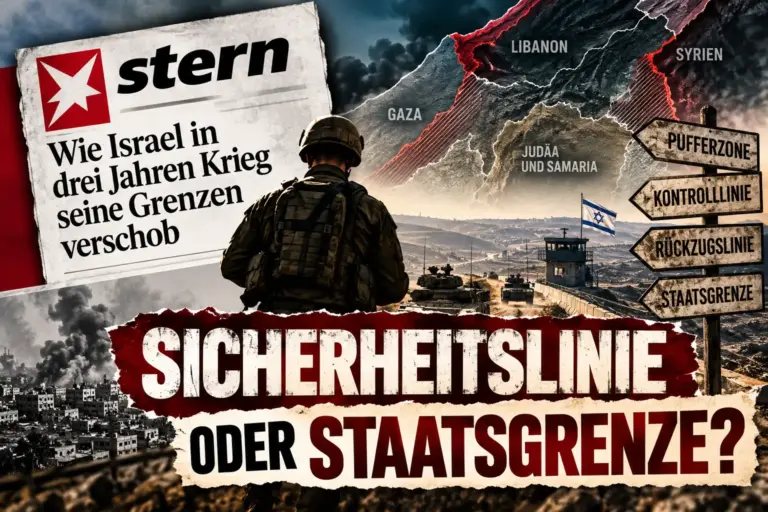


Israel-Turkey war? Ankara has not announced a war against Israel. But Turkey is planning at the state level for regional scenarios extending all the way to war, monitoring the increasingly close military cooperation between Israel and Greece, expanding its influence in Syria and increasingly treating the Jewish state politically as a strategic adversary. Israel has therefore long since become part of the security calculus with which Ankara is responding to the changed balance of power in the eastern Mediterranean and in Syria.
A letter from the Turkish Ministry of Defense dated August 10, 2026, offers an unusually candid insight into this. The response was not issued as a statement on a possible war with Israel. It answers a parliamentary inquiry about the arming of Greek islands in the Aegean and the growing military cooperation between Athens and Jerusalem.
It is precisely this connection that makes the response of the Turkish Ministry of Defense politically significant.
Ankara has regarded Greece as a strategic rival for decades. Israel, in turn, has now become a close security partner of Athens. At the same time, Israeli and Turkish interests in Syria are coming into increasingly direct conflict. What previously consisted of separate areas of conflict is thus growing into a broader Turkish security calculus.

Passende X-Beiträge
Aus dem SCHLAGSEITE X-ArchivAnkara itself writes the word war
The starting point is parliamentary inquiry 7/46682 by CHP member of parliament Hasan Öztürkmen from Gaziantep. The official database of the Grand National Assembly of Turkey lists it as received on July 16, 2026, and now as answered. The parliamentary subject is, from the Turkish perspective, the problematic arming of Greek islands and Athens’s growing military cooperation with Israel.
In the response dated August 10, Defense Minister Yaşar Güler writes that work on all possible developments in the regional environment, explicitly including crisis, tension and war, would continue in full coordination with the responsible state authorities.
This sentence is important. It describes a general regional planning horizon for Turkey. It is not an order to deploy against Israel and does not name Israel as the target of an impending war.
In the same letter, however, the ministry treats Israeli-Greek military cooperation as a security-relevant variable. Ankara explains that cooperation between Israel and Greece in the defense industry, military training, exercises and technology is being closely monitored. Developments in the Aegean and the eastern Mediterranean are also being followed with a view to Turkish security interests.
The letter was published on August 26 by Nordic Monitor. The Middle East Forum subsequently picked up the publication and likewise placed the document in the context of the growing Israeli-Greek defense cooperation.
The finding therefore needs neither to be inflated nor softened: The document does not prove a Turkish attack plan against Israel. But it does show that the Jewish state’s military cooperation with Greece now explicitly appears in a Turkish assessment of the situation that extends to the possibility of war.

Inquiry 7/46682 concerns Greece, the Aegean, the arming of Greek islands and Athens’s growing military cooperation with Israel. Güler’s response names a possible crisis, tension and war as Turkey’s regional planning horizon and at the same time confirms that Ankara is closely monitoring military cooperation between Greece and Israel. Israel is thus treated as a security-relevant factor, not as an explicitly named war target in the document.
Aegean, Cyprus and Mavi Vatan: The conflict is older than Gaza
Why Israel appears at all in a Turkish response about Greece is explained by the broader conflict in the eastern Mediterranean.
Turkey and Greece have been disputing sovereignty rights in the Aegean, the status of various islands, maritime jurisdiction and Cyprus for decades. Added to this is the Turkish doctrine of “Mavi Vatan,” the “Blue Homeland,” with which Ankara articulates far-reaching maritime interests in the Black Sea, the Aegean and the eastern Mediterranean.
Israel has entered this field of tension because Jerusalem has significantly expanded its political, economic and military relations with Greece and the Republic of Cyprus. From the Turkish perspective, the arming of Greek islands, Israeli defense technology and a closer Athens-Jerusalem-Nicosia axis are increasingly being read as a zone of strategic pressure.
This Turkish perspective explains Ankara’s language. It neither excuses Erdogan’s aggressive rhetoric toward Israel nor the attempt to make Turkish power claims the standard for the foreign policy of other sovereign states.
For Israel, cooperation with Greece is not an attack on Turkey. Greece is a democratic partner with its own security interests, and Jerusalem is not obliged to make its alliances dependent on whether Erdogan approves of them.
The record deal came only after Güler’s letter
The chronology is important here.
The response from the Turkish Ministry of Defense is dated August 10. At that point, the military rapprochement between Israel and Greece had long been a reality, but the major new defense agreement had not yet been signed.
On August 31, Jerusalem and Athens finally concluded an agreement worth around three billion euros on the further expansion of Greece’s air defense and a national command-and-control system. Reuters described it as Israel’s largest-ever arms export deal with Greece.
The agreement therefore does not explain Güler’s letter retroactively. Rather, it confirms the direction Ankara was already observing on August 10: Israel and Greece are growing ever closer militarily.

Erdogan’s hostility toward Israel did not begin in 2026
Erdogan’s stance toward Israel is not a sudden change in weather, either.
The Turkish president has politically elevated Hamas for years and hosted senior representatives of the organization in Turkey. In April 2024, Erdogan met with then-Hamas leader Ismail Haniyeh in Istanbul. Reuters documented the meeting.
A few weeks later, Ankara halted all direct trade with Israel. Trade volume between the two countries had still stood at around $6 billion to $7 billion in 2023. Reuters already described relations at the time as having reached a low point.
Jerusalem has played a special ideological role in Erdogan’s rhetoric for years. In September 2024, he declared Jerusalem and the Al-Aqsa Mosque a Turkish “red line” and called on Islamic states to form an alliance against what he described as Israeli expansionism. Reuters reported on these statements.
June 10, 2026, therefore does not mark the beginning of this development, but rather another escalation. Speaking to lawmakers from his AKP, Erdogan declared that Israeli actions in Syria and Lebanon now also threatened Turkey. He announced a strong response should, in his view, Turkish interests in the region be violated. Reuters documented the speech.
Anti-Israel rhetoric has thus increasingly become strategic rivalry. This development fits into the already discernible Turkish power politics toward Israel .
Damascus is not governed by an ordinary postwar government
This development is particularly dangerous in Syria.
After the ouster of Bashar al-Assad at the end of 2024, forces led by Ahmed al-Sharaa took power. Al-Sharaa was formerly known by the nom de guerre Abu Mohammed al-Jolani and led Hayat Tahrir al-Sham, or HTS. The organization emerged from the milieu of the former Syrian al-Qaeda structures, later publicly broke with al-Qaeda and developed into the dominant power in Idlib.
Since the change of power, al-Sharaa has sought international recognition and has significantly changed his political public image. This does not make the historical background of his movement disappear, however. A current overview by the UK House of Commons Library explicitly describes today’s Syrian leadership as having emerged from HTS.
The United Kingdom and the United States later removed HTS from their respective terrorist lists and established official contacts with al-Sharaa. This does not erase the historical background. It remains part of the security assessment, particularly because Ankara is one of the decisive external supporters in this new order.
Turkey has become one of the most important foreign-policy and military supporters of this new order. Ankara trains Syrian forces, helps rebuild state structures and wields considerable political influence over Damascus.
For Israel, this is not distant Syrian domestic politics. The power struggle between Israel and Turkey in Syria directly affects Israel’s northern security interests.
Syria borders the Jewish state directly. Which foreign power builds military capabilities there and what influence it gains over the Syrian armed forces directly affects Israel’s security.
Israel spent years witnessing Iran use Syrian territory for its military infrastructure and for arms deliveries to Hezbollah. Jerusalem has no reasonable grounds to suddenly treat every new foreign military presence on its northern border as harmless after Assad’s ouster.
Israel does not fear the Turkish flag, but capabilities
Israel’s red line is therefore not directed against the mere presence of Turkish citizens or against a flag on a barracks building.
Jerusalem is looking at military capabilities.
These include possible radar and air-defense structures, drone technology, Turkish arms deliveries, the training and arming of Syrian forces, as well as a possible further expansion of Turkish military structures southward.
Such capabilities could shorten Israel’s warning time and restrict its previous freedom of military action over Syria. That is precisely why Jerusalem assesses Turkey’s development differently from an ordinary training mission.
How seriously the Israeli leadership viewed the matter became clear on August 14. On that day, Mossad chief Roman Gofman spoke by telephone with Syrian Foreign Minister Asaad al-Shaibani. According to three sources familiar with the conversation, the discussion explicitly concerned the Turkish military presence, arms deliveries, drones, and a possible deployment of Turkish forces.
Reuters described the phone call as one of the highest-level direct contacts between Israel and the new leadership in Damascus since Assad’s fall.
Four days later, Israel attacked the Abu al-Duhur air base in northwestern Syria.
Israel said Damascus had been on the verge of allowing Turkish troops there and had ignored previous Israeli warnings. Ankara and Damascus denied plans for a permanent Turkish base. Syria did, however, confirm that Turkish military personnel had visited the site as part of military cooperation. Reuters contrasted the conflicting accounts.
The core conflict is thus out in the open: Ankara views its military cooperation with Syria as legitimate regional influence. Israel views the development of certain Turkish capabilities in Syria as a possible direct security threat.
For Jerusalem, Turkish declarations of intent are therefore not the only consideration. Capabilities, range, and military presence are decisive.
October 7, 2023, showed Israel in a horrific way what price the Jewish state can pay when warning signs are misjudged. That does not mean equating Turkey with Hamas. It means not taking security warnings seriously only once a threat has been fully established.

Israel Katz draws the red line
Israel’s defense minister, Israel Katz, accordingly articulated Israel’s position clearly after the attack.
He warned Erdogan against dragging Turkey into “dangerous adventures in Syria” and testing Israel’s determination to defend itself. Reuters documented the warning.
This is not a mirror-image confrontation between two states that mutually threaten each other’s territory.
Israel is not claiming Turkish territory. Nor is it trying to eliminate Turkish military bases within Turkey. Jerusalem is drawing a line against military capabilities being established in Syria that could impair Israel’s security.
Ankara is building influence. How far the Turkish military presence in the region already extends is something Israel itself recently pointed out publicly to Ankara.
Jerusalem is setting limits.
That is a distinction.
Washington saw the danger of a direct miscalculation
The seriousness of the situation is already apparent from the American reaction.
US special envoy Tom Barrack said after the attack that Turkey had not been informed in advance about the Israeli operation and could have observed Israeli flight movements toward its border area. Ankara could therefore have prepared its own military response. Barrack attributed the fact that this did not happen to prudent conduct. Reuters reported his statements.
Barrack was not a neutral backdrop for the Israeli position. He himself described the attack as an “unnecessary escalation” and later publicly questioned Israel’s justification.
Katz contradicted this account. According to his version, Israel had warned the Syrian leadership beforehand and provided relevant intelligence to the responsible American authorities. He described parts of Barrack’s account as inaccurate.
This disagreement does not alter the decisive finding: Washington now considers the military proximity between Israel and Turkey dangerous enough to establish a stronger deconfliction mechanism between Israel, Turkey, and Syria.
Such a channel is intended to prevent flight movements, troop transfers, or other military developments from being misinterpreted and resulting in a direct clash.
During US-mediated talks between Israel and Syria on August 23, there was also explicit discussion of defusing tensions between Israel and Turkey and preventing their rivalry from spilling over into Syrian territory. Reuters reported on the talks.
Israel-Turkey war? The NATO factor makes the issue bigger
Turkey has been a NATO member since 1952. Greece joined the alliance in the same year. Israel is not a NATO member, but has worked closely with the United States and Western armed forces for decades.
An Israel-Turkey war, or even a direct military clash in Syria, would therefore not automatically trigger Article 5 of the North Atlantic Treaty. The Articles 5 and 6 of the North Atlantic Treaty define the conditions and territorial scope of collective defense. The mere involvement of Turkish forces in an incident on Syrian territory does not automatically constitute an alliance contingency.
Politically, a direct military confrontation between Israel and one of NATO’s most militarily powerful members would nevertheless be a massive alliance problem.
Washington would simultaneously have to consider the security of a NATO partner, its close strategic relationship with Israel, and Syria’s stability. That is precisely why the American crisis channel is more than diplomatic courtesy.
It is intended to prevent a regional confrontation from suddenly raising questions extending far beyond Syria.
Yıldırım is routine. The language behind it is nevertheless interesting
In parallel with these developments, Turkey is once again conducting its “Yıldırım” mobilization exercise in 2026.
Accuracy is particularly important here.
Yıldırım is not a newly created exercise against Israel. The Turkish Defense Ministry itself describes it as a planned exercise series of the armed forces. Comparable Yıldırım mobilization exercises were 2024 and 2025 officially announced and conducted.
The 2026 series had also been planned for a long time. On May 20, the Ministry of Defense published an announcement on Yıldırım-2026 and explicitly described the exercise as part of the scheduled exercises of the Turkish armed forces.
Among other things, the exercise rehearses cooperation between the armed forces, ministries, and state institutions under mobilization and wartime conditions.
What is therefore noteworthy is not that Turkey suddenly scheduled an exercise in September for a war with Israel. That would be incorrect.
What is noteworthy instead is that the same official language of mobilization and wartime conditions, arising from routine preparedness, is running in parallel with a political development in which Israel appears increasingly clearly as a security-relevant factor in other official Turkish documents.
The connection is political. It is not evidence of a specific operational plan.
The legal front against Israel is also being expanded
Turkish pressure is not limited to Syria and military planning.
On August 21, the Turkish Justice Ministry said it intended to seek an Interpol Red Notice against Israeli Prime Minister Benjamin Netanyahu. The background is a Turkish criminal proceeding connected with the Israeli interception operation against the Global Sumud Flotilla. The Turkish arrest warrants include allegations ranging from genocide to crimes against humanity and torture. Reuters reported on the proceedings.
A Red Notice, however, is not an international arrest warrant issued by Interpol. It is an international wanted-person notice requested by a member state. Interpol itself explicitly clarifies, that the organization cannot have anyone arrested and that each country decides on the legal effect of such a notice.
Interpol also reviews requests before publication. Article 3 of the Interpol Constitution prohibits interventions of a predominantly political, military, religious, or racial character. Whether Ankara’s application will succeed is therefore not decided by Erdogan.
Netanyahu’s office described the move as a pathetic attempt to intimidate Israel’s leadership.
The pattern is also evident here: Ankara is trying to pressure Israel politically, diplomatically, legally, and strategically at the same time.
Ankara wants to be a regional power
Behind these conflicts lies Erdogan’s larger project.
Turkey does not simply want to be a NATO member on the edge of Europe. Ankara claims an independent role as a regional power between Europe, the Caucasus, the Black Sea, and the Middle East.
This power claim is increasingly colliding with Israel.
Not because Jerusalem claims Turkish territory.
But because the Jewish state is militarily strong, possesses advanced technology, cooperates with Greece and the Republic of Cyprus, and enforces its own security lines in Syria.
Israel is thereby effectively limiting areas in which Erdogan seeks to expand his political and military room for maneuver.
That makes Israel inconvenient from Ankara’s perspective.

Israel must not underestimate Erdogan’s course
Turkey is not a small adversary or another nonstate actor on Israel’s border. It has large armed forces, a significant defense industry, a strategic geographic position, and considerable regional influence.
That is precisely why Jerusalem must take Erdogan’s course seriously.
Turkey is not Hamas. Nor is it Iran. Equating them would be analytically wrong.
A persistently hostile course by a major NATO state has a different dimension. That is precisely why the question of a possible Israel-Turkey war is relevant to security policy, without claiming that a war has already been decided.
Israel therefore cannot base its security on the assumption that Turkish power projection in Syria will presumably turn out well or that Erdogan’s aggressive rhetoric will have no practical consequences.
It must monitor what capabilities emerge, where they emerge, and what influence Ankara gains over those forces positioned directly north of Israel.
The red line runs before Israel’s border
Israel is not seeking a war with Turkey by deepening its relations with Greece or limiting military risks in Syria. The dangerous point arises where Erdogan’s regional power ambitions meet Israel’s immediate security interests. Ankara can plan, arm itself, expand its influence, and declare Israel a political adversary. But it cannot expect Jerusalem to ignore all of that. A Jewish state that takes warning signs seriously only once foreign military structures have been fully established would have drawn the wrong lesson from October 7. Israel is therefore watching closely. That is not a provocation, but its damned duty.
ℹ️ Factual basis and primary sources for the article 📑
▶️ Grand National Assembly of Turkey:
Parliamentary Question 7/46682 by Hasan Öztürkmen
Official parliamentary database. The question of July 16, 2026, concerns the arming of Greek islands and Athens’s growing military cooperation with Israel.
▶️ Nordic Monitor:
Turkey plans for war scenarios amid expanding Israel-Greece defense ties
First publication of Defense Minister Yaşar Güler’s response letter of August 10, 2026, contextualizing the wording concerning crisis, tension, and war.
▶️ Middle East Forum:
Turkey Plans for War Scenarios amid Expanding Israel-Greece Defense Ties
Further publication and analysis of the letter made public by Nordic Monitor.
▶️ Reuters:
Israel signs $3.5 billion air defence deal with Greece
Report dated August 31, 2026, on the new Greek-Israeli defence agreement and the expansion of strategic cooperation.
▶️ Reuters:
Erdogan meets Hamas leader in Turkey
Report on Erdogan’s meeting with Hamas leader Ismail Haniyeh in Istanbul in April 2024.
▶️ Reuters:
Israeli-Turkish trade on life support as relations hit bottom
Background on Turkey’s suspension of trade with Israel and the longer-term deterioration of relations.
▶️ Reuters:
Erdogan calls for summit of Muslim leaders
Documents Erdogan’s rhetoric on Jerusalem, Al-Aqsa and what he claims is Israeli expansion.
▶️ Reuters:
Erdogan says Israel’s actions threaten Turkey too
Report dated June 10, 2026, on the further escalation of Turkey’s rhetoric against Israel.
▶️ House of Commons Library:
Syria in 2026: Interim government and Kurdish integration
Current assessment of the Syrian leadership under Ahmed al-Sharaa, its origins in Hayat Tahrir al-Sham and the subsequent international rapprochement.
▶️ Reuters:
Mossad chief and Syrian foreign minister discussed Turkish deployments
Report on the phone call between Roman Gofman and Asaad al-Shaibani on August 14, 2026.
▶️ Reuters:
Israel and Turkey step up warnings over Syria
Report on the attack on Abu al-Duhur, Israeli security concerns, the Turkish-Syrian account and the warning issued by Israel Katz.
▶️ Reuters:
US working on deconfliction mechanism among Turkey, Israel and Syria
Report on the risk of military misinterpretations and American efforts to establish a crisis channel.
▶️ Reuters:
Syria, Israel hold US-mediated talks to ease tensions
Report dated August 23, 2026, on US-mediated talks and the attempt to prevent the Israeli-Turkish rivalry from spilling over into Syrian territory.
▶️ NATO:
NATO member states
Official overview. Greece and Turkey have been members of the alliance since 1952.
▶️ NATO:
North Atlantic Treaty, Articles 5 and 6
Official treaty text on collective defence and the territorial scope of collective defence.
▶️ NATO:
Accession Protocols of Greece and Turkey
Official treaty text on the accession of Greece and Turkey to NATO in 1952.
▶️ Turkish Ministry of Defence:
Yıldırım-2026 Mobilisation Exercise
Official announcement dated May 20, 2026. The ministry explicitly describes Yıldırım as a planned exercise of the Turkish armed forces.
▶️ Turkish Ministry of Defence:
Yıldırım-2025 Mobilisation Exercise
Documents that the mobilisation series was also conducted in the previous year.
▶️ Turkish Ministry of Defence:
Yıldırım-2024 Mobilisation Exercise
Documents that the exercise series was planned as early as 2024.
▶️ Reuters:
Turkey to seek Interpol notice for Netanyahu
Report on Turkey’s proceedings in connection with the Gaza flotilla and the announced application to Interpol.
▶️ Interpol:
About Red Notices
Official explanation that a Red Notice is not an international arrest warrant.
▶️ Interpol:
Legal review of Interpol Notices
Explains the review of applications and the prohibition under Article 3 of predominantly political, military, religious or racial intervention.
🔎 Error discovered, criticism or addition?
SCHLAGSEITE.eu stands for careful research and transparent corrections. Have you discovered a factual error, unclear wording or a broken link? Then send me your tip. Please provide a verifiable source where possible.