00:00 / –:–
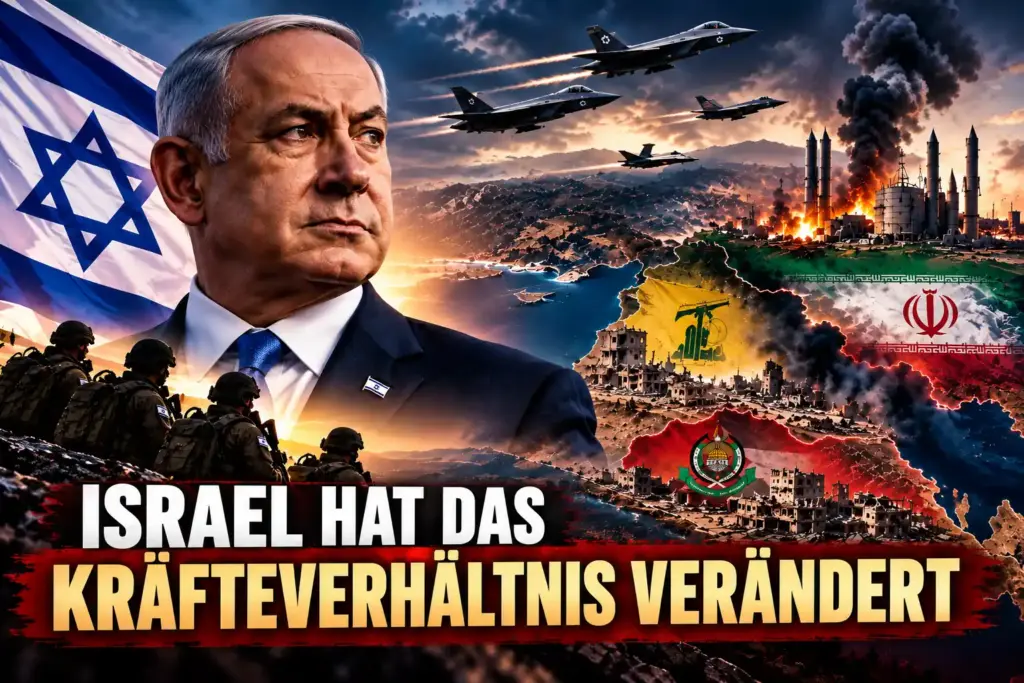
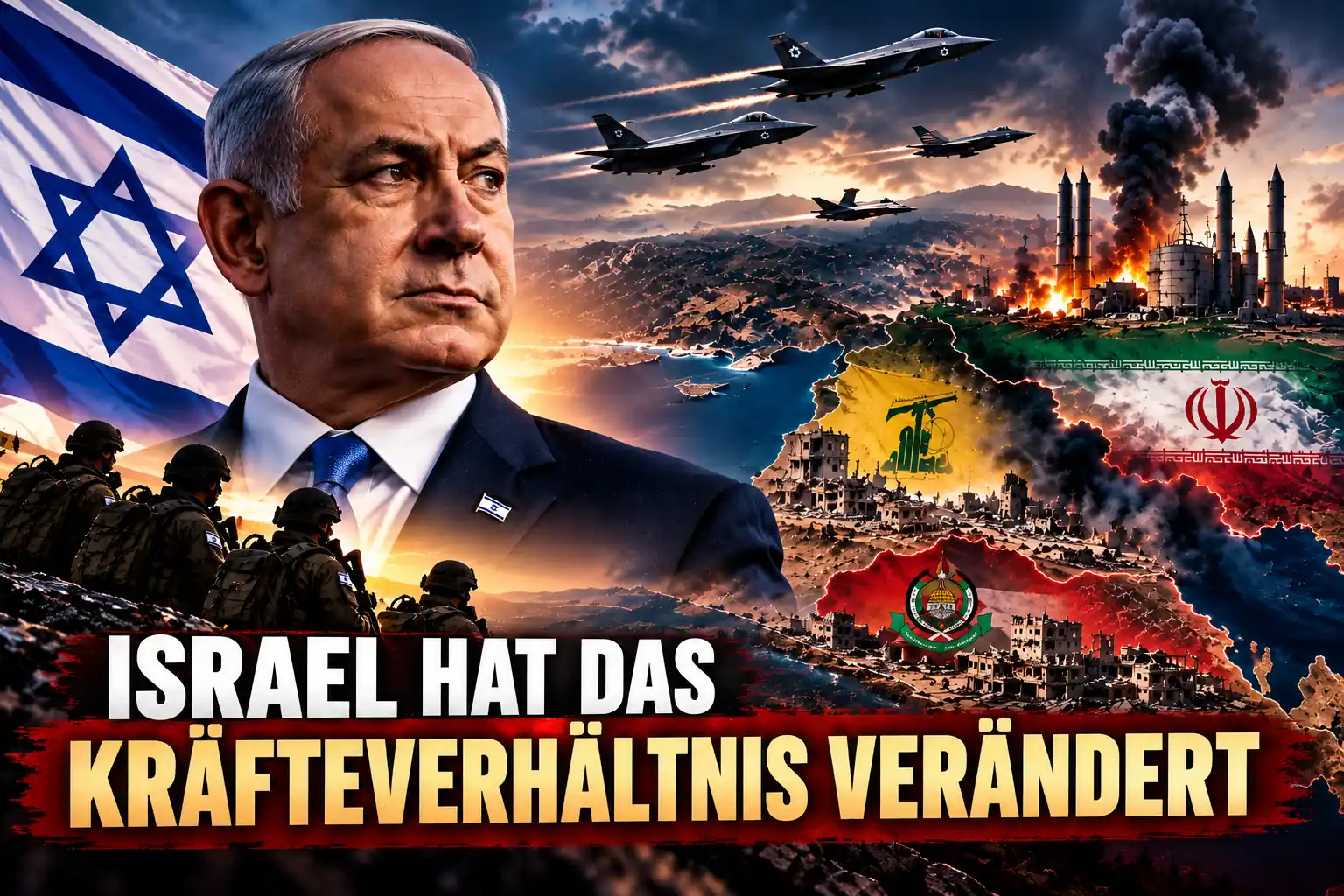
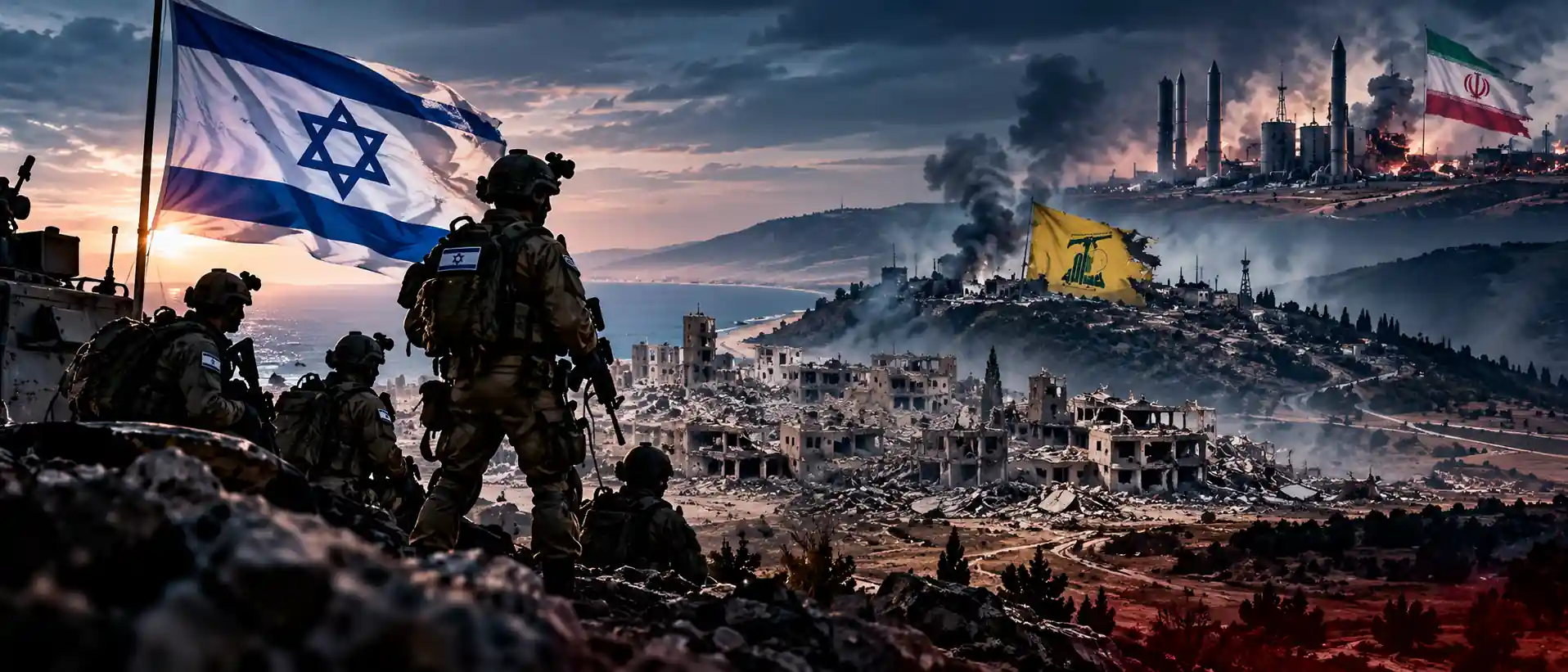
On October 7, 2023, Israel suffered the most serious security failure in its history. Hamas murdered around 1,200 people and abducted 251 hostages to Gaza. Three years later, the military situation looks fundamentally different: Hamas and Hezbollah have been severely weakened, Iran’s military and nuclear infrastructure has been hit massively, and Tehran’s regional power network has lost striking power. This change took place under the government of Benjamin Netanyahu and on the basis of political decisions that were implemented despite enormous international pressure.
Uri Geller has in a commentary for the Jerusalem Post voiced what many of Netanyahu’s supporters think. He calls him Israel’s Churchill and sees in him the politician who must carry the course that was begun through to its conclusion. This argument does not require a personality cult. The security-policy results are entirely sufficient.
Shortly before the election on 27 October 2026 a simpler question therefore arises: How has Israel’s strategic position changed under Netanyahu’s leadership? The answer is clear. Israel today faces its most important adversaries from a stronger military position than it did immediately after 7 October.
Passende X-Beiträge
Aus dem SCHLAGSEITE X-ArchivHamas and Hezbollah have lost their former strength
Hamas started the war with the massacre of October 7. Israel’s response has severely damaged its military structures. Leaders have been eliminated, infrastructure destroyed, and its ability to carry out an organized attack on the scale of October 7 has been severely impaired.
The Jewish People Policy Institute describes Hamas in 2026 as significantly weakened and far removed from its former military capabilities. The organization continues to exist and still has armed structures at its disposal. The decisive finding remains: Hamas today is militarily no longer the Hamas of October 6, 2023.
The change is even more pronounced in the north. Hezbollah lost large parts of its leadership, thousands of fighters, and significant portions of its military capabilities. On September 27, 2024, Israel killed Hassan Nasrallah, the organization’s longtime secretary-general. With him, one of the most important figures in Iran’s power apparatus in the Middle East fell.
Israel also attacked weapons depots, missile positions, command facilities, and other Hezbollah military structures. The threat infrastructure built up over years along Israel’s northern border was severely damaged.
These operations were carried out by soldiers, the Mossad, the Shin Bet, and military planners. Political responsibility for the strategic direction, the authorization of key operations, and the continuation of the war despite massive international pressure lay with Netanyahu’s government.
This is the point at which political leadership becomes measurable.
The war reached the center of power in Iran
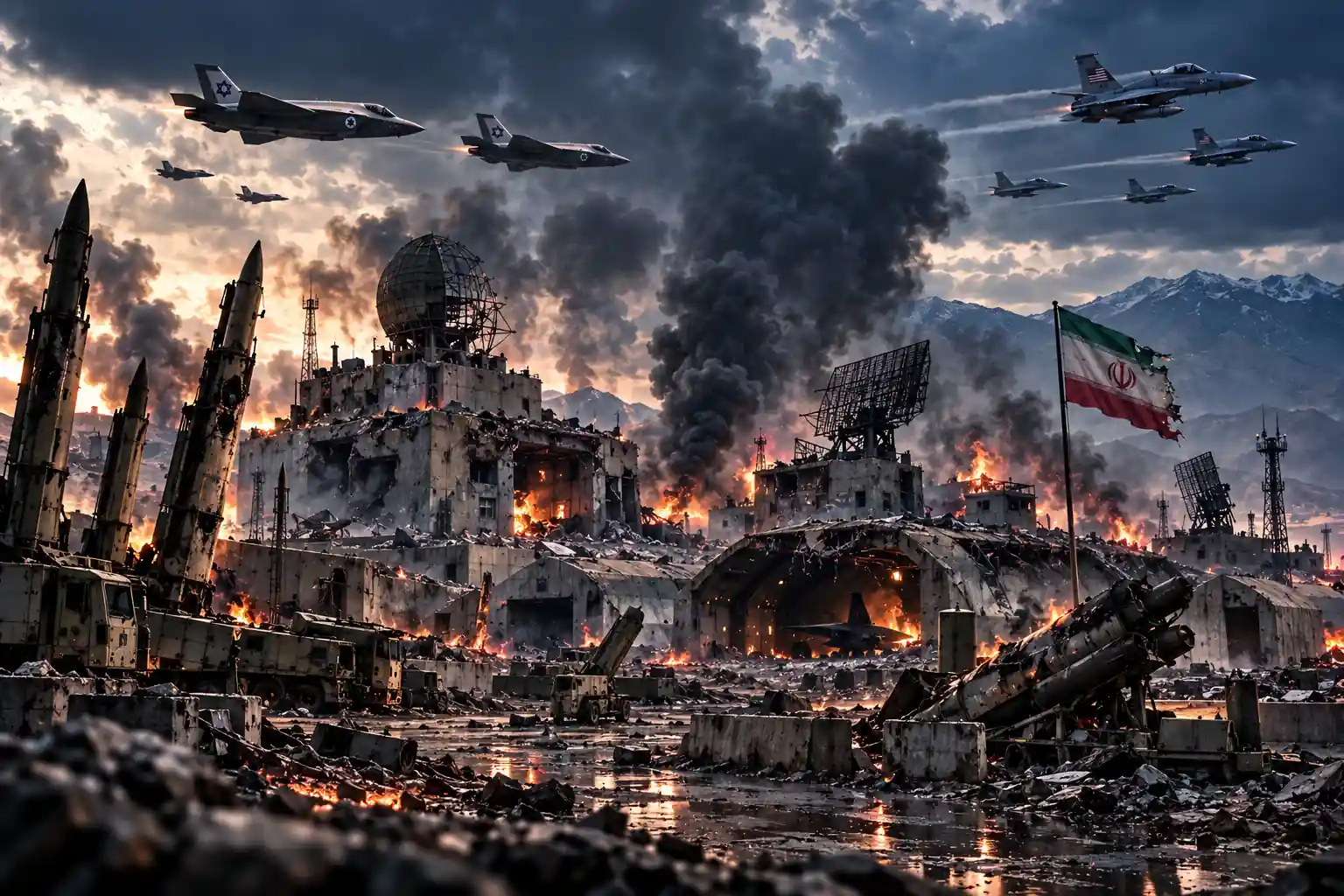
On February 28, 2026, the confrontation reached a new stage. Israel and the United States jointly attacked targets in Iran. Reuters reportedabout the joint operation and the targeted attacks on the Iranian leadership.
Ayatollah Ali Khamenei was killed in the operation. Other senior representatives of Iran’s power apparatus also died, including, according to Israeli sources, Islamic Revolutionary Guard Corps Commander Mohammad Pakpour and former security chief Ali Shamkhani.
The American involvement is part of the facts. It does not diminish Israel’s strategic role.
Netanyahu had made the Iranian threat the core of his foreign and security policy for years. He warned about Iran’s nuclear program, the expansion of its ballistic missile capabilities, and Tehran’s strategy of encircling Israel through armed proxies.
In 2026, this strategy was no longer merely contained. It was attacked directly.
The success will only be lasting if Iran cannot rebuild its military, nuclear, and missile capabilities undisturbed. That is precisely the next task of Israeli security policy.
Israel’s enemies took note of the internal division
The political crisis over judicial reform in 2023 was not merely a domestic conflict. Israel’s opponents closely watched what was happening in the country.
An analysis by the Institute for National Security Studiesdescribes how Hamas and other opponents of Israel perceived the internal tensions and doubts about social cohesion as a weakening. Senior military and intelligence officials had warned of damage to deterrence.
Hamas had been preparing the attack of October 7 over an extended period. Responsibility for the attack lies with Hamas and the other terrorists involved. However, Israel’s political and social divisions became part of its opponents’ assessment and reinforced their impression of a favorable window of opportunity.
Anyone who publicly conveys the impression that a country is politically paralyzed, that reservists could refuse to serve, and that state institutions are permanently preoccupied with one another must expect enemies to draw their own strategic conclusions from this.
Terrorist organizations are not interested in domestic political theory. They look for weakness.
October 7, 2023 remains an Israeli security failure
Hamas bears responsibility for the massacre. The failure to prevent this attack was Israeli.
The investigations by the Israeli military describe serious misjudgments in assessing Hamas, defense preparedness, and the response to warning signs ahead of the attack. The previous containment strategy toward Gaza also failed.
The practice of allowing Qatari funds to flow into Gaza spanned several Israeli governments. Under Netanyahu’s government, direct cash transfers were authorized from 2018 onward with Israeli approval. A later fact-check on the funding policy toward Gaza documents this practice and the subsequent changes to the payment mechanism.
The concept behind it failed. Hamas did not use the years of presumed calm for peace. It prepared for war.
For Netanyahu’s record, this means: October 7 remains the gravest failure of his tenure. His response to it also belongs in the balance sheet. Under his government, a military strategy was subsequently implemented that struck Hamas, Hezbollah and Iran to an extent that hardly anyone had expected before October 7.
All 251 abductees have returned
251 people were abducted from Israel on October 7. On January 26, 2026, the remains of Ran Gvili, the last October 7 hostage still in Gaza, were brought back to Israel . This meant that none of the people abducted at the time remained in Gaza.
Many returned alive. Others were brought home only as corpses. This is not a minor detail in the balance sheet of the war. A state whose citizens have been abducted has a duty to bring them back. Israel remained committed to this goal, militarily and through negotiations. The price was high. Nevertheless, the result is part of the balance sheet.
The Abraham Accords have survived the war
Netanyahu’s foreign-policy record does not end with the military. The Abraham Accords of 2020 showed that Arab states can establish relations with Israel without waiting for a solution to the Palestinian conflict first. The United Arab Emirates, Bahrain and Morocco represent this course. Crucially, these relations themselves survived the war after October 7.
At the end of September 2026, Netanyahu met the president of the United Arab Emirates, Mohamed bin Zayed, in Abu Dhabi. The state news agency WAM officially confirmed the meeting and reported on talks about the further development of bilateral relations.
This meant that a central pillar of Israel’s regional strategy remained in place. Arab states do not have to love Israel. They have to recognize that cooperation with a strong Israel serves their own interests. That was precisely the basis of Netanyahu’s strategy even before October 7.
The alternative must offer more than being anti-Netanyahu
The Israeli opposition consists of politicians from different camps. Some have military experience, others experience in government. That is no substitute for a strategy.
The benchmark for an alternative government is concrete:
- Can it prevent Hamas from rebuilding an army in Gaza?
- Can it prevent Hezbollah from restoring its missile arsenals and command units?
- Can it prevent Iran from reviving its nuclear and missile programs?
- Can it bring additional Arab states closer to Israel?
- Is it prepared to stand by military decisions even when diplomatic pressure from Europe, international organizations, and parts of American politics increases?
That is what this is about—not who finds Netanyahu likeable.
Israel needs strength, not illusions
The Jewish People Policy Institute describes Israel in 2026 as militarily stronger than it has been in decades. Hamas, Hezbollah and Iran have been significantly weakened. At the same time, the institute describes a more difficult international situation and continuing internal polarization.
The central security-policy finding is not diminished by this. After October 7, Israel did not capitulate, freeze the war or subordinate its security to international wishful thinking. It struck back. Netanyahu politically upheld this course.
This requires neither Geller’s Churchill comparison nor a mystical aura. The results are there for all to see.
Netanyahu bears responsibility for the security failure of October 7. He also bears political responsibility for the strategy with which Israel subsequently dealt heavy blows to Hamas, Hezbollah and Iran. Today, Israel faces its most important enemies from a militarily stronger position than it did three years ago. That is precisely what the next government must be judged by. Israel does not need a soft-pedaled course that replaces security with hope. It needs leadership that understands that deterrence only works when the adversary knows that threats have consequences. Netanyahu proved that after October 7.
ℹ️ Factual basis and primary sources for the article 📑
▶️ Israel Defense Forces:
The October 7 Inquiries
Investigations by the Israel Defense Forces into military misjudgments and failures surrounding October 7.
▶️ Institute for National Security Studies:
Israel’s National Security Concept: Functional Incoherence and the October 7 Disaster
Analysis of deterrence, internal cohesion and Hamas and other adversaries’ perception of Israeli weakness.
▶️ Jewish People Policy Institute:
Annual Assessment of the Jewish People 2026
Analysis of Israel’s strategic situation and the weakening of Hamas, Hezbollah and Iran.
▶️ Reuters:
Israel and US launched strikes as Iranian leader met with inner circle
Report on the joint Israeli-American operation of February 28, 2026, and the attacks on the Iranian leadership.
▶️ Reuters:
Israel retrieves last hostage body from Gaza
Report on the recovery of the remains of Ran Gvili, the last hostage from October 7 still located in Gaza.
▶️ Israel Democracy Institute:
Elections 2026
Schedule and date of the Israeli parliamentary election on October 27, 2026.
▶️ Emirates News Agency WAM:
UAE President receives Prime Minister of Israel
Official confirmation of the meeting between Benjamin Netanyahu and Mohamed bin Zayed in Abu Dhabi.
▶️ Times of Israel:
Time fact-checks Netanyahu interview on Gaza funding
Documentation of the Qatari money transfers to Gaza and the cash payments authorized under Netanyahu’s government from 2018 onward.
▶️ Jerusalem Post:
The Left has weakened Israel, only Bibi can save it – opinion
Introductory commentary by Uri Geller on Benjamin Netanyahu’s political and national security role.
🔎 Spotted an error, criticism, or addition?
SCHLAGSEITE.eu stands for thorough research and transparent corrections. Have you spotted a factual error, unclear wording, or broken link? Then send me your note. Please provide a verifiable source if possible.