00:00 / –:–
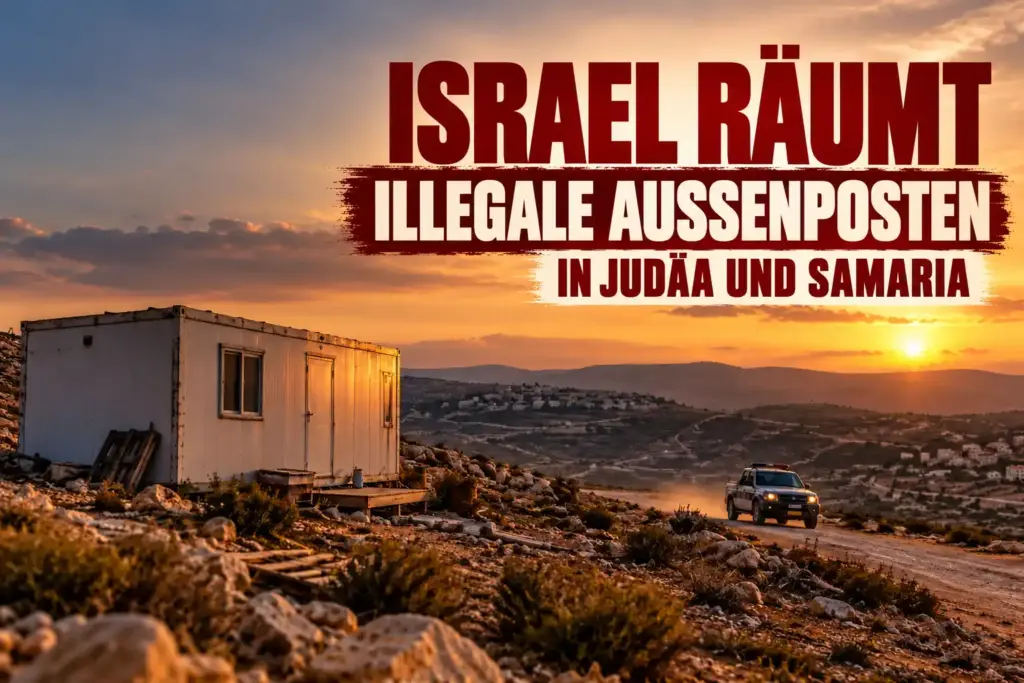
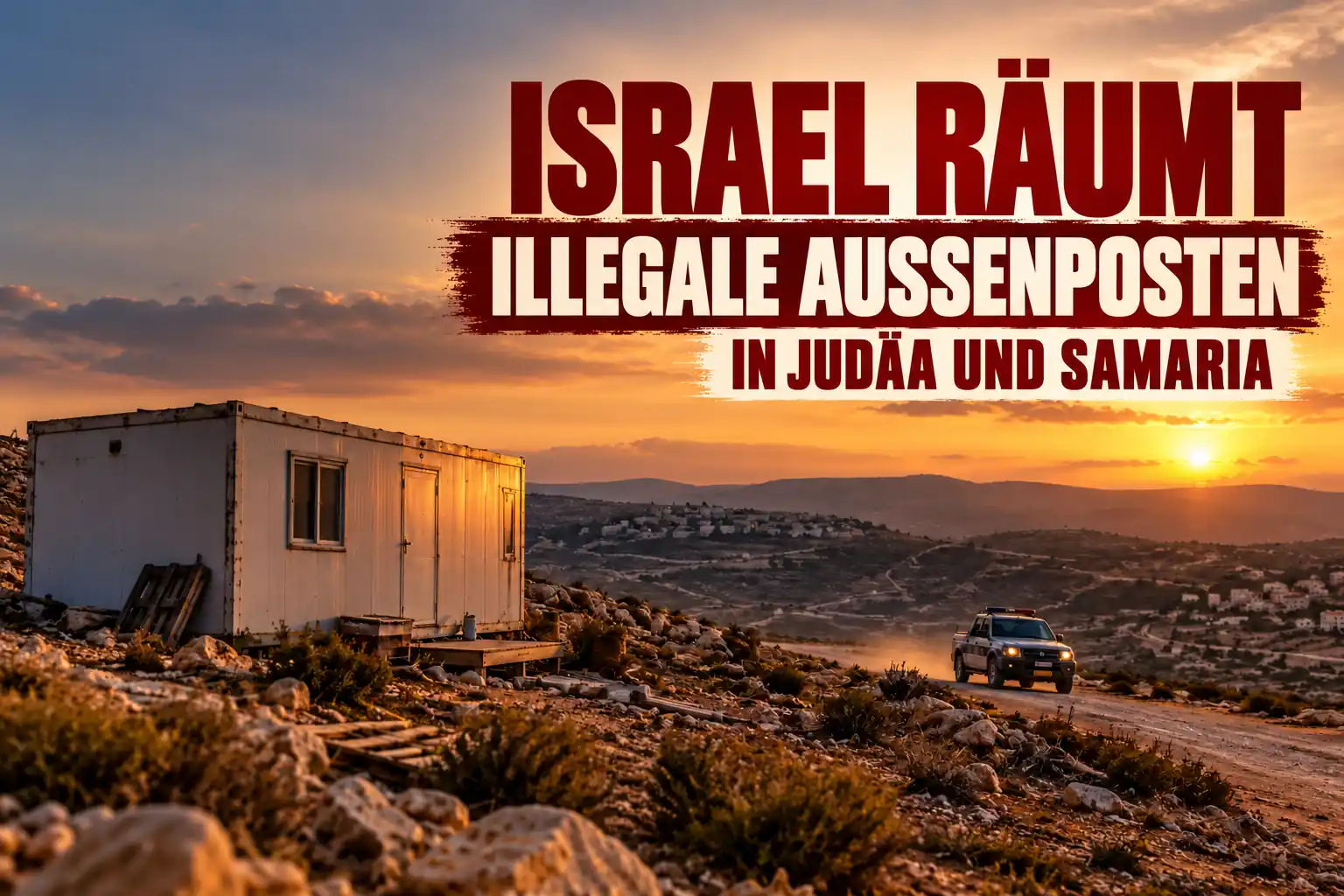
Israel’s military is currently clearing seven to ten unauthorized outposts per week in Judea and Samaria. Central Command wants to step up the operations further. However, some of the cleared sites are being reoccupied, while suspected perpetrators of violence are returning despite court-imposed restrictions. Defense Minister Israel Katz therefore wants civilian law enforcement to be placed entirely under the responsibility of the police in the future.
The most recent evictions point to a problem that cannot be solved with an excavator and a few arrests: it concerns state authority, the enforcement of court-imposed conditions, and a violent minority that also attacks Israeli security forces. The intensified measures were reported by Walla and the Jerusalem Post.
Ta’ana: 15 arrests, but the evictions continue
The problem is particularly clear at the illegal outpost of Ta’ana in the southern Hebron Hills. Within a week, security forces moved in there several times. According to a senior security official, 15 people were arrested and handed over to the police. The first nine were accused of throwing stones at border police officers; they received seven days of house arrest and a 45-day ban on entering the southern Hebron Hills.
Six other suspects received only 72 hours of house arrest from another judge. According to the security official, they returned to Ta’ana afterward, where they encountered the same border police officers who had previously cleared the outpost.
The security official accuses the courts of lacking deterrence. If soldiers and police officers repeatedly clear the same sites and those arrested subsequently return, the effect of the operations evaporates. The specific rulings are not available as original documents in the reporting; the criticism of the judges is therefore an assessment attributed to the security official.

Passende X-Beiträge
Aus dem SCHLAGSEITE X-ArchivAttacks on a female journalist and European diplomats
On October 16, American photojournalist Heidi Levine was attacked during the Palestinian olive harvest near Abu Falah, close to Ramallah. She was wearing a clearly identifiable press vest and a helmet. According to reports by the Associated Press , she sustained serious injuries, including fractured ribs and vertebrae, as well as an injury to one finger that required surgery.
One day later, on October 17, masked Israeli activists attacked a delegation in Taybeh that included representatives from Belgium, France and Poland, as well as Catholic representatives. A diplomatic vehicle was also damaged in the incident. The IDF explicitly condemned the attack. US Ambassador Mike Huckabee and Israel’s President Isaac Herzog also criticized the violence. The attack on the delegation is documented, among other things, by Reuters documented.
On October 19, the “Olive Leaf” police operation followed. Police, border police, the Shin Bet and the army were involved. Police initially reported eight and later ten arrests of Israeli suspects. The suspects are alleged to be connected with the weekend’s acts of violence. Vehicles and evidence were seized. The specific charges against each individual and the criminal outcomes of the investigations have not yet been fully published. The updated police statement names ten arrests.
Another incident was reported on October 18 from the Wadi al-Rahim area. According to the IDF operations log from October 18 , Israeli civilians entered a Palestinian village, left graffiti and set fire to a container used as a storage facility. Police and the army launched investigations; on the same day, a nearby illegal outpost was evacuated.
Katz wants police to prosecute violence in the future
On October 19, Defense Minister Israel Katz announced that combating serious violence by Jewish rioters in Judea and Samaria should fall entirely under the jurisdiction of the local police district. According to his statementinclude prevention, investigations and criminal prosecution. The IDF is to focus on combating terrorism, protecting the borders and the security of Jewish communities.
As early as August, Katz had a corresponding plan drawn up. According to him, its implementation was discussed with Prime Minister Benjamin Netanyahu; personnel and budgetary resources would still have to be coordinated for this purpose. The reorganization has therefore been announced, but not completed. Katz continues to reject administrative detention for Jewish suspects. Instead, he is relying on stronger regular law enforcement.
Chief of Staff Eyal Zamir meanwhile ordered the reinforcement of forces by an additional Border Police unit. This was reported by the Jerusalem Post on October 19. Whether the reorganization will prevent repeat offenses remains to be seen in practice.
Unauthorized outposts are not to be equated with communities
Hundreds of thousands of Jews live in Judea and Samaria. Their communities must not be lumped together indiscriminately with those radical groups that attack farmers, journalists or police officers. The area has been part of Jewish history for thousands of years. Places such as Hebron, Shiloh and Beit El are historically and religiously significant.
According to a Ynet report dated 14 October 2026 Israeli security circles speak of a violent hard core of around 300 to 500 youths. This is an estimate from security circles, not an official overall statistic.
However, the outposts currently being evacuated do not have the required Israeli permits. The competent authorities and courts decide on recognition, demolition and the legal consequences. Historical ties to the land give no one the right to use violence against police officers or damage someone else’s property.
Olive harvest: 85 locations coordinated, 65 with IDF protection
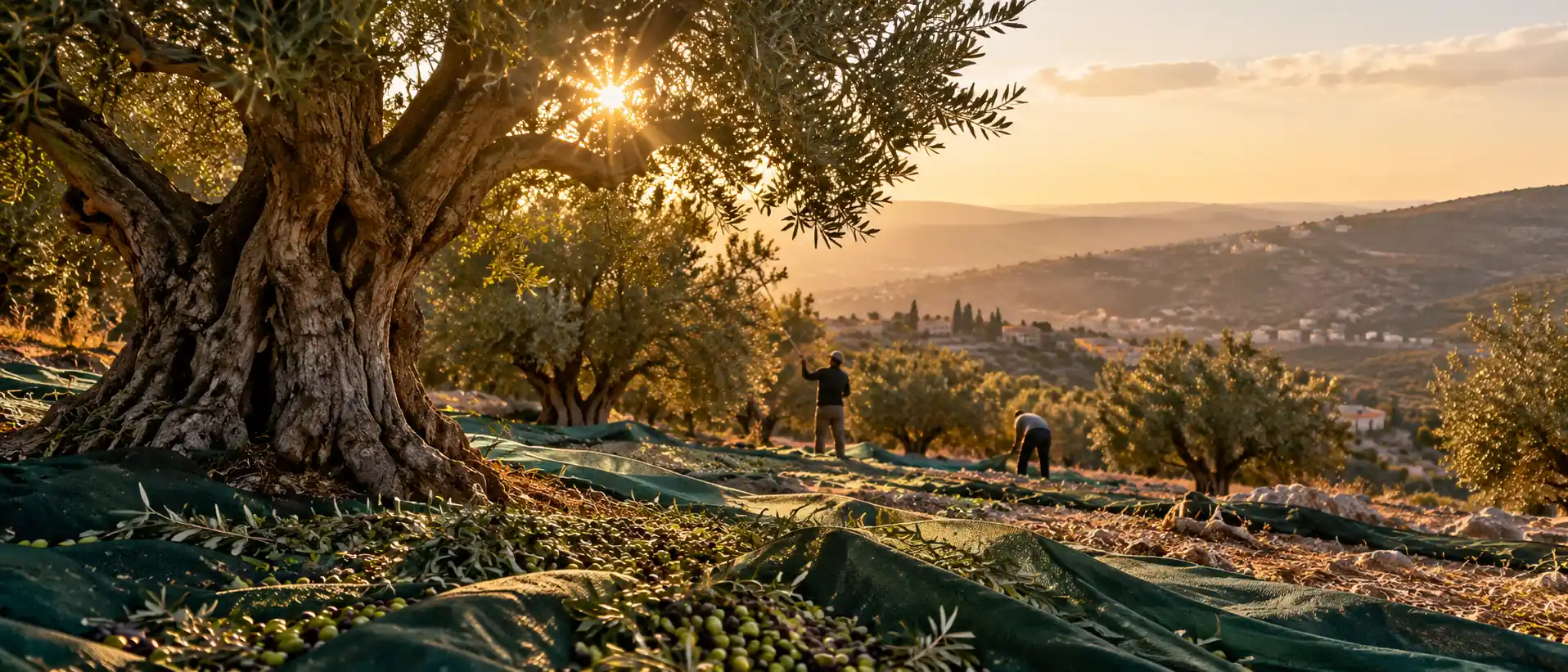
The annual olive harvest is one of the conflict-prone periods in Judea and Samaria. Access routes, disputes over land and security measures regularly lead to tensions. Individual allegations of theft or provocations must each be examined on the basis of concrete evidence. The confirmed attacks on harvest workers, journalists and diplomats are acts of violence in their own right.
According to the security official interviewed by Walla, the army coordinated harvesting operations at 85 locations. At 65 of them, the harvest took place under the protection of soldiers. At four locations, violent confrontations prevented the work; in the remaining cases, no farmers had arrived or no fruit was available. These are statements by this security official, not an independently published overall statistic.
He also stated that the particularly serious incidents of the weekend occurred in Area B, where the harvest did not have to be coordinated with the army in advance. He explicitly described some of the perpetrators of the violence as “Jewish terrorists.” His criticism was correspondingly sharp. The IDF is supposed to combat Palestinian terrorist networks and protect residents of Jewish communities. Attacks from within its own ranks create additional security problems.
Unauthorized outposts and Palestinian construction in Area C
The debate over unauthorized Jewish outposts has another side: In Area C, Israel has civil authority over construction and planning. Numerous unauthorized Palestinian structures also exist there. The Israeli organization Regavim recorded in an aerial imagery analysis as of May 2024 a total of 97,566 Palestinian structures classified as illegal according to its methodology. This is an organization-linked survey, not a current official figure for October 2026.
Israel also takes action there: According to an analysis by Peace Now based on OCHA data, 1,269 Palestinian structures in Area C were demolished in 2025 due to a lack of permits. Israel’s permitting practice itself is politically and legally contested. That is precisely why the standard, the authority responsible and the respective procedures must be named precisely.
Persistent enforcement against unauthorized outposts
As early as September 6, Reuters citing sources familiar with the matter, that Netanyahu had ordered the removal of unauthorized outposts. Finance Minister Bezalel Smotrich confirmed the instruction and criticized it. Katz’s current decision now shifts the focus to permanent police enforcement.
This is a political and organizational task. The police must prosecute offenses, the judiciary must review petitions and allegations in accordance with the rule of law, and the government must regulate its areas of responsibility in such a way that the police and army do not have to repeatedly carry out the same operations in the same places.
Israel does not need self-appointed defenders
Israel is a state governed by the rule of law, with an army, a police force and independent courts. That is precisely why it cannot afford groups that want to decide for themselves when laws apply and when they do not.
Jewish history in Judea and Samaria does not have to be defended by attacking Palestinian farmers or throwing stones at Israeli police officers. Such behavior gives Israel’s opponents additional opportunities to attack and places an added burden on security forces that are already facing significant threats. It also harms the Jewish residents of the area who have nothing to do with these acts.
Anyone who truly wants to strengthen Israel must accept that the Jewish state enforces its own laws. Radical activists do not decide where construction is permitted, who may enter someone else’s property or when violence is allegedly justified. The rule of law decides that. And its authority must also apply in Judea and Samaria.
ℹ️ Factual basis and primary sources for the article 📑
▶️ IDF, October 18, 2026:
Official operational diary
Report on Wadi al-Rahim at 10:43 p.m. and on the evacuation of the outpost.
▶️ Walla / Jerusalem Post, October 18/19, 2026:
Evacuations, Ta’ana and olive harvest
Reports of seven to ten evacuations per week, court orders and protection of the harvest.
▶️ Ynet, October 14, 2026:
Security sources on the violent hard core
Estimate of 300 to 500 youths who are attributed with nationalist-motivated violence.
▶️ Times of Israel, October 19, 2026:
Katz on the police’s future responsibility
Wording and contextualization of the announcement.
▶️ Times of Israel, October 19, 2026:
Updated police report: ten arrests
Police operation Olive Leaf and the status of the investigation.
▶️ Associated Press and Reuters, October 18/19, 2026:
Attack on Heidi Levine and diplomats
Reuters report on Taybeh
Confirmation and chronological classification of the attacks.
▶️ Jerusalem Post, October 19, 2026:
Border police reinforcement by Zamir
Planned additional forces against nationally motivated violence.
▶️ Reuters, September 6, 2026:
Netanyahu’s earlier instruction to evacuate
Political background to the measures.
▶️ Regavim and Peace Now:
Regavim survey, data as of May 2024
Peace Now, 2025 annual report
Separately identified organizational survey and OCHA-based figures for Area C.
🔎 Found an error, criticism, or addition?
SCHLAGSEITE.eu stands for careful research and transparent corrections. Have you discovered a factual error, unclear wording, or a broken link? Then send me your note. If possible, please provide a verifiable source.