00:00 / –:–
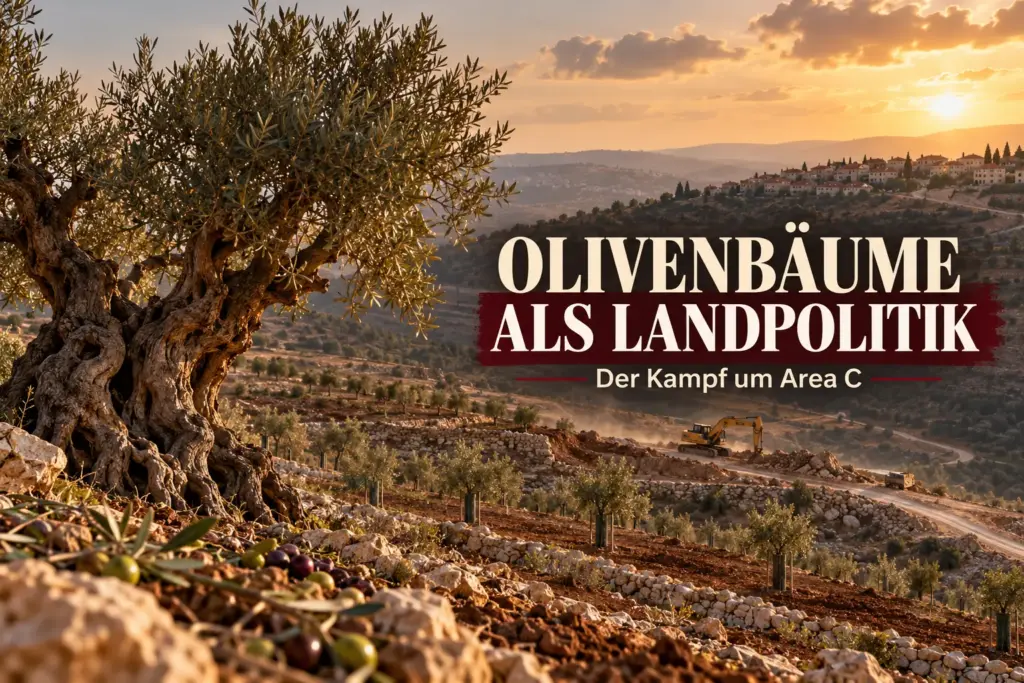
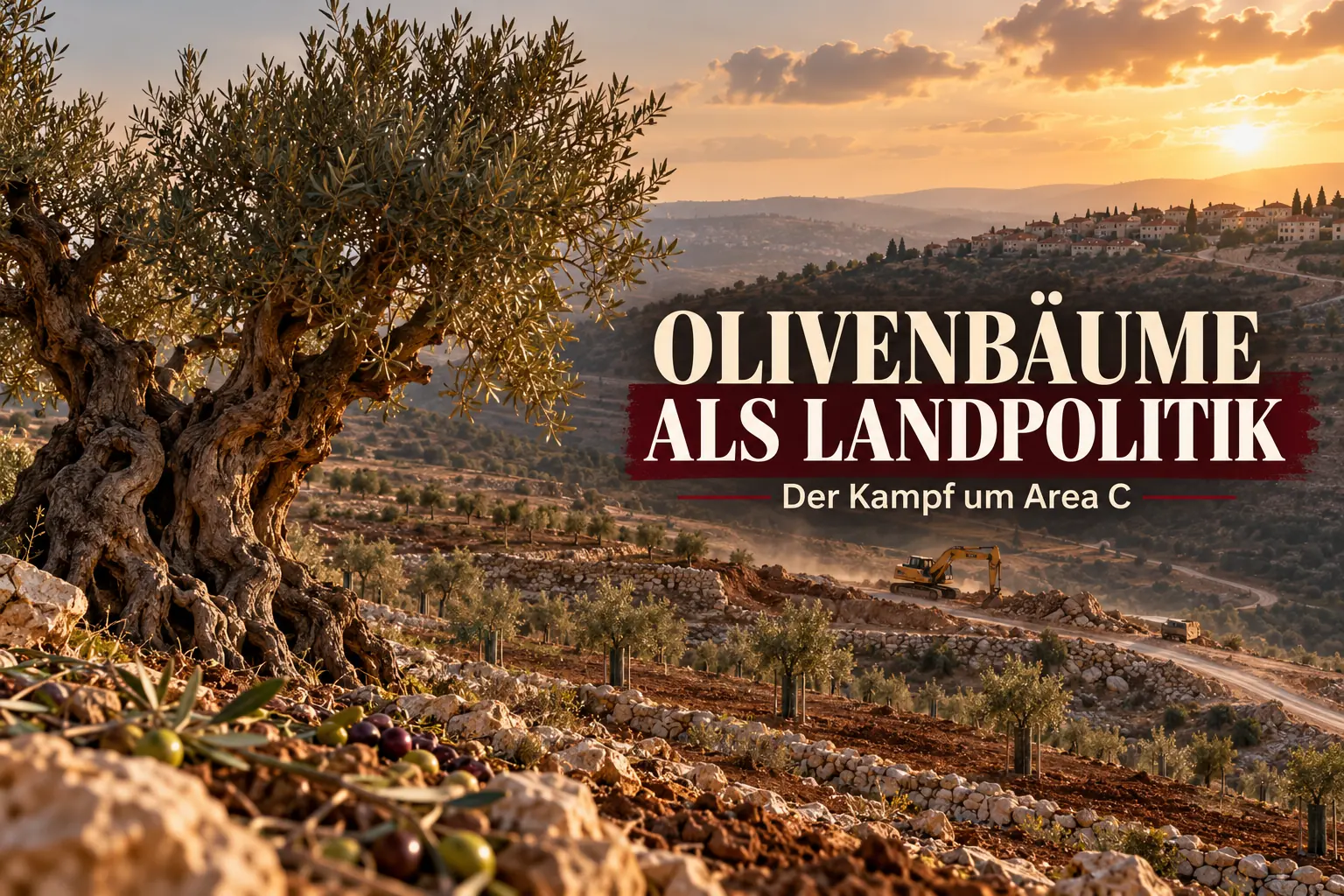
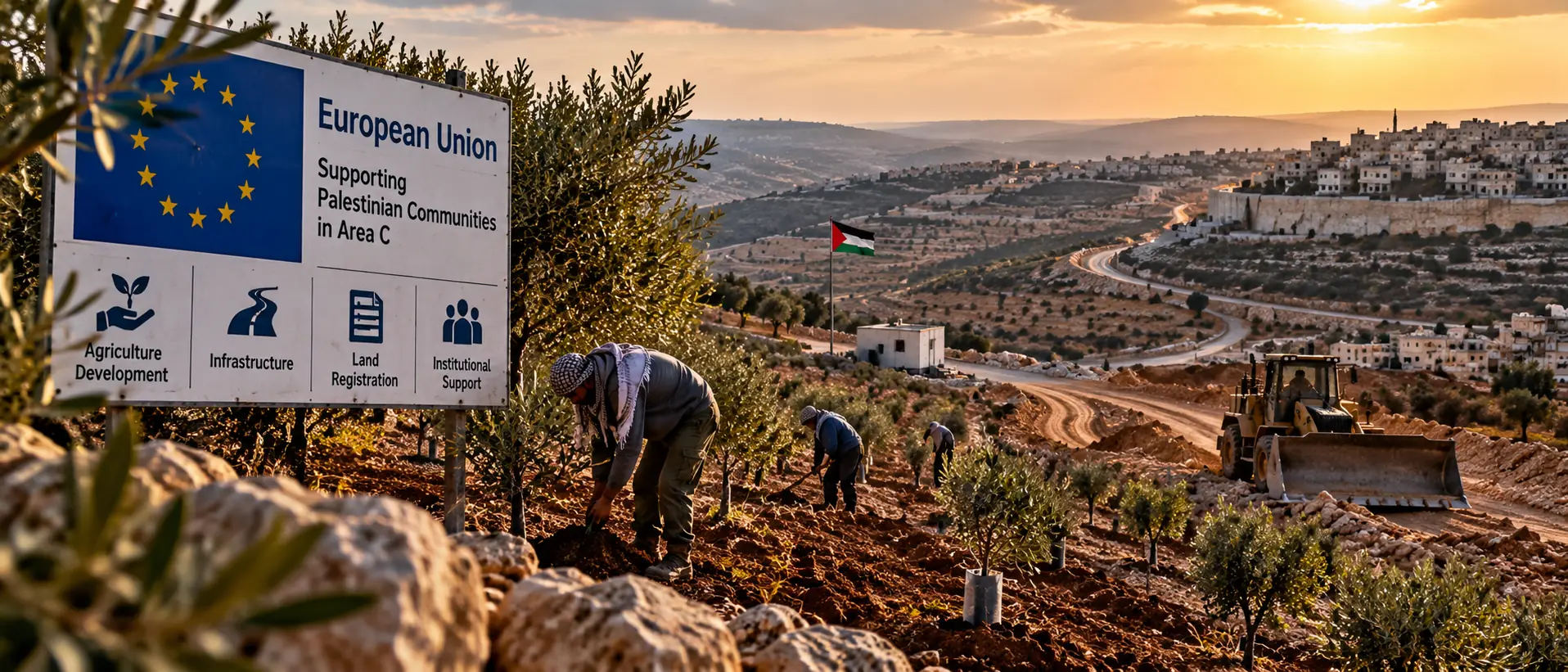
In Area C, it is not only harvesting that takes place. Here, new roads, terraces, irrigation systems and olive plantings are being used to prepare long-term claims to land. The Palestinian Authority aims to expand its influence in this area. The EU supports agriculture, land registration and Palestinian administrative structures with an explicit political objective. Under Oslo II, territorial planning authority lies with Israel. That is precisely what this conflict is about.
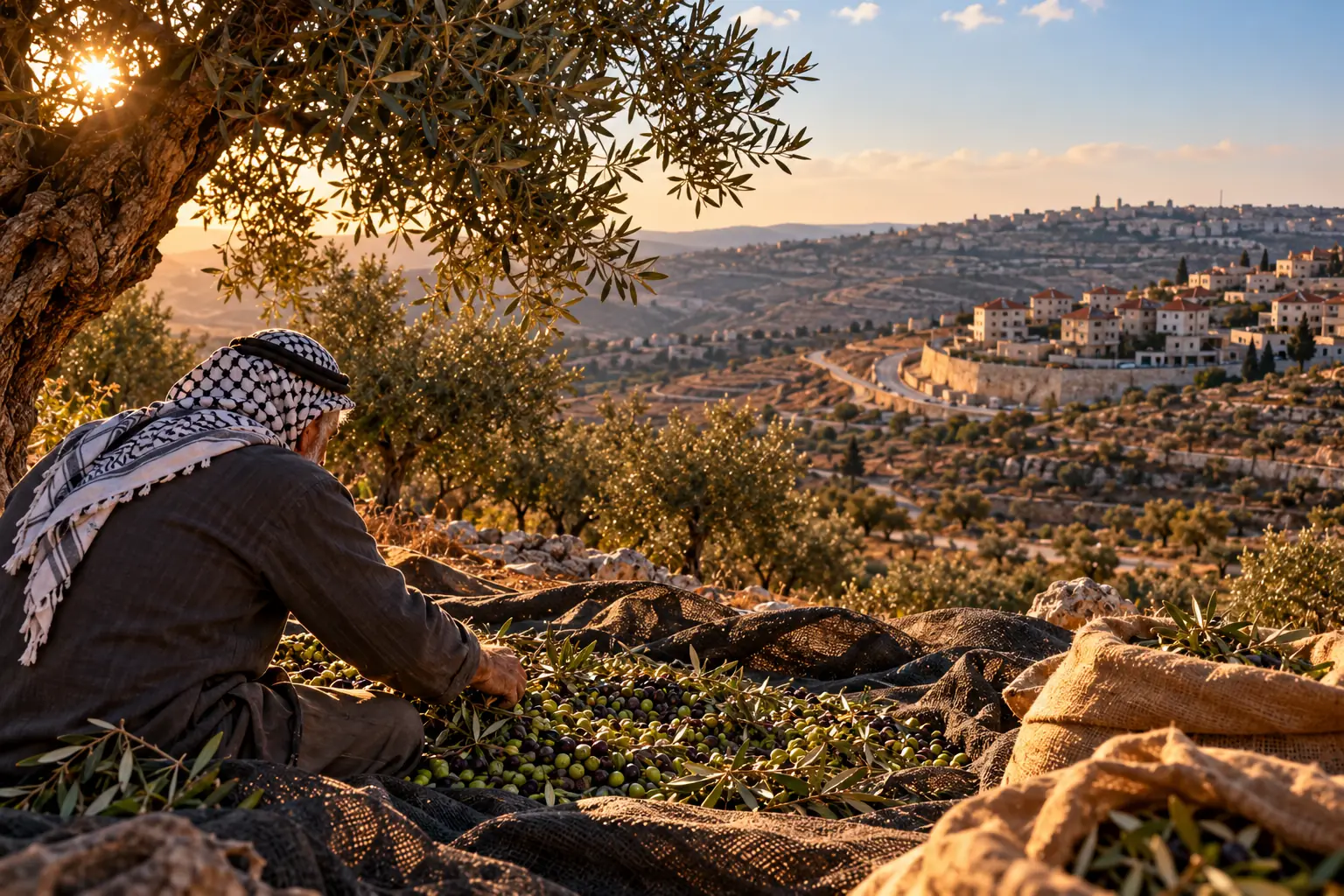
Anyone who shows only images of olive harvests in the autumn is telling only part of the story. Behind some of the plantations lies an organized effort concerning the future use of Area C. This is documented not only by the Israeli organization Regavim. The Israeli Institute for National Security Studies (INSS) also describes how the Palestinian Authority seeks to create the conditions for later control over large parts of the area through infrastructure, land registration, and agricultural development.
Planning authority under Oslo: What Area C establishes
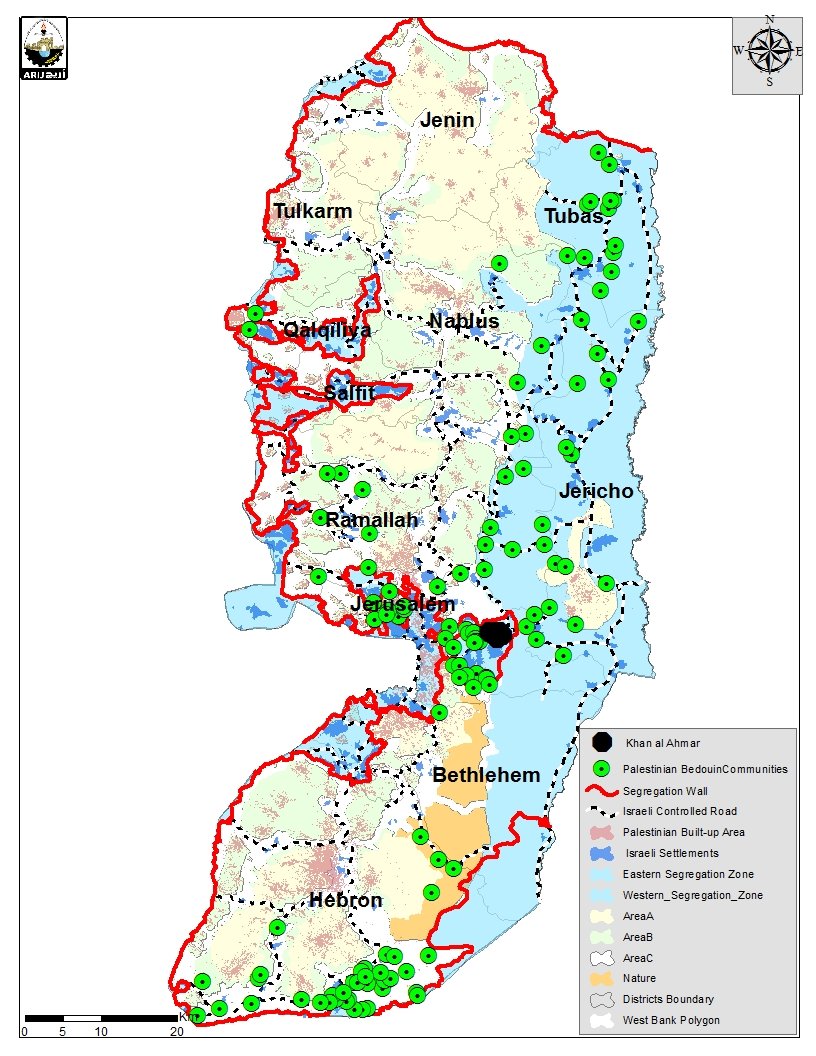
Under the Oslo II Agreement of September 28, 1995Judea and Samaria were divided into Areas A, B and C. Area C comprises approximately 60 percent of the territory. Israel retained territorial jurisdiction there over planning, construction and essential security tasks. Certain non-territorial powers were transferred to the Palestinian administration. The envisaged transitional process did not lead to the complete transfer of Area C.
This entails a specific administrative authority: On proven state land, Israel may take action against unlawful appropriations and unauthorized construction or development measures. Anyone who erects new facilities or claims land without an existing right of use cannot obtain a permit merely by planting trees. The administrative jurisdiction is part of the agreed regulatory framework and not an invention of Israeli settlement policy.
Passende X-Beiträge
Aus dem SCHLAGSEITE X-ArchivOlive trees as evidence in the land dispute
The Ottoman Land Code of 1858 continues to have an effect on local land law to this day. Its Article 78 stipulates that ten years of undisputed cultivation of certain categories of land can establish legally protected usage rights. A single planted tree does not replace a deed of ownership. Long-term cultivation can, however, become evidence in a subsequent land dispute.
That is precisely why new terraces, access roads and planting rows are politically relevant. They change the use of an area and create visible, documentable traces. The INSS explicitly describes the Palestinian strategy as an attempt to develop contiguous areas, spatially constrain Jewish localities and influence future control over Area C. The 2022 Regavim reportcites specific development measures and case studies in this regard. This is a territorial conflict, not merely a debate about agricultural tradition.
Fayyad Plan: Building a state through facts on the ground
The political foundation dates back at least to the 2009 Fayyad Plan. The then Palestinian Prime Minister Salam Fayyad focused on building state institutions and economic infrastructure in order to prepare Palestinian statehood in practical terms. For Area C, the INSS describes a campaign building on this to expand the Palestinian presence and register land claims.
The approach is understandable: First come plans, access roads, utilities and use. These are then used to derive political and, where applicable, legal claims. It is precisely at this point that the strategy comes into conflict with Israel’s responsibility for spatial planning and permits. The problem is not the olive tree. It is the attempt to preempt the later decision on an area through permanent use.
EU funding in Area C: planning, infrastructure and land registration
The EU’s political role is set out in its own documents. The European External Action Service mentions funding programmes for planning, social infrastructure, as well as land development and agriculture in Area C. The EU Action Programme of 2020 explicitly names strengthening the institutional presence of the Palestinian Authority as an objective. An EU programme from 2018 also supports land registration procedures.
Particularly noteworthy is the European External Action Service’s own programme descriptionAfterwards, the EU promotes infrastructure projects in localities whose plans have either been approved by Israel or are treated as tacitly approved under the logic of its programme if the Israeli Civil Administration raises no substantive objection within 18 months. This is a European funding rule, not an Israeli building permit demonstrated by us.
The political thrust is thus openly documented: The EU wants to permanently strengthen the Palestinian presence in Area C and links the programmes to its vision of a two-state solution. In doing so, it intervenes in the development of an area whose territorial planning falls to Israel under Oslo. These programmes cannot be described as purely apolitical agricultural assistance.
Shahak and Ganim/Kadim: Two concrete evictions in 2026
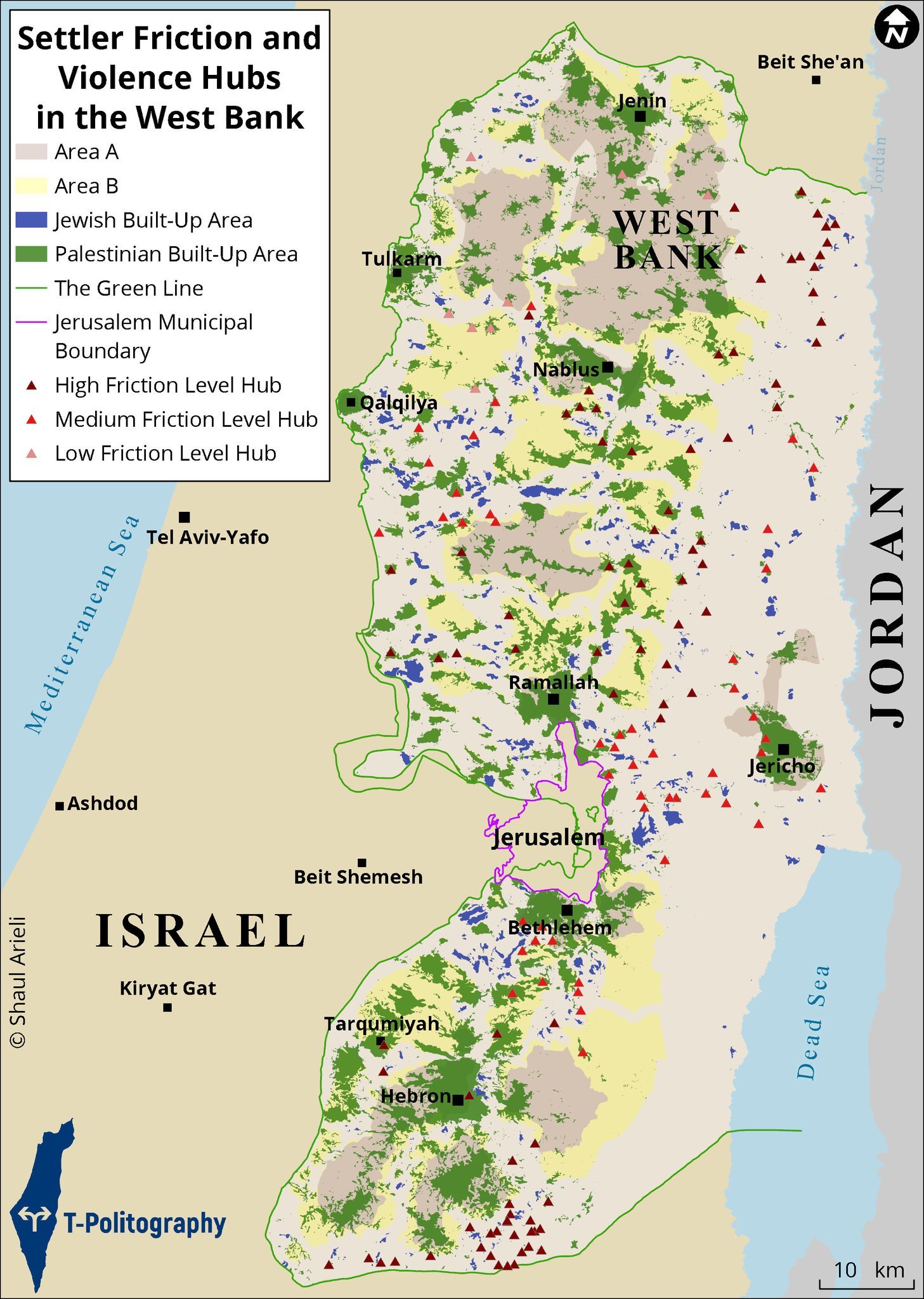
On May 7, 2026, the Israeli Civil Administration had around 3,000 trees planted by Palestinians removed in northern Samaria. Finance Minister Bezalel Smotrich said they had stood on state land within the planning area of the Shahak industrial zone. According to his account, the measure was intended to enable the expansion of the industrial zone and the establishment of another Israeli community. Smotrich explicitly linked the decision to his political goal of preventing a Palestinian state. The details were documented by Times of Israel.
On September 20, Israel National News another measure near Ganim and Kadim. According to the Civil Administration, around 500 newly planted olive trees on approximately 250 dunams of state land were removed. Facilities and infrastructure that the authority classified as unauthorized were also affected. The areas were located near planned Israeli expansions.
There is therefore a specific official justification for both operations: enforcement of land and planning law within the scope of planning authority under Oslo on areas that Israel classifies as state land. The reports do not contain complete cadastral and court records allowing for an independent review of the individual parcels. Documented are the Israeli enforcement measures against plantings and facilities which, according to the authorities, obstructed the planned use of these areas.
Reading the millions figure correctly
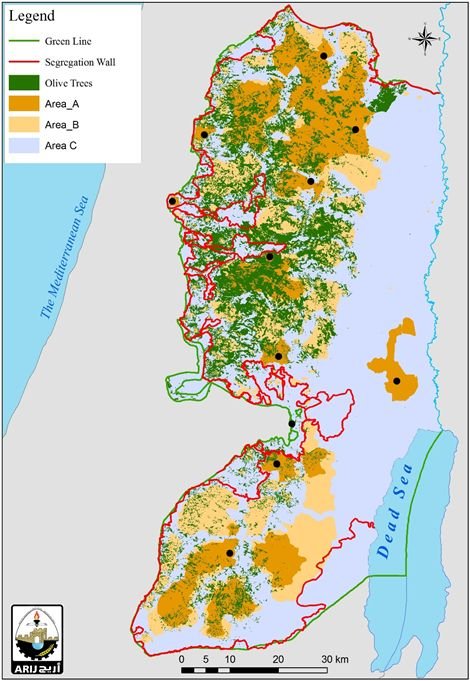
A A 2018 Ynet reportcited an internal report by the Israeli Civil Administration that put the figure at around 14.7 million olive trees on approximately 975,000 dunams. COGAT clarified that these were Palestinian figures for Judea and Samaria as a whole that had not been independently verified, including Areas A and B. The figure is not evidence of 14.7 million illegal new plantings in Area C.
The decisive evidence is not, in any case, found in a huge overall figure. It lies in the verifiable programs, development measures, and specific official decisions. They show why even relatively small planting campaigns can become strategically significant.
Harvest images do not replace context on the land dispute
Attacks on harvest workers are criminal offenses and should be prosecuted. But such an act is different from a clearance carried out by the competent authority because of contested land use. Anyone who lumps the two together obscures the legal subject matter of the respective proceeding. A photograph of uprooted trees proves neither an assault nor a property right.
The land dispute in Area C cannot be reduced to a harvest story. The Palestinian Authority is pursuing a documented strategy to expand its territorial presence. The EU supports parts of this expansion with an explicitly political objective. Under Oslo II, Israel has the primary planning authority there and exercises it in cases of contested seizures of possession. Anyone reporting on this must put these facts first. Anything else makes the most important part of the conflict disappear.
ℹ️ Factual basis and primary sources for the article 📑
▶️ Oslo II, original agreement:
Open original source
▶️ Ottoman Land Code, Article 78:
Open original source
▶️ Institute for National Security Studies, Area C:
Open original source
▶️ Regavim, War of Attrition 2022:
Open original source
▶️ European External Action Service, Area C funding programs:
Open original source
▶️ EU funding program 2018:
Open original source
▶️ EU action program 2020:
Open original source
▶️ Times of Israel, Shahak, May 8, 2026:
Open original source
▶️ Israel National News, Ganim and Kadim, September 20, 2026:
Open original source
▶️ Ynet and COGAT, planting figures 2018:
Open original source
🔎 Spotted an error, criticism, or addition?
SCHLAGSEITE.eu stands for careful research and transparent corrections. Have you discovered a factual error, unclear wording, or a broken link? Then send me your note. If possible, please provide a verifiable source.