
00:00 / –:–
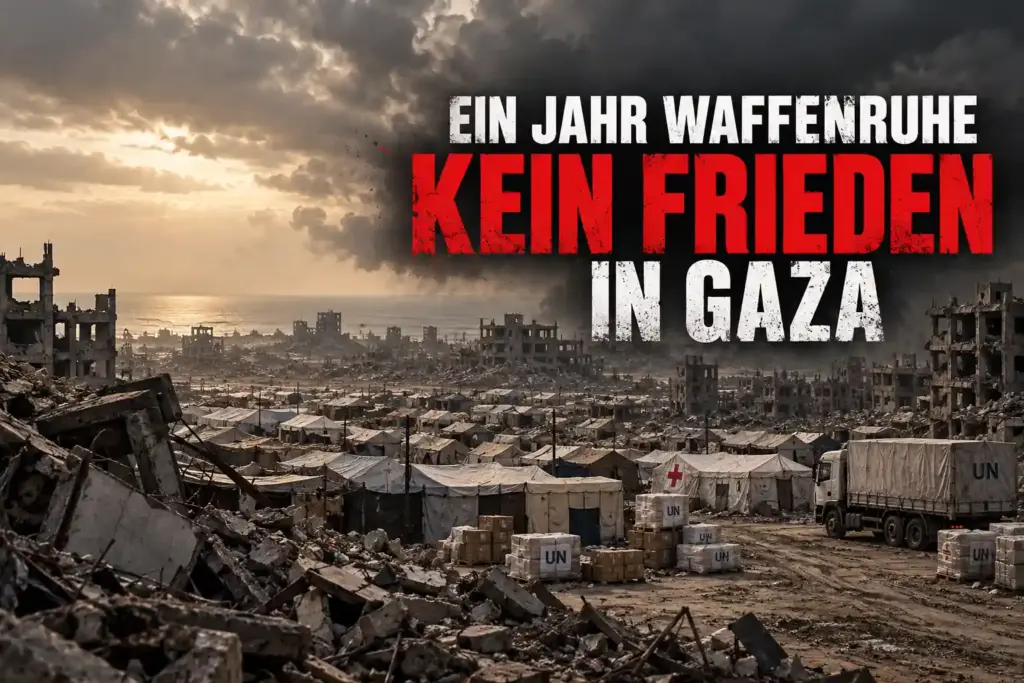
One year of ceasefire, but Gaza is still unable to get back on its feet. Hundreds of thousands of people continue to live in tents, reconstruction is stalled and Hamas remains armed. While international politicians talk about peace, stability and billions in aid, the decisive element is still missing: a functioning order in which the terrorist organization can no longer determine Gaza’s future.
On October 10, 2025, the U.S.-brokered ceasefire took effect. After two years of war, it was intended to pave the way for a political fresh start. The last 20 living Israeli hostages were released on October 13, 2025. The repatriation of the remains took longer: It was not until January 26, 2026, that the IDF reported, that the last dead hostage, Ran Gvili, had also been brought back to Israel. The peace plan was also intended to enable Hamas’s disarmament, a new administration and the reconstruction of Gaza.
Twelve months later, only part of this has been implemented. Hamas remains armed, an international stabilization force is absent, and the planned Palestinian transitional administration has not yet begun its work on the ground. This assessment also appears in the UN report of September 24, 2026.
The originally agreed so-called Yellow Line left about 53 percent of the Gaza Strip under Israeli control. In In May 2026, Reuters put the controlled share at around 64 percent. In July, the Jerusalem Post, citing Israeli security sources, reported 67 to 70 percent. The figures come from different months; they nevertheless show that the Israeli presence has extended beyond the initial line, while the planned further withdrawal failed to take place.
The large-scale fighting was halted, but Israel continues to carry out airstrikes and limited military operations. The IDF justifies such operations by citing remaining threats from Hamas fighters and their infrastructure, as Reuters reported on October 12, 2026 reported. According to the Palestinian Ministry of Health in Gaza, more than 1,400 Palestinians have been killed since the ceasefire began. The UN Human Rights Officehad itself verified a total of 1,076 conflict-related deaths by the end of July 2026. The ministry’s overall figure has not been independently verified for every individual case and does not reliably distinguish between civilians and combatants. This is continuing violence during a ceasefire, not a return to the large-scale fighting seen before October 2025.
Without clarified power relations and verifiable security guarantees, reconstruction cannot move forward.
Passende X-Beiträge
Aus dem SCHLAGSEITE X-ArchivCeasefire in effect, daily life and reconstruction remain precarious
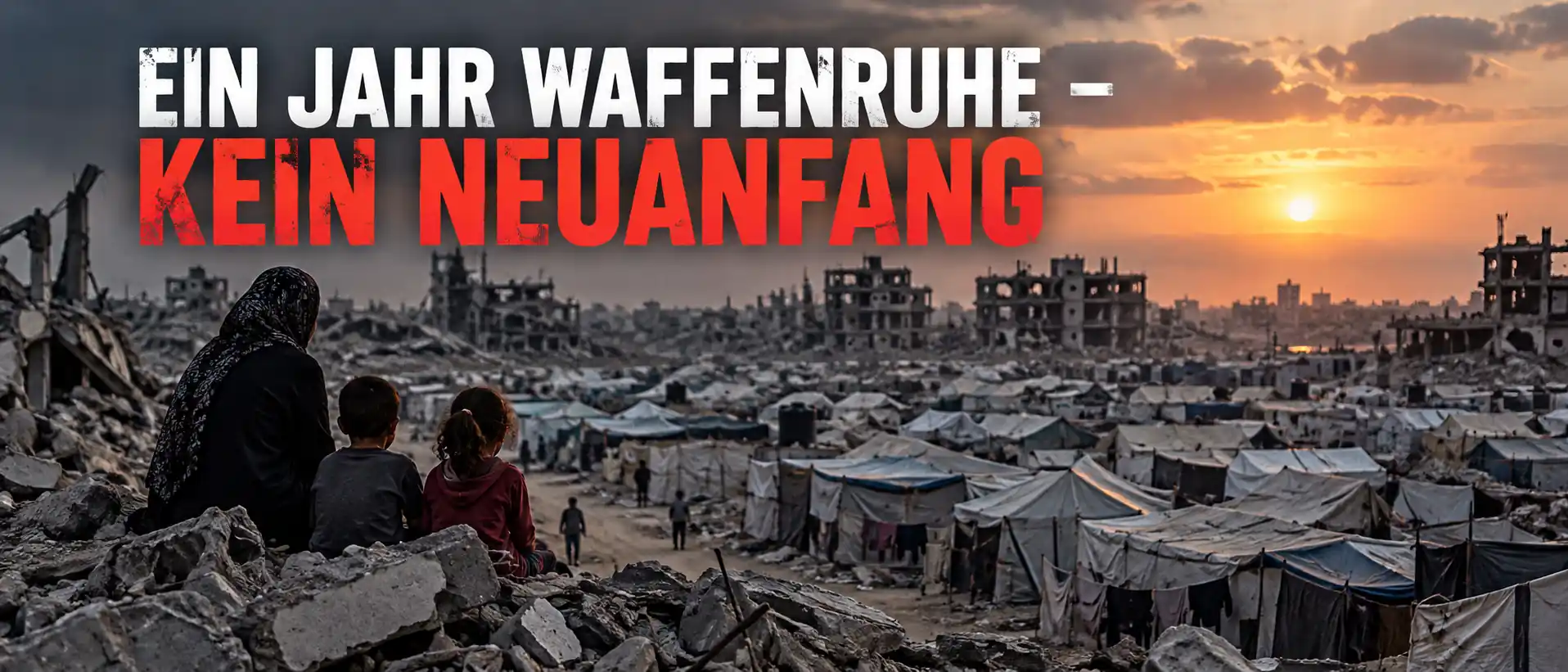
The situation in the Gaza Strip is catastrophic. According to figures from the UN Shelter Cluster, as reported by Times of Israel around 65 percent of the population—approximately 1.37 million people—were living in tents or makeshift shelters in October 2026.
The joint damage assessment by the EU, UN and World Bank estimates the need for reconstruction and economic recovery at 71.4 billion US dollars. More than 371,000 housing units were damaged or destroyed. Water, electricity and wastewater services have also been severely disrupted across large parts of the area.
Israeli journalist Nurit Yohanan spoke to residents of Gaza for the Times of Israel. Her reports convey above all exhaustion and anger that daily life has hardly improved despite the ceasefire. International conferences do not replace destroyed homes, and press statements do not restore electricity. As long as no one is reliably responsible for civilian administration and security, the announced billions remain above all a figure on paper.
Gaza needs an administration that actually works and a security order that prevents armed terrorist structures from taking hold again. That is precisely what the peace plan was designed for.
October 7 is the starting point of this war
Anyone explaining the current situation while leaving out October 7, 2023, leaves the trigger for this war unaddressed. Hamas terrorists and other armed attackers raided Israeli communities, military bases and the Nova music festival at the time. Around 1,200 people were killed and 251 were abducted as hostages. The attack and its preparation are documented in our Dossier on October 7, 2023.
Hamas started this war. Over the years, it had built an armed regime in the Gaza Strip and expanded its military infrastructure. Israel responded to a terrorist attack of historic proportions. Israel’s security services and political leadership had seriously underestimated the threat beforehand. This failure must be addressed, while Israel must continue to ensure that such an attack does not happen again.
That is precisely why Hamas’s disarmament is a central security demand. Israel’s population must not once again have to rely on a terrorist organization perhaps not carrying out its own threats at some point.
Hamas is weakened. It has not been disarmed.
Hamas has lost a large part of its former military strength and territorial control. In areas of Gaza outside Israeli control, however, it remains a significant armed power. According to Israeli security assessments, the organization is attempting to recruit new fighters and restore its infrastructure. The extent of this rebuilding cannot be independently quantified on the basis of publicly available information. The UN report from September 2026 confirms the decisive point: Hamas and other armed groups have not been disarmed.
Its continued power is also evident beyond military positions. According to the UN humanitarian aid office OCHAOn July 12, 2026, armed members of the de facto authorities entered a food distribution point in Jabalia. Aid workers had to suspend the distribution. The armed men also entered a World Food Programme warehouse; according to the report, two truck drivers were attacked. OCHA attributes the perpetrators to the de facto authorities, but does not name any individuals in this report. The incident demonstrates that armed power structures continue to interfere in civilian aid.
That Hamas, according to the reporting by Times of Israel, has not fired rockets at Israel for some time is relevant to the military situation. However, the absence of rocket attacks should not be equated with the promised disarmament. Compliance with a ceasefire and fulfillment of all the conditions of the peace plan are also two different questions.
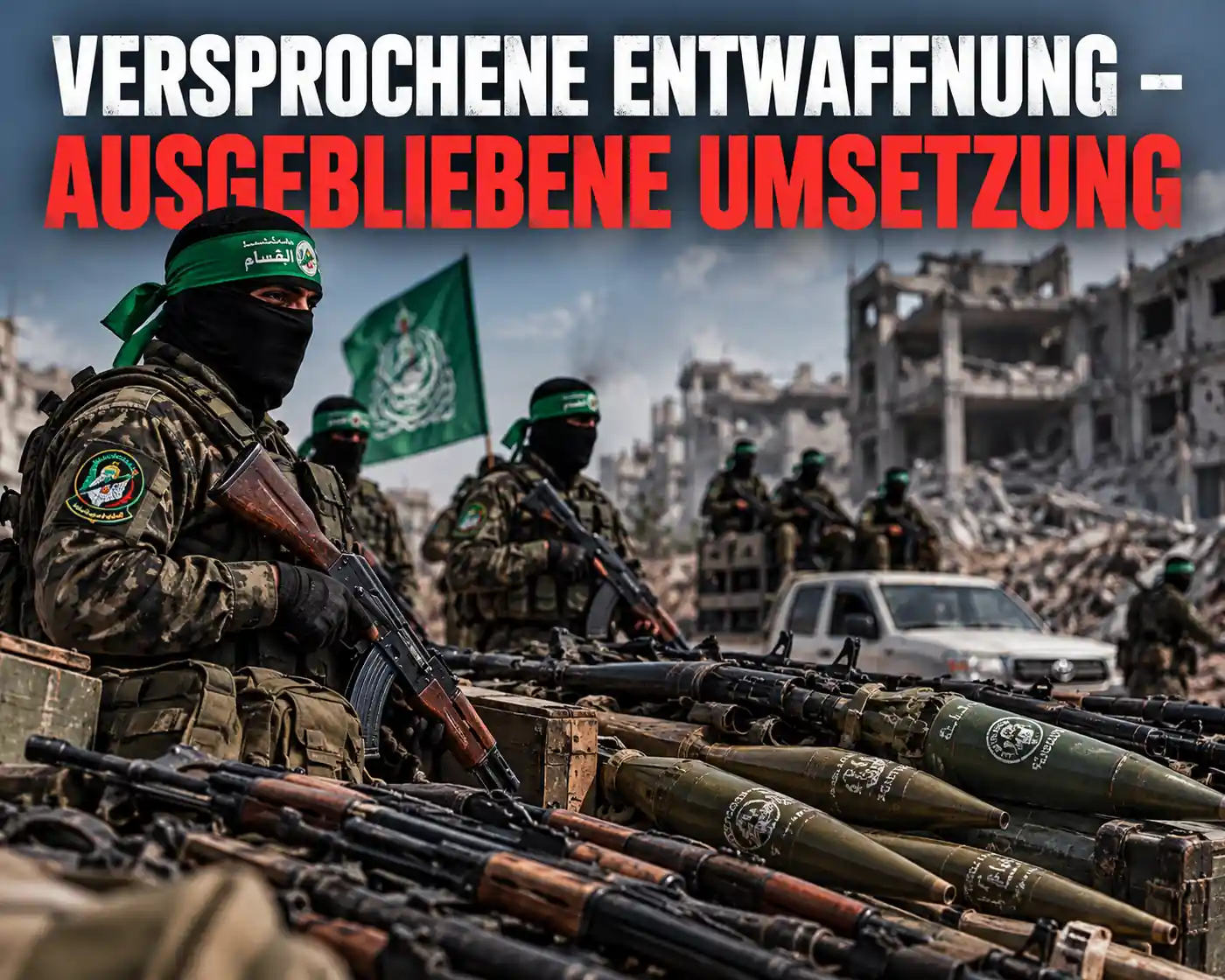
In Point 13 of the American 20-point plan of September 29, 2025It states that Hamas must play no role whatsoever in future governance. Tunnels, weapons production facilities and other military infrastructure are to be destroyed and not rebuilt. Disarmament is to take place under independent supervision and render weapons permanently unusable. As long as Hamas retains its organized armed power, this part of the plan has not been implemented. An announcement is no substitute for a verifiable handover.
The new Gaza administration exists only on paper
The peace plan envisages a Palestinian transitional administration that organizes public services and prepares reconstruction without Hamas involvement. For this purpose, the National Committee for the Administration of Gaza (NCAG) was established under Ali Shaath in January 2026. Yet the body does not govern Gaza to this day.
In July 2026, Hamas stated that it had dissolved its previous government. According to reporting by Associated Press the administrative apparatus remained in place, and Hamas retained significant influence in areas not controlled by Israel. Israel did not allow the new transitional administration to enter via Egypt. The international stabilization force envisaged in the peace plan was likewise not deployed. The UN report confirms that the NCAG has not yet been able to begin its work in the Gaza Strip.
The blockades are therefore specifically identified: Hamas has not given up its armed power, Israel has not allowed the new administrative body to enter, and international partners have not created the promised security presence. These decisions and failures are preventing the planned transfer of power.
Israel has good reason to reject a civilian administration that would be new only in name, while Hamas continued to give orders in the background. That is precisely why a verifiable transfer of responsibilities should finally be organized. After a year, a body is ready that does not govern, while a power structure that was supposed to be replaced remains in place. This is a political failure with consequences for millions of people.
The dispute over disarmament is blocking the withdrawal
This is the core political conflict. Point 16 of the original U.S. peace plan provides for a phased Israeli withdrawal. The individual steps are to be tied to agreed benchmarks, timetables and verifiable progress on demilitarization. A later American proposal from the summer of 2026 likewise linked the phased handover of Hamas’s weapons to a staggered Israeli withdrawal.
Hamas declared its readiness for this procedure. It was not fully disarmed as a result. Prime Minister Benjamin Netanyahu rejected the later plan and demanded that Hamas first be fully disarmed before additional Israeli troops withdraw. This conflict is described by the Associated Press in its year-end review.
Israel’s objection is understandable. Anyone who surrenders only part of their weapons while preserving their chains of command and continuing to control armed forces is not a reliably disarmed terrorist organization. After October 7, a new security system that overlooks this gap would be irresponsible. Merely storing weapons and leaving Hamas the possibility of later returning to power does not solve the security problem.
The difference between the original phased plan and Netanyahu’s later precondition must nevertheless be clearly stated. The Israeli government is demanding more than the agreed step-by-step implementation initially envisaged. It must therefore explain through what verifiable process complete disarmament is to be achieved. A security objective is not yet a strategy for implementing it.
Washington, too, has reason to take stock soberly. According to Times of Israel on October 13, 2026, the U.S. State Department spoke of progress on demilitarization. What matters, however, is what has actually been implemented: Hamas remains armed, the NCAG does not govern, and an international stabilization force is not ready. Reports of success do not replace proof of security.
Support for Hamas is also waning in Gaza
Disappointment with the political situation is increasingly affecting Hamas as well. According to a survey by the Palestinian Center for Policy and Survey Research from August 2026, 38 percent of Gaza residents surveyed were satisfied with its performance during the war; in October 2025, the figure was still 51 percent. In another study by the Jerusalem Media and Communication Centre, 9.9 percent of respondents named Hamas as their preferred political party. The two figures address different questions and must not be compared directly. Both findings are reproduced in the report by Nurit Yohanan .
Less support for Hamas by no means implies a majority in favor of Israel’s demand for disarmament before the withdrawal. According to the PCPSR survey from August 2026 , 62 percent of those surveyed in Gaza rejected Hamas’s disarmament before from a complete Israeli withdrawal. Across the entire Palestinian sample, the figure was 72 percent. The question explicitly concerned the sequence of disarmament and withdrawal, not unconditional support for Hamas. The finding shows how difficult an accepted security order remains.
The residents interviewed by the journalist describe difficult living conditions and anger at various political actors. Such personal accounts are important, but they are not representative of all people in Gaza. They show how little trust the promises of the past year still inspire.
One interviewee claims that only the Palestinian side is adhering to the ceasefire. The interview provides no reliable evidence for this. The ongoing Israeli military operations are documented, as is the failure to implement the agreed disarmament of Hamas and other armed groups. These are distinct findings: Whether an individual attack violated the ceasefire must be assessed on the basis of the specific incident. It is undisputed that disarmament, as a core component of the entire peace plan, has still not been implemented.
Reconstruction needs oversight, not new dependencies
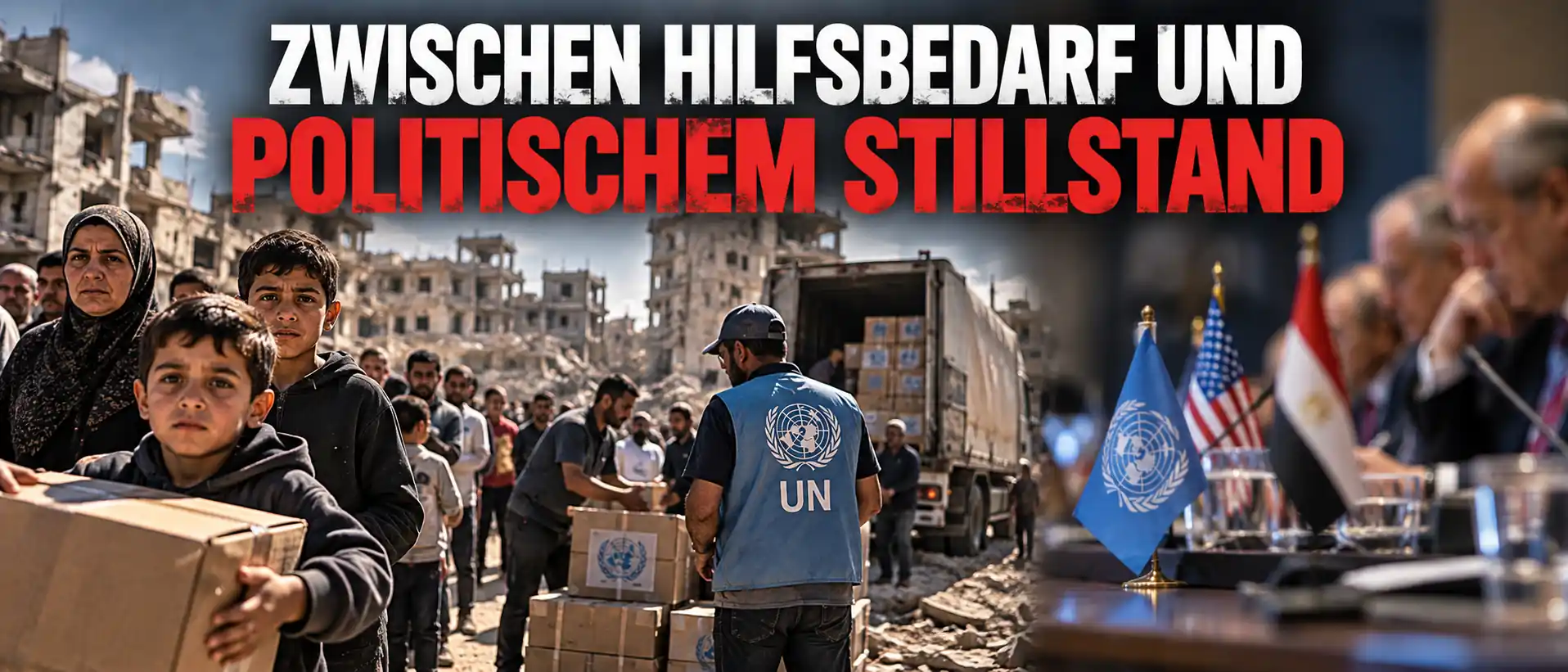
Anyone who wants to invest billions in the Gaza Strip must be able to say who will manage the funds, who will oversee construction projects and which security rules will apply. The population needs accommodation, drinking water, medical care and functioning facilities. It must not be held responsible for Hamas’s actions. Its basic needs must be secured.
Israel has a legitimate interest in ensuring that material with potential military use is not used again for tunnels or weapons facilities. This requires effective controls, verifiable supply routes and independent inspections. At the same time, necessary civilian aid supplies must actually arrive.
On October 9, 2026, the International Organization for Migration (IOM) warned that almost two million people in Gaza need assistance with housing. According to IOM information at the UN press conference the delivery pipeline of humanitarian partners covered only 17 percent of the need for winterized shelters. The 17 percent therefore refers to planned or available aid deliveries, not material already distributed to people in Gaza. The organization cited insufficient funding and Israeli import restrictions as obstacles.
The task is to enable the flow of civilian aid without giving Hamas new military capabilities. Security does not become credible by allowing supplies to remain stalled indefinitely. It must be enforced through concrete, verifiable procedures.
Ceasefire in effect, yet a political order remains absent
The American peace plan produced real results: The last living hostages were released, the remains of those who had died were later brought back to Israel, large-scale fighting ended, and access for humanitarian aid was expanded. The decisive political reordering, however, failed to materialize. Hamas has not surrendered its weapons, the new civilian administration cannot govern, the international stabilization force has not been deployed, and reconstruction remains far behind what is needed.
That is the balance sheet of a year full of diplomatic announcements. Hamas is clinging to its armed power. In light of the experience of October 7, Israel insists on security guarantees and has rejected the subsequent withdrawal plan. International partners have failed to create an operational framework for the period that follows. Anyone announcing another peace initiative now must above all explain what will be bindingly different this time.
Israel’s population has the right to reliable protection against new terrorist attacks. The people in the Gaza Strip need a civilian future without the rule of armed groups. Both require the controlled disarmament of Hamas and a transitional administration that can actually assume responsibility.
Reconstruction must not enable Hamas to continue its rule under a new name. One year after the ceasefire took effect, it remains armed, while the promised new administration is not governing. Anyone who calls this state of affairs peace is confusing the silence of major battles with a resolved security issue. This is not a sustainable peace. It is political paralysis.
ℹ️ Factual basis and primary sources for the article 📑
▶️ USA, peace plan of September 29, 2025:
Comprehensive Plan to End the Gaza Conflict
Point 13 on disarmament and Point 16 on the phased withdrawal.
▶️ Israeli forces, January 26, 2026:
Completion of the return of all hostages
Confirmation of the return of the last mortal remains of Ran Gvili.
▶️ United Nations, September 24, 2026:
UNSCO Report to the Ad Hoc Liaison Committee
Status of disarmament, transitional administration, stabilization force and humanitarian situation.
▶️ UN Human Rights Office, October 12, 2026:
One year after ceasefire announcement, killings continue across Gaza
Figures from the Palestinian Ministry of Health and independently verified deaths through the end of July 2026.
▶️ Reuters, May 28, 2026:
Netanyahu directs Israeli forces to expand Gaza control to 70 percent
Baseline of approximately 53 percent and estimated Israeli control of 64 percent in May.
▶️ Jerusalem Post, July 15, 2026:
Israel now controls up to 70% of Gaza, Security Cabinet told
Information from Israeli security sources on the expansion to approximately 67 to 70 percent.
▶️ UN humanitarian affairs office OCHA, July 16, 2026:
Humanitarian Situation Report
Documented intervention by armed forces of the de facto authorities in humanitarian facilities on July 12.
▶️ EU, UN and World Bank, April 20, 2026:
Final Gaza Rapid Damage and Needs Assessment
Damage to housing and financial needs for reconstruction and economic recovery.
▶️ International Organization for Migration, October 9, 2026:
UN Geneva Press Briefing
Shelter needs and the 17 percent coverage of the planned winter aid delivery pipeline.
▶️ Associated Press, October 2026:
A US-brokered ceasefire was supposed to end the war in Gaza
Blocked entry of the transitional administration and dispute over the phased withdrawal.
▶️ Palestinian Center for Policy and Survey Research, August 12, 2026:
Public Opinion Poll No. 97
Survey on the sequence of disarmament and Israeli withdrawal: 62 percent in Gaza, 72 percent overall.
▶️ Reuters, October 12, 2026:
Israeli strike kills two people in Gaza, medics say
Continued Israeli airstrikes and corresponding IDF justifications.
▶️ The Times of Israel, October 12, 2026:
One year into ceasefire, vexed Gazans say they’re still living like war never ended
Interviews with residents, polling data, and housing situation.
▶️ The Times of Israel, October 13, 2026:
On ceasefire anniversary, US claims real progress made in demilitarizing Gaza
US government statements on the state of demilitarization.
🔎 Spotted an error, criticism, or addition?
SCHLAGSEITE.eu stands for careful research and transparent corrections. Have you discovered a factual error, unclear wording, or broken link? Then send me your information. If possible, please provide a verifiable source.