00:00 / –:–
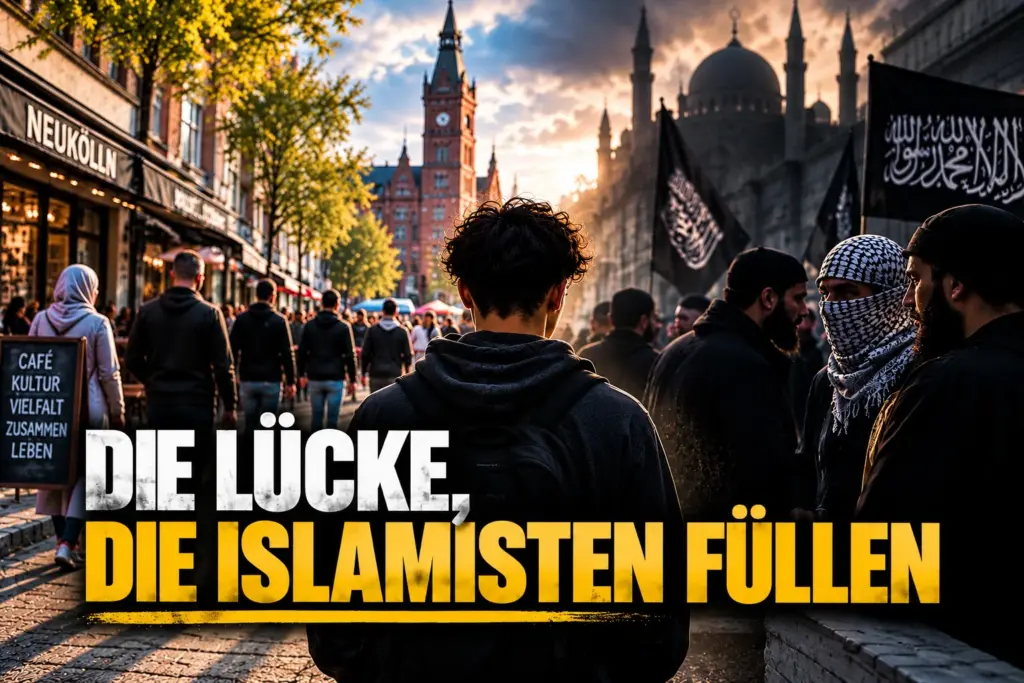
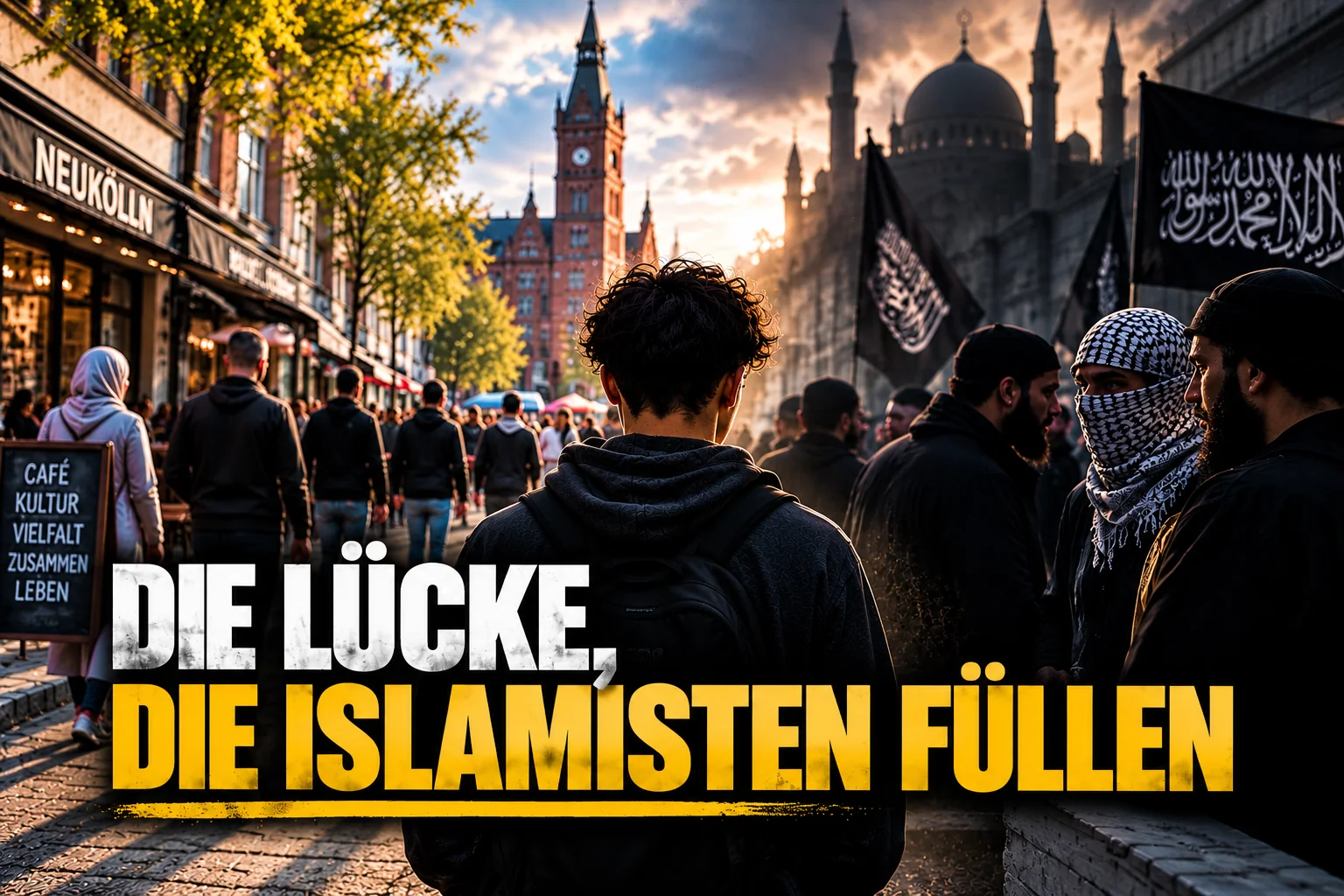
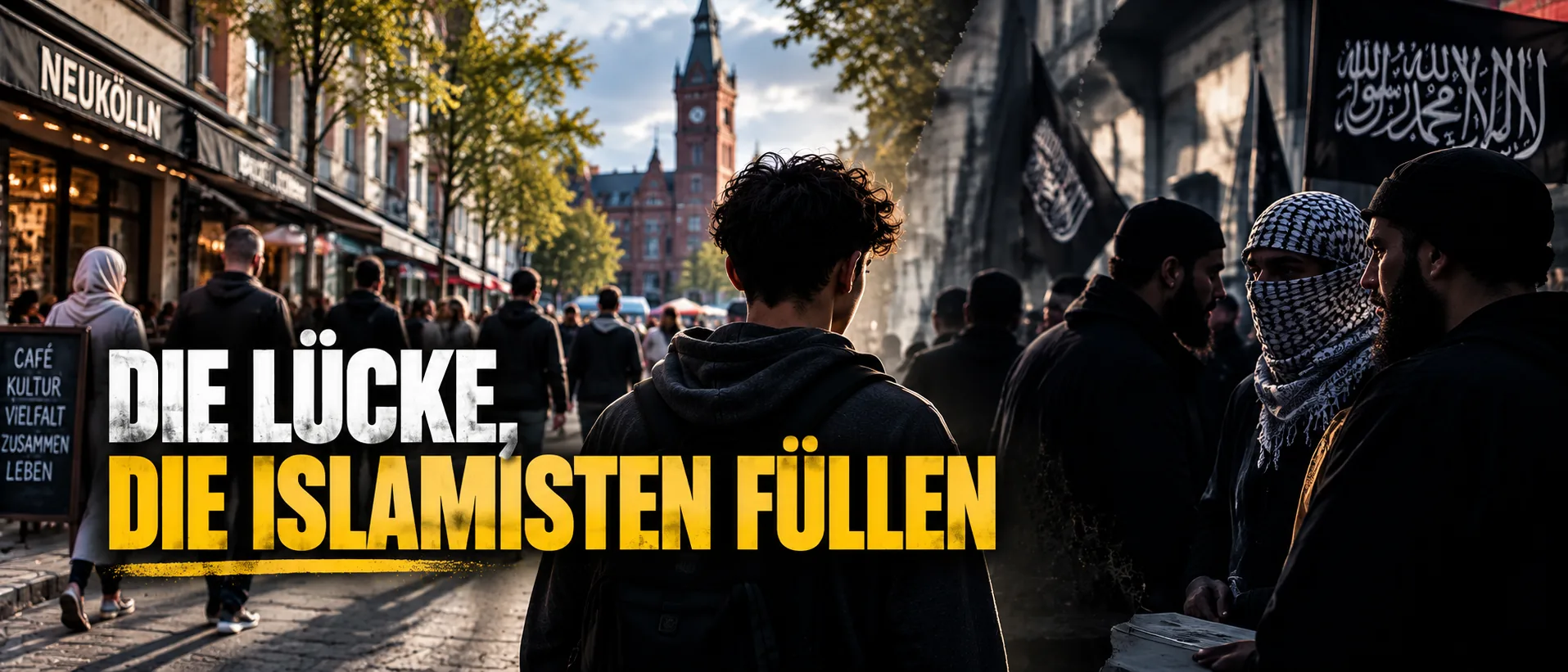
Berlin-Neukölln shows what happens when immigration is managed over decades, while integration remains stalled in the areas of language, work and public administration. At the end of his term, district mayor Martin Hikel describes a district with entrenched parallel milieus, weak ties to the state and Islamist actors exploiting precisely these gaps.
During a tour with the NZZ Hikel describes a district in which different population groups often live more alongside one another than together. His warning is not directed against immigration, but against structures that encourage isolation.
If economically disadvantaged people—and therefore many migrants—are repeatedly concentrated in the same neighborhoods, this repeats a mistake made in the 1980s. At that time, migrants from Lebanon were housed en masse in certain parts of West Berlin. This allowed parallel societies to become entrenched.
Passende X-Beiträge
Aus dem SCHLAGSEITE X-ArchivOctober 7 made visible what had long been there
The extent to which social separation can go became apparent immediately after the Hamas massacre of October 7, 2023. Members of the pro-Palestinian network Samidoun distributed sweets on Sonnenallee and described the action themselves as a celebration of an alleged “victory of the resistance.”
It was a small group. This is important, because it must not be turned into a chorus of celebration representing an entire district. Hikel goes a step further, however: In his assessment, this agitation fell on fertile ground on Sonnenallee.
The network did not remain unchallenged permanently. The Federal Ministry of the Interior banned the activities of the international Samidoun network in Germany and dissolved Samidoun Germany.
Just under two weeks after October 7, it became apparent how great social pressure within such milieus can become. Following a call for a so-called general strike, more than 126 shops, bakeries and restaurants on Sonnenallee remained closed. Tagesspiegel reported that not all owners had participated voluntarily and that alleged threats had been mentioned.
The NZZ also reports that foul-smelling butyric acid was poured outside the businesses of those who refused to participate.
This shifts the question. It is no longer merely about the political views held by individual people. When pressure develops within a neighborhood to join a political mobilization, opinion becomes social power.
Immigration over decades: When belonging is absent
Hikel also sees this as the result of decades of inadequate integration efforts. He is shocked by how weak some people’s ties to the German state are. He speaks of a lack of “rootedness of the heart” in German society.
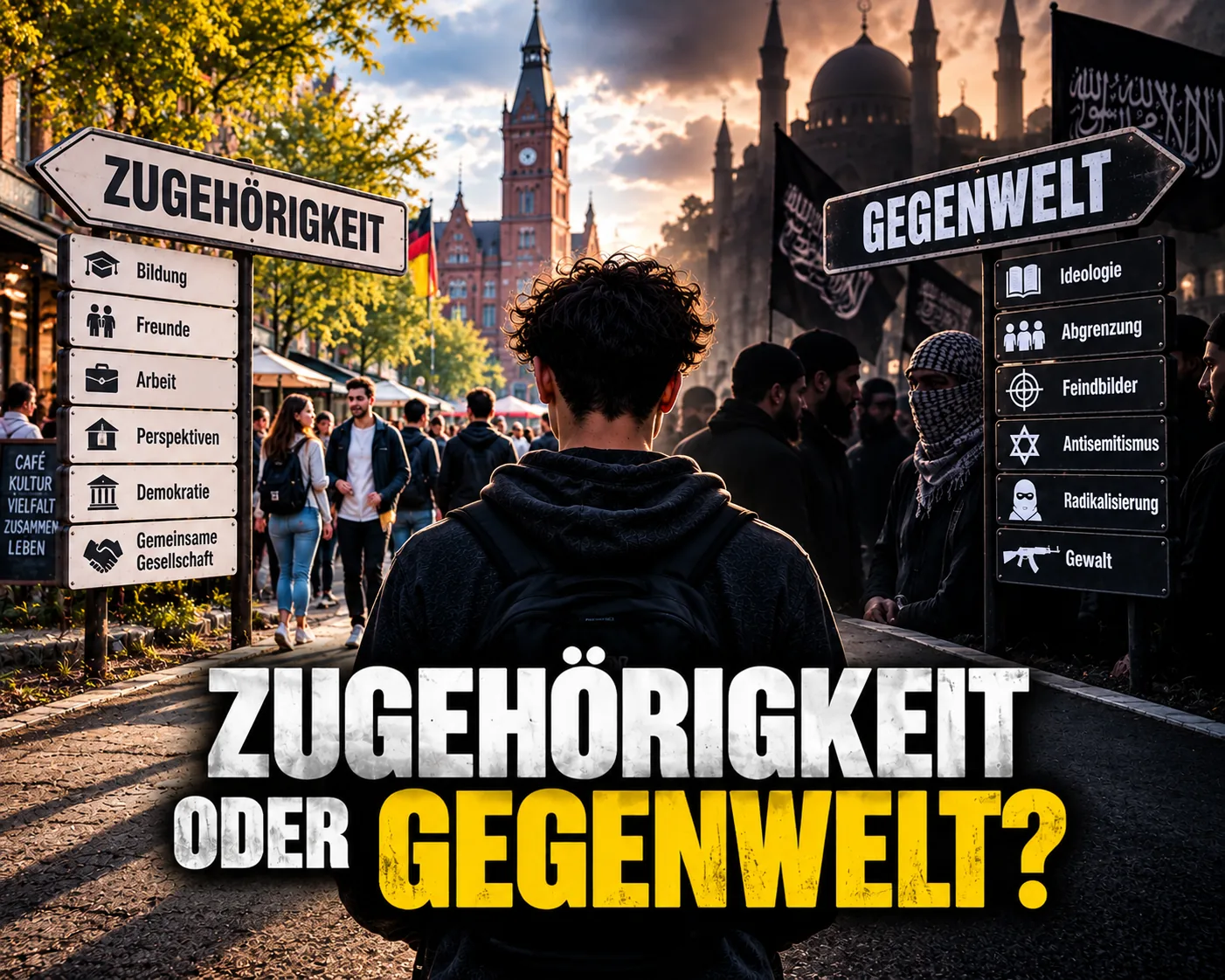
It is precisely at this point that Islamist actors gain influence. They offer a separate form of belonging based not on shared citizenship, but on religious and political separation.
This does not operate solely through jihadist propaganda and explicit calls for violence. In Neukölln, Hikel points to mosques and associations shaped by Salafism and close to the Muslim Brotherhood. Added to this are organizations that combine religious authority, youth work and claims to represent society.
Islamism therefore does not begin only with terrorism. Part of the Islamist spectrum operates through legalistic means. The Federal Agency for Civic Education explicitly treats legalistic Islamism as part of the Islamist spectrum. Influence can emerge through associations, educational programs, social media and claims to represent society.
Islamist spectrum grows to 28,645 people
For 2025, the Federal Office for the Protection of the Constitution counts 28,645 people in the Islamist spectrum, 365 more than the previous year. Around 9,110 are considered violence-oriented, slightly fewer than in 2024. At approximately 11,200 people, the Salafist scene remains the largest current.
The figures therefore do not show a simple upward trend. The recorded potential for violence-oriented activity has declined, while the Islamist spectrum as a whole has grown slightly. At the same time, the analysis of the 2025 report by the Federal Office for the Protection of the Constitution points to the increasing radicalization of young people and the effects of the Middle East conflict on antisemitic mobilization.
The Islamist spectrum remains a minority within the Muslim population. Its social significance, however, cannot be measured solely by membership numbers. Digital propaganda does not require large organizational structures. Ideology, enemy images and a sense of community reach people directly on their smartphones.
Israel becomes a test of belonging
This alternative world becomes particularly visible on the issue of Israel. The Middle East conflict serves Islamist actors as a mobilization issue in which political attitudes and personal belonging are linked. The analysis of the 2025 report by the Federal Office for the Protection of the Constitution also points to the importance of the Middle East conflict for antisemitic mobilization.
Solidarity with Palestinians can be used to construct a demand for loyalty: Anyone wishing to belong to the community must oppose Israel. Antisemitism and hostility toward Israel can thus be passed on beneath a political surface.
What can emerge from this was visible on Berlin’s streets after October 7. A small group celebrated Hamas’s attack on Israel. The problem was not that it spoke for everyone on Sonnenallee. The problem was that such a message found an audience at all.
Hikel disputes the concept of racism and the Middle East debate
Hikel’s position has also earned him opposition within his own party. This is particularly clear in the term “anti-Muslim racism.” In an interview with Berliner Zeitung Hikel explains that, in his view, the term makes no sense. In his opinion, it conflates racist discrimination with criticism of a religion. As a result, legitimate criticism of Islam could come under suspicion of racism.
He also sees political naivety in the debate over the Middle East conflict. Speaking to the NZZ Hikel says that parts of his party—but even more so the Greens and the Left—have been influenced by an academic, postcolonial discourse. In his assessment, this quickly turns the attack of October 7 into a “measure of self-defense.”
That is Hikel’s political assessment. His actual finding goes beyond it: A district mayor who governed Neukölln for eight years describes entrenched parallel milieus, weak ties to the state, antisemitic mobilization and Islamist actors gaining influence within these structures.
Integration is decided by belonging
Integration does not consist in people merely living in the same city. Language, education and work are prerequisites. But they do not answer the question of whether people see themselves as part of the same political society.
This includes individual freedom, equality, freedom of religion, the right to criticize religion, rejection of antisemitism and acceptance of the democratic order.
Hikel’s assessment of Neukölln is therefore not an abstract warning about a possible problem. It describes one that already exists. Where social belonging remains weak and isolated milieus emerge, the space does not remain empty. Others fill it.
📚 Sources and further information
- NZZ, September 19, 2026: “We are repeating the mistakes of the 1980s” — Tour of Neukölln with Martin Hikel
Open source at the NZZ - Tagesspiegel — Events of October 7, 2023, article dated October 8, 2023: Samidoun distributes sweets on Sonnenallee after the Hamas attack and celebrates an alleged “victory of the resistance.”
Open source at Tagesspiegel - Federal Government / Federal Ministry of the Interior — Ban of November 2, 2023: Ban on the activities of Hamas and the international Samidoun network, as well as the ban and dissolution of Samidoun Germany.
Open source at the Federal Government - Tagesspiegel, October 21, 2023: More than 126 shops, bakeries and restaurants closed during the so-called general strike on Sonnenallee; report on alleged threats against business owners.
Open source at Tagesspiegel - Federal Agency for Civic Education, August 13, 2026: Figures on the Islamist scene based on the 2025 report by the Federal Office for the Protection of the Constitution.
Open source at the bpb - Federal Agency for Civic Education, July 15, 2026: Analysis of the 2025 report by the Federal Office for the Protection of the Constitution, with references to the radicalization of young people and antisemitic mobilization.
Open source at the bpb - Federal Agency for Civic Education: The Islamist scene in Germany, focusing on so-called legalistic Islamism.
Open source at the bpb - Berliner Zeitung, April 9, 2026: Martin Hikel on criticism of the term “anti-Muslim racism.”
Open source at Berliner Zeitung
🔎 Found an error, criticism or addition?
SCHLAGSEITE.eu stands for careful research and transparent corrections. Have you found a factual error, unclear wording or a broken link? Then send me your note. If possible, please provide a verifiable source.