00:00 / –:–
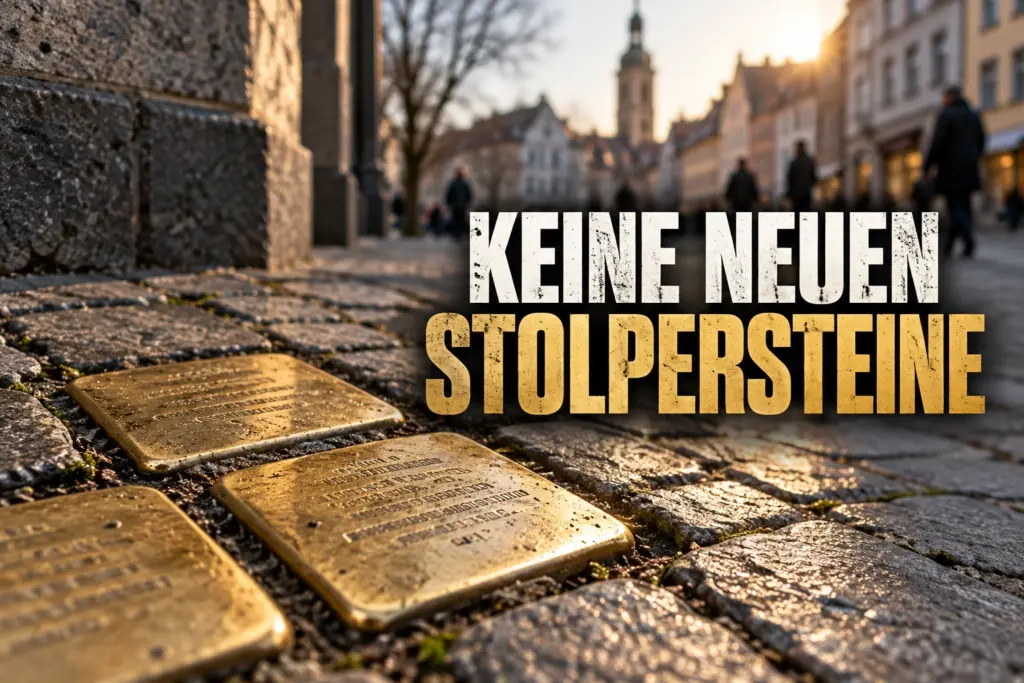
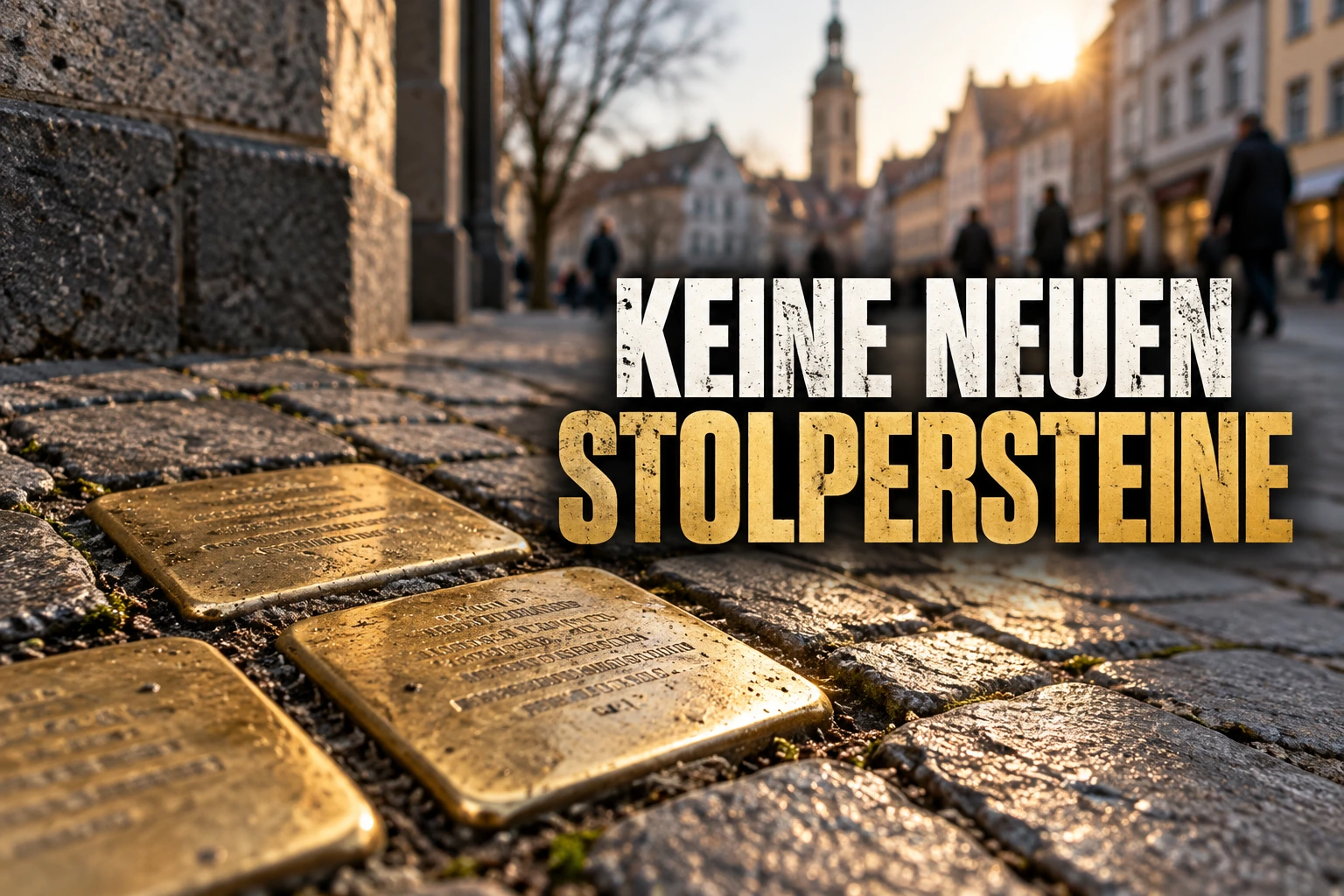
In future, no new Stolpersteine are to be laid in public streets or pavements in Heidenau. The town council adopted this principle on 24 September. The motion was submitted by councillors from BOD, the CDU and the AfD. The town administration itself had expressly recommended that the town council not approve the motion in this form.
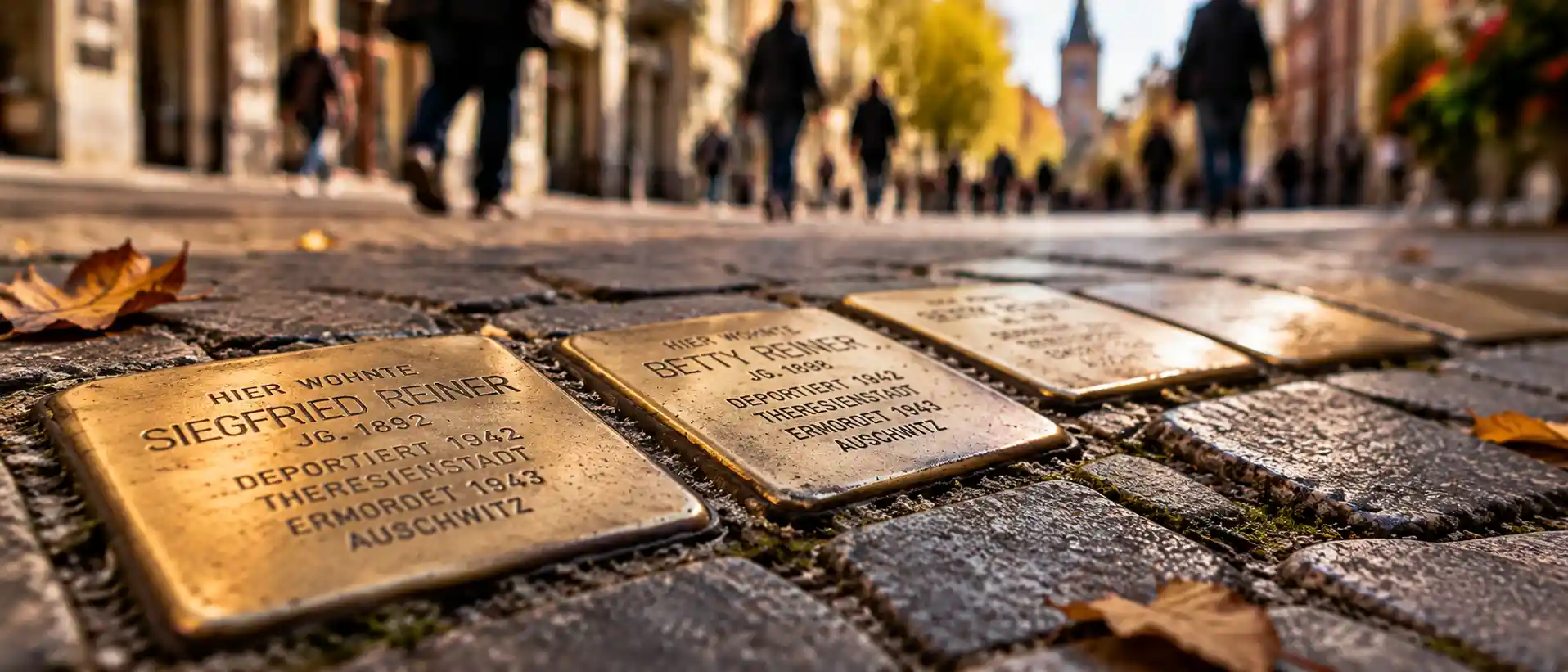
Five Stolpersteine in Heidenau currently commemorate people persecuted during Nazi rule. One commemorates former mayor Paul Gröger; others commemorate the Jewish Reiner family of merchants. The brass plaques are located at the former homes or places of work of those persecuted. This very principle is not to be expanded in future. MDR SACHSEN documents Heidenau’s Stolpersteine to date and their locations.
The town council’s decision is clearly worded: The laying of so-called Stolpersteine in public streets and pavements is to be rejected in future. It does not, however, mention removing the stones already in place. Mayor Conny Oertel confirmed to MDR that they are to remain. The exact wording of the decision is documented in the official decision document 083/2026 of the town of Heidenau
Passende X-Beiträge
Aus dem SCHLAGSEITE X-ArchivMotion by BOD, CDU and AfD against new Stolpersteine
The cross-party motion was submitted by nine councillors from the Bürgerinitiative Oberelbe für mehr Demokratie, or BOD for short, the CDU and the AfD. The official decision document states that nine town council members submitted the motion on 25 June 2026. The original motion is signed by councillors from BOD, the CDU and the AfD. According to the town administration, the vote was subsequently held by secret ballot. Thirteen councillors voted in favour, six against, and one abstained.
Precisely because the vote was secret, an important distinction is necessary: It is documented which political groups submitted the motion. It is not documented, however, which individual councillor voted yes or no in the secret ballot. The result therefore cannot be used to construct a complete party-by-party voting list.
The applicants justify their initiative by referring to the form of remembrance. The names of persecuted people are set into the ground in Stolpersteine and can be walked on. Numerous citizens, relatives and remembrance initiatives consider this form of commemoration inappropriate, according to the reasoning of the cross-party motion.
The published documents do not, however, identify these citizens, relatives or initiatives specifically. Nor do they list any documented survey, petition or statement from corresponding groups. This does not mean that no such views exist. It does mean, however, that this justification for the motion is not substantiated in greater detail in the publicly available documents.
Administration warned against excluding new Stolpersteine
The position of the Heidenau town administration is clearly documented in the official decision document.
The administration had expressly recommended that the town council reject the motion. Its argument was that remembrance of the victims of National Socialism and other dictatorships should continue to take place visibly and perceptibly in public spaces. This presence in the townscape, it argued, enabled broad awareness and direct engagement with history. This is how the town administration justifies its recommendation to reject the motion.
The administration was not fundamentally opposed to an additional central site of remembrance. Rather, it distinguished between supplementation and replacement: A memorial site at the Nordfriedhof could fulfil an independent and dignified commemorative function, but could not replace the decentralised sites of remembrance at former homes and places of work on an equal footing.
The administration also determined that a blanket exclusion of additional Stolpersteine was not necessary in order to establish an additional memorial. In its recommendation, decisions on further installations were to continue to be made on a case-by-case basis.
The town council instead opted for a principle-based decision that generally excludes further Stolpersteine in public streets and pavements.
Remembrance to take place at the cemetery in future
Following the decision, a central memorial area is preferably to be created at Heidenau’s Nordfriedhof, or an existing area is to be expanded accordingly. It is intended to commemorate victims of war, terror, dictatorships, expulsion and, in particular, National Socialism. The memorial elements are to be designed so that they cannot be walked on. This is expressly stipulated in the adopted motion.
Concrete implementation is still pending, however.
The Nordfriedhof is administered by the town of Heidenau, but the property belongs to the Evangelical Lutheran parish. According to the administration, concrete implementation therefore requires the church’s involvement and approval. In addition, the Nordfriedhof is registered as a cultural monument, meaning that structural or design changes also require approvals under heritage protection law. These requirements are explained in the town administration’s decision document
The town administration also points out that, because of its peripheral location and limited opening hours, the cemetery is not integrated into everyday urban space in the same way as sites of remembrance at former homes or places of work.
The two concepts therefore differ in one key respect: A central memorial site must be deliberately visited. Stolpersteine bring remembrance directly to former places of life and thus into everyday public space.
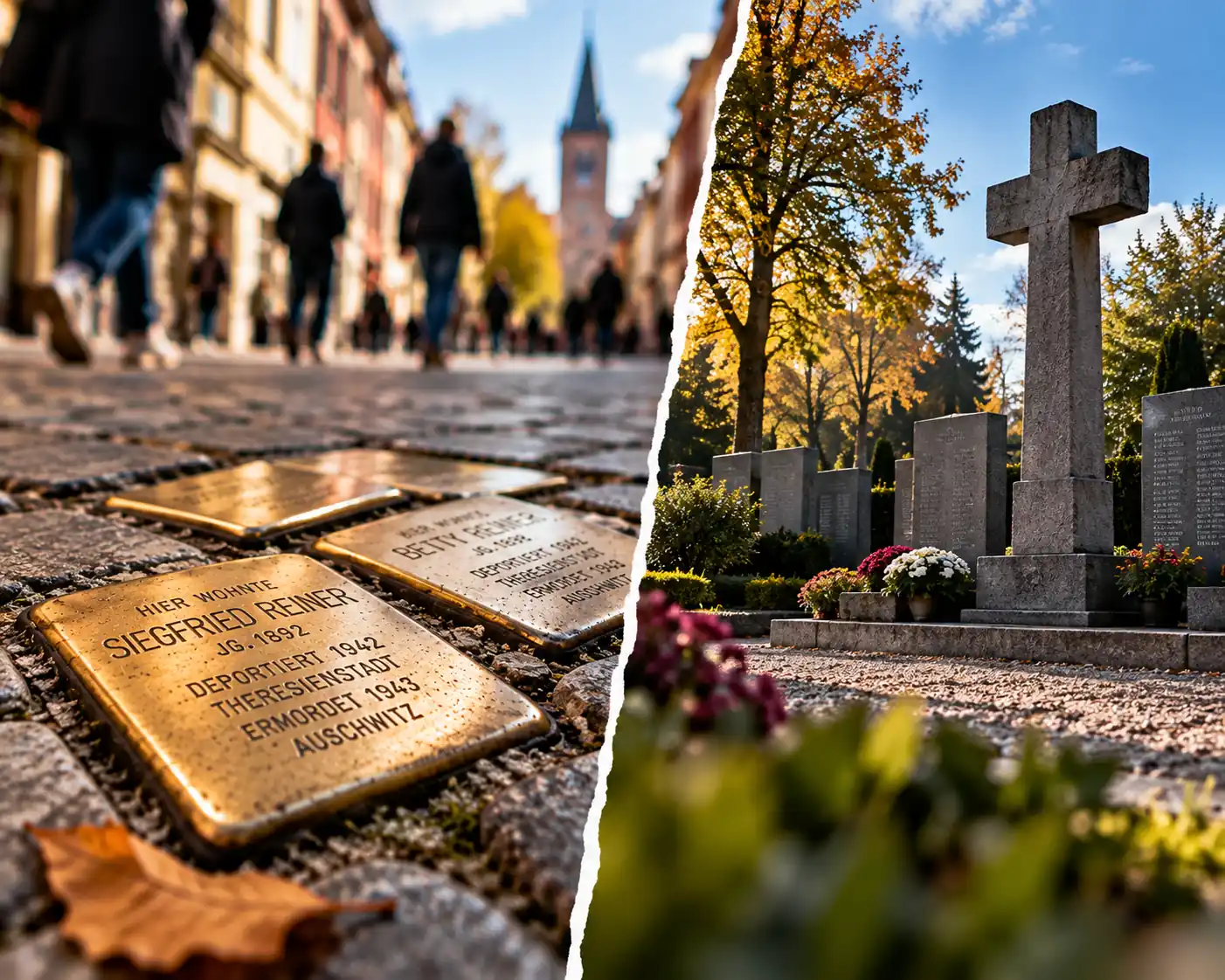
No new Stolpersteine: Dispute over planned memorial stones
The conflict is not theoretical. The Alternative Kultur- und Bildungszentrum Sächsische Schweiz, or AKuBiZ, had already applied for additional Stolpersteine in Heidenau.
The information differs here: The Heidenau decision document refers to an application in 2025 for seven additional Stolpersteine. AKuBiZ, in contrast, told MDR SACHSEN that it had applied for twelve Stolpersteine for seven Jewish families and individuals. Why the two figures differ has not been conclusively clarified in the publicly accessible documents available so far.
AKuBiZ sharply criticised the decision and, according to MDR, is examining both alternative forms of remembrance and possible legal steps. No court proceedings have been confirmed so far.
Behind every Stolperstein is the biography of a specific person. The project connects that biography with a former home or place of work. In its decision document, Heidenau’s town administration also describes this connection to a place as a defining feature of the Stolperstein project.
The debate is therefore not only about whether a memorial element can be walked on. It is also about whether the names of those persecuted should continue to be visible directly where these people lived or worked.
Sharp criticism of the decision
The International Auschwitz Committee responded with strong criticism on the day of the decision. Executive Vice-President Christoph Heubner criticised both the exclusion of further Stolpersteine and cooperation between CDU councillors and the AfD. The full statement was published by the International Auschwitz Committee on 24 September 2026. This assessment is the committee’s position and is not a statement about the personal motives of individual councillors.
Charlotte Knobloch, President of the Jewish Community of Munich and Upper Bavaria, also criticised Heidenau’s decision. This is noteworthy insofar as Knobloch herself has for many years been one of the best-known critics of laying Stolpersteine in the ground. Nevertheless, she told MDR that removing sites of remembrance from the townscape was the wrong course. MDR SACHSEN documents her response to the Heidenau decision.
Criticism also came from Saxony’s CDU. Secretary-General Tom Unger told MDR that Stolpersteine were a legitimate form of remembrance. The specific design of remembrance culture had to be discussed locally, he said, but he described a general exclusion of one form of remembrance as the wrong course.
The dispute therefore does not simply run between supporters and opponents of remembering the Shoah. Rather, the controversy concerns the form remembrance should take and whether an established decentralised form of remembrance should in principle be excluded from public streets.
Munich demonstrates an important distinction
The fact that Stolpersteine can be controversial as a form of remembrance is not new. Munich, too, decided against Stolpersteine on public land. The Munich town council confirmed this policy in 2015 and instead had its own system of decentralised memorial markers developed.
Today, the city uses memorial markers in the form of plaques on building walls and steles in front of houses. They are installed at places where people lived or worked who were persecuted and murdered by the Nazi regime. Biographical remembrance thus remains directly visible at specific places where people lived.
Heidenau has so far adopted no comparable decentralised replacement system. What is initially planned is a central site of remembrance, preferably at the Nordfriedhof. The two concepts therefore differ substantially on the question of whether remembrance remains directly present at former homes and places of work.
Remembrance needs names and places
Mayor Conny Oertel told MDR that the town council had not disputed whether remembrance should take place, but rather its form. The wording of the decision itself also expressly provides for a new or expanded central memorial site.
The decision is therefore not directed against every form of remembrance for the victims of National Socialism.
It does, however, exclude a specific and established form of decentralised remembrance for future cases in public streets and pavements.
This raises the question of whether a new central memorial site must necessarily replace the existing decentralised form of remembrance. Heidenau’s town administration expressly answered this question in the negative in its recommendation on the motion.
A central memorial site can inform, commemorate and preserve names. It does not, however, automatically replace the specific place where those persecuted were neighbours, ran businesses, worked and lived. This is precisely where the particular impact of Stolpersteine lies: Remembrance is not located exclusively at a memorial site that must be deliberately visited, but in the midst of everyday urban life.
ℹ️ Factual basis and primary sources for the article 📑
▶️ Town of Heidenau – Decision document 083/2026:
Cross-party motion – decision document and assessment by the town administration
The document records the draft resolution, the previous stumbling blocks in Heidenau, the Nordfriedhof cemetery as a possible memorial site, and the administration’s explicit recommendation to reject a blanket exclusion of further Stolpersteine.
▶️ Inter-party original motion:
Appendix 083/2026-1 – Motion by city councillors from BOD, CDU and AfD
Original document with the draft resolution and the applicants’ reasoning.
▶️ City of Heidenau – City Council meeting of 24 September 2026:
Official overview of the City Council meeting
Documentation of the City Council meeting at which draft resolution 083/2026 was considered.
▶️ MDR SACHSEN:
City Council follows AfD and CDU motion: No new Stolpersteine in Heidenau
Report on the voting result, the existing Stolpersteine, the planned memorial site, AKuBiZ, and the reactions from Charlotte Knobloch and the Saxon CDU.
▶️ International Auschwitz Committee:
Statement on the Heidenau Stolperstein resolution
Press release of 24 September 2026 featuring criticism from Executive Vice-President Christoph Heubner.
▶️ City of Munich:
Memorial markers for victims of the Nazi regime in Munich
Official information on Munich’s decentralised memorial concept, with plaques on house walls and steles in public spaces.
🔎 Found an error, criticism or addition?
SCHLAGSEITE.eu stands for careful research and transparent corrections. Have you found a factual error, unclear wording or a broken link? Then send me your tip. If possible, please provide a verifiable source.